
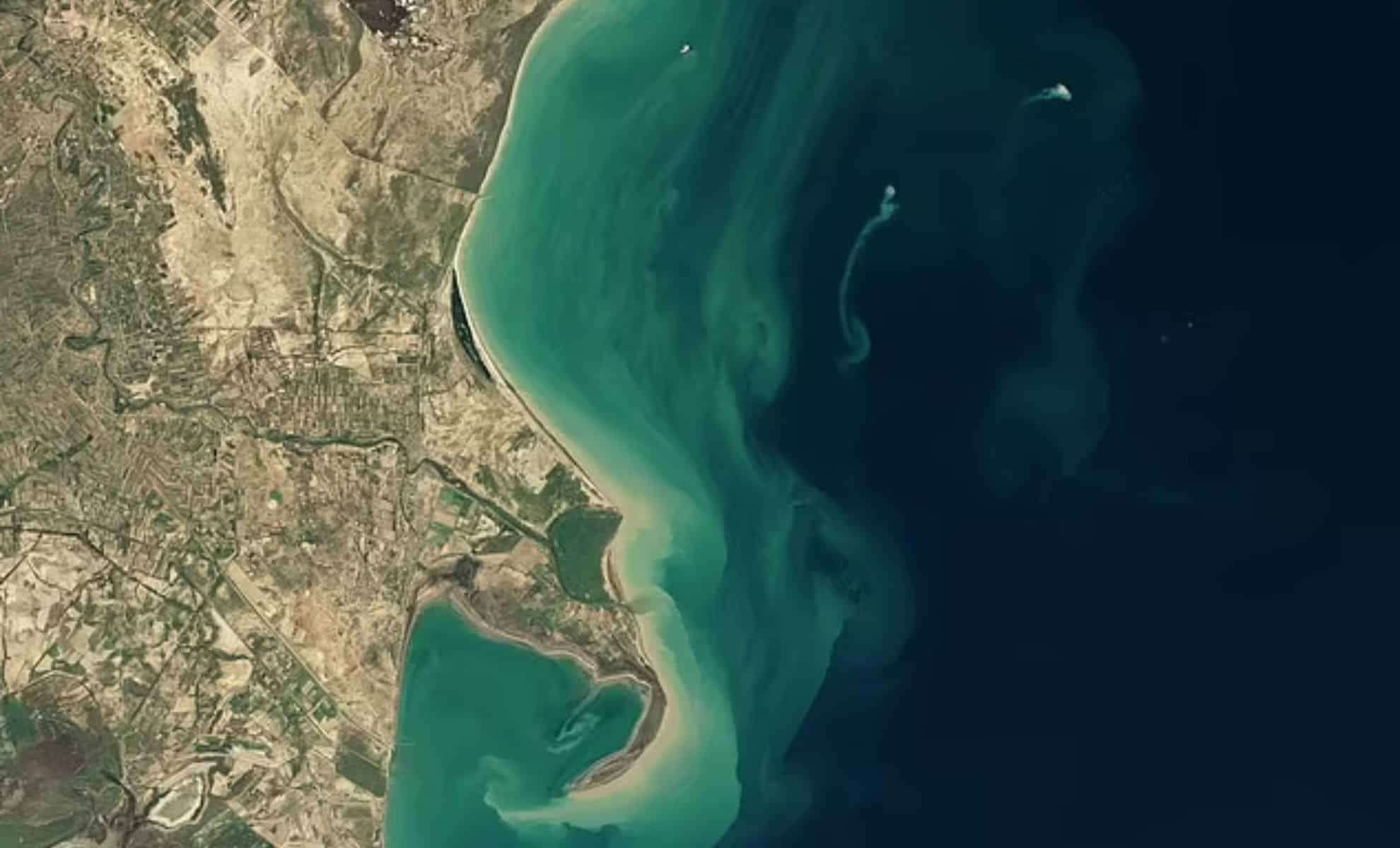
NASA satellites have recently documented an extraordinary occurrence: a fleeting "ghost island" briefly appearing in the Caspian Sea before quickly disappearing. This ephemeral landform emerged following a mud volcano eruption off Azerbaijan’s shores, captivating scientists with its rapid creation and swift erosion. Tracking this island over two years has intrigued researchers, prompting investigation into how such transient formations arise and vanish, as well as what they reveal about the turbulent geological forces sculpting this tectonically active area.
Island Emerges and Disappears in Record Time
As reported by NASA Earth Observatory, the ghost island appeared in early 2023 after a major eruption of a mud volcano beneath the Caspian Sea unleashed fresh sediment and gas. Satellite imagery captured both its rapid emergence and eventual retreat, likened to a phantom vanishing. This temporary island has drawn attention not only due to its fleeting presence but also because it vividly illustrates the region’s intense geological activity.
Mud volcanoes are notable for expelling mud, gases, and sediment explosively. The Kumani Bank mud volcano—sometimes called Chigil-Deniz—stands among the most active in this region. NASA explains that “numerous eruptions of Kumani Bank have generated temporary islands several times since 1861,” highlighting the ongoing tectonic dynamics that create and erase landforms within months.

Ephemeral Islands Through History
Situated roughly 25 kilometers (15 miles) off Azerbaijan’s eastern coast, the Kumani Bank volcano has a legacy of producing short-lived islands. Its inaugural eruption in May 1861 formed an island approximately 87 meters (285 feet) wide and 3.5 meters (11.5 feet) above sea level. NASA observed this island disappeared by early 1862, showcasing the persistent effects of erosion by wind and waves.
The 2023 event exhibited a similar lifecycle but benefited from modern satellite surveillance via NASA’s Landsat 8 and 9. These satellites tracked the island's genesis and gradual disintegration over two years, leaving just a submerged remnant of Kumani Bank visible by late 2024. These vanishing islands offer more than geological curiosity—they deepen understanding of Earth’s surface-shaping forces.
Impact of Tectonic Plate Collisions
The Caspian Sea area lies within a key tectonic boundary where the Arabian and Eurasian plates meet. This junction has resulted in eastern Azerbaijan hosting over 300 mud volcanoes, many onshore. “Geologists have documented more than 300 mud volcanoes in this region, with the majority on land,” said NASA.
Mud volcanoes here are known for their erratic and sometimes explosive behavior. Though the 2023 Kumani Bank eruption's fiery nature remains unclear, NASA notes previous eruptions have produced flames reaching several hundred meters high. This intense activity, combined with rapid mud and sediment shifts, makes these ghost islands both a geological enigma and a striking spectacle.
Unraveling the Geological Mysteries
While mud volcanoes remain somewhat understudied, they offer vital clues about subterranean tectonic dynamics. Such eruptions are driven by underground pressures that force mud, gas, and sediment upward, often in regions rich in hydrocarbons. The interplay of abundant geological resources and tectonic forces in the Caspian basin fosters these dramatic occurrences.
Experts note Azerbaijan’s unusually high concentration of mud volcanoes is strongly linked to its active tectonic setting. The Kumani Bank volcano, especially, has generated islands of various sizes and durations over decades, with the 2023 eruption providing a rare real-time glimpse via satellite technology.
A Natural Spectacle and Potential Risk
Though fascinating, ghost islands like this one highlight hazards associated with mud volcanoes. The sudden ejection of gas and sediment may threaten local ecosystems and infrastructure. Moreover, the occasional flames seen during past eruptions underscore their volatile nature.
“It is uncertain if the 2023 Kumani Bank eruption was fiery,” NASA added, “but past eruptions of this and other nearby mud volcanoes have sent towers of flame hundreds of meters into the air.” Such unpredictable events remind us of the immense subterranean forces shaping our planet.
- Categories:
- News









0 comments
Sign in to Comment