
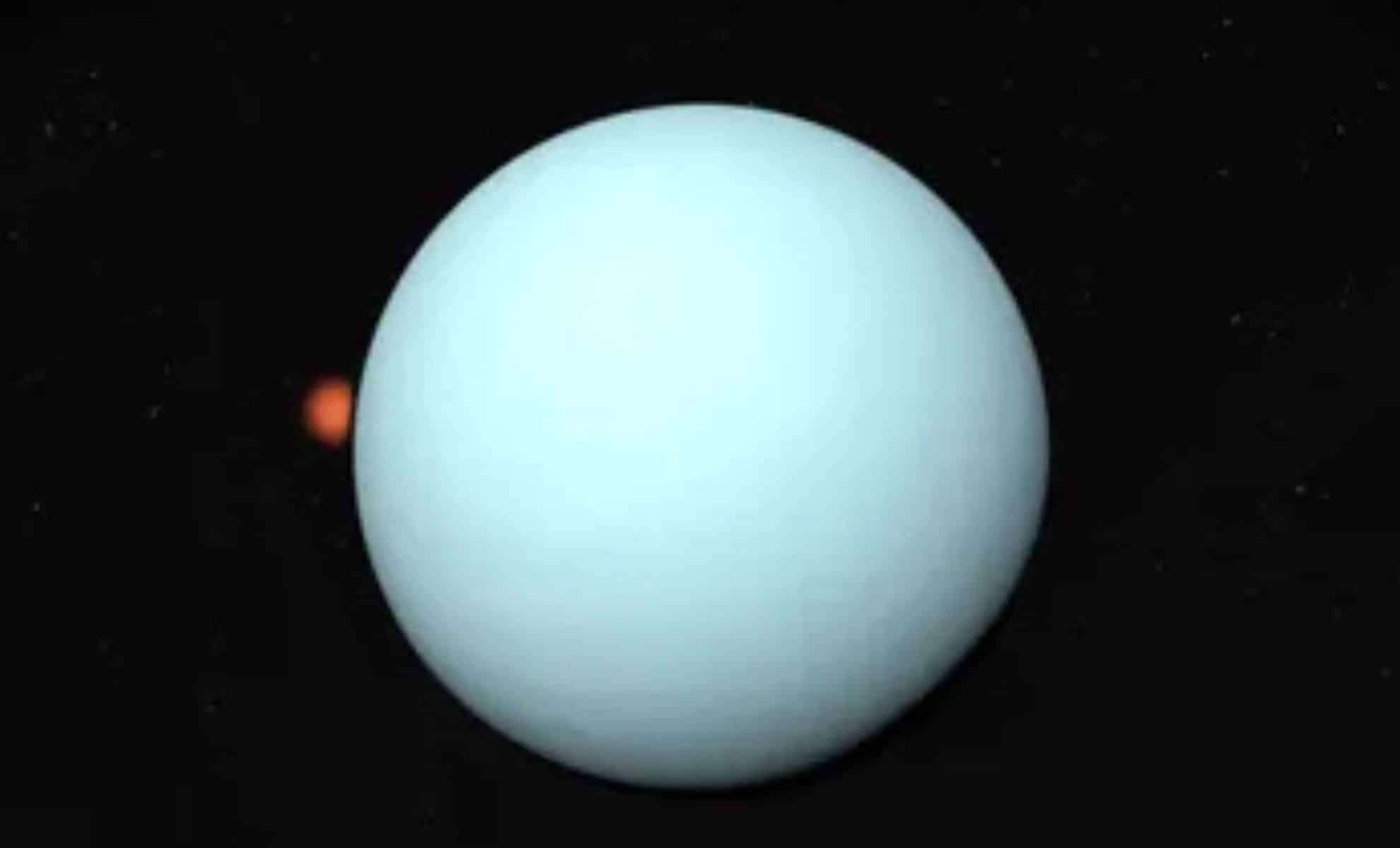
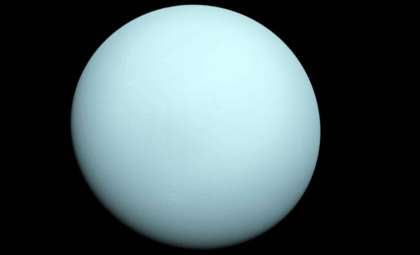
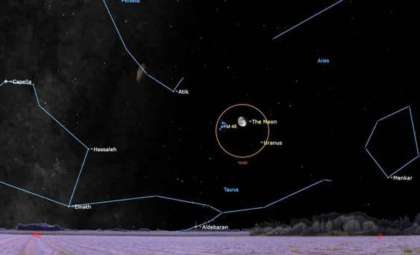
On April 7, 2025, astronomers at NASA seized a unique chance to analyze Uranus as it moved directly between Earth and a far-off star, initiating an event known as a "stellar occultation." Visible exclusively from western North America, this rare alignment enabled researchers to collect valuable measurements of the planet’s atmospheric makeup. The last occurrence of such an event was back in 1996, made possible through a global partnership of astronomers and sophisticated observatories. Further details were shared in NASA’s official announcement, marking a milestone in the study of this distant world.
A Unique Celestial Event
The stellar occultation event on April 7, 2025, was an extraordinary phenomenon lasting roughly one hour. As Uranus briefly obscured light from a distant star, scientists gained an unparalleled chance to examine its rings and atmosphere with remarkable precision. "This occasion marked the first collaboration on such a scale for an occultation," noted William Saunders, a planetary expert from NASA’s Langley Research Center, emphasizing the breadth of this cooperative effort. Although viewable only from western North America, information gathered from 18 global observatories will shed new light on the atmospheric properties of this ice giant.
Guided by NASA, a widespread team of astronomers analyzed multiple layers of Uranus’ atmosphere by observing how the starlight filtered through during the occultation. These observations allowed scientists to estimate the temperature and components of Uranus’ stratosphere. Comparing these results with data from the 1996 event offers important clues about how the planet's atmosphere has evolved over the decades.

Revealing the Mysteries of Uranus’ Atmosphere
Located around 2 billion miles from Earth, Uranus is classified as an ice giant due to its distinct makeup of water, ammonia, and methane. Its atmosphere, primarily hydrogen and helium, lacks a solid surface—an attribute that provides a straightforward window into its atmospheric dynamics free of surface-related interference.
“The gas and ice giants [Jupiter, Saturn, Uranus, and Neptune] serve as exceptional natural laboratories for atmospheric research since they do not possess solid surfaces,” explained Emma Dahl, a postdoctoral researcher at Caltech. Dahl, who helped collect data from NASA’s Infrared Telescope Facility in Hawaii, highlighted how this absence makes these planets ideal for studying atmospheric processes, including cloud development, storms, and wind behavior.
“This unique environment enables us to examine cloud formation, storm activity, and wind dynamics without the complicating influences that a solid surface can introduce, which often makes modeling more complex,” Dahl added. Detailed observations of Uranus grant scientists a clearer understanding of the planet’s intricate atmospheric mechanisms and the physical forces shaping its environment.
- Categories:
- News




0 comments
Sign in to Comment