
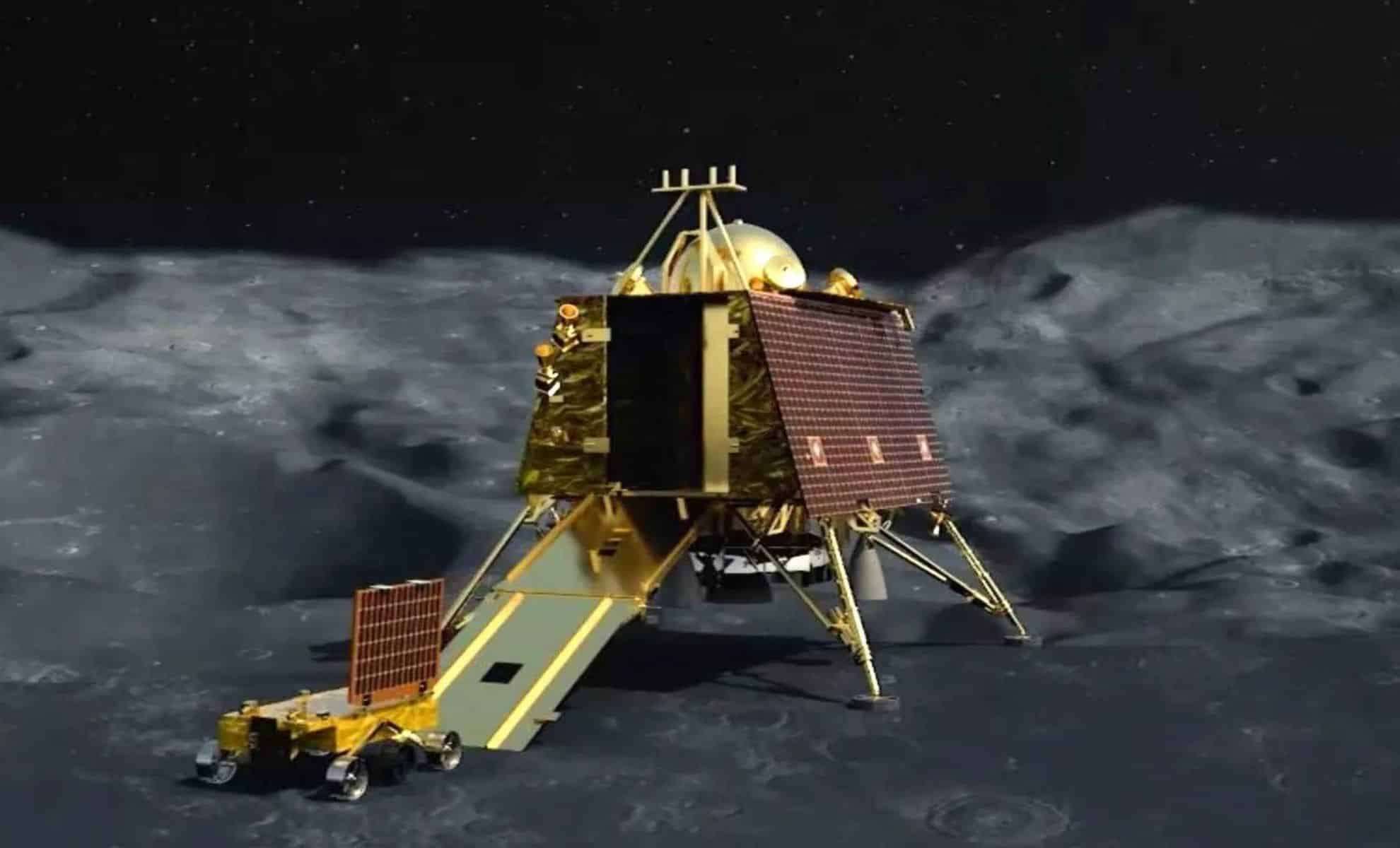
India’s Chandrayaan-3 spacecraft has unveiled compelling evidence reinforcing the idea that the Moon once possessed a vast magma ocean covering its surface.
These findings shed light on the Moon’s primordial development and enhance our comprehension of its geological transformation over billions of years.
Probing the Moon’s Volcanic Beginnings
The Chandrayaan-3 project has expanded our understanding of the Moon’s origin by detecting specific minerals and elements in lunar soil indicative of an ancient global magma ocean. This theory suggests that shortly after the Moon formed—likely from remnants of a giant collision between Earth and another protoplanet—the lunar surface was completely molten. As the Moon gradually cooled, heavier elements such as iron and magnesium sank inward, while lighter components like aluminum and silicon ascended, creating the crust.

Data obtained from Chandrayaan-3 confirms that the mineral makeup of the South Pole vicinity closely matches other lunar regions. The presence of elements including sodium, magnesium, and iron, which form at elevated temperatures, implies they crystallized during the cooling phase of the magma ocean. This unification of distant lunar areas strengthens the argument for a molten global surface early in the Moon’s history.
Examining the South Pole-Aitken Basin’s Impact on Lunar History
A focal point of the Chandrayaan-3 investigation has been the South Pole-Aitken Basin, among the solar system’s largest and oldest craters. Situated on the Moon’s far side, this basin came into existence over 4 billion years ago when a massive collision exposed deep mantle layers. The materials excavated by this event are vital for exploring the Moon’s interior and molten origins.
This area revealed magnesium-enriched minerals that likely originated deep within the Moon during its magma ocean phase. Although these minerals should have descended to the core during cooling, the immense impact forming the South Pole-Aitken Basin thrust them upward, closer to the surface. This supports the notion that monumental impacts influenced lunar geology heavily and that the Moon’s mantle development resulted from both internal processes and external forces.
Investigations of the South Pole-Aitken Basin offer an exceptional chance to study the Moon’s deep layers and early evolution. The discovery of these primordial minerals underscores the Moon’s intense volcanic and tectonic past, spurred by the solidification of its global magma ocean.
Linking Lunar Formation with Current Geological Features
Results from Chandrayaan-3 are pivotal in piecing together how the Moon transitioned from a molten sphere to the solid body we observe now. By analyzing elemental and mineralogical data from the South Pole region, researchers are uncovering details about the lunar interior. The mission confirms that the surface evolved through complex volcanic activity, major impacts, and the gradual cooling of an initially molten body.
The identification of ferroan anorthosite, a bright mineral typical of the lunar highlands, serves as crucial evidence of a once global magma ocean. This mineral likely formed as it crystallized and floated to the surface during cooling, contributing to the crust's creation. Its widespread presence validates the concept that the early Moon’s surface was entirely molten.
These discoveries also enhance our understanding of planetary formation processes, offering parallels to early stages of Earth and Mars. Given the Moon's relatively pristine surface, it provides a rare glimpse into the mechanisms shaping rocky planets, shedding light on their cooling and stratification.
Looking Ahead: The Future of Moon Exploration
The breakthroughs from Chandrayaan-3 pave the way for upcoming space endeavors. Future missions aim to explore permanently shadowed lunar regions near the poles, which could harbor water ice crucial for sustaining long-term human presence on the Moon.
Further investigations into the South Pole-Aitken Basin are expected to deepen knowledge of the Moon’s early molten state and solidification processes. Continued study of the lunar mantle and its geological characteristics promises to reveal additional insights into the formation of the Moon and other planetary bodies throughout our solar system.
By validating the presence of a global magma ocean and uncovering evidence of the Moon’s dynamic geological past, Chandrayaan-3 has made a significant contribution to lunar science, setting the stage for future exploration missions.
- Categories:
- Astronomy ,
- News ,
- Space








0 comments
Sign in to Comment