
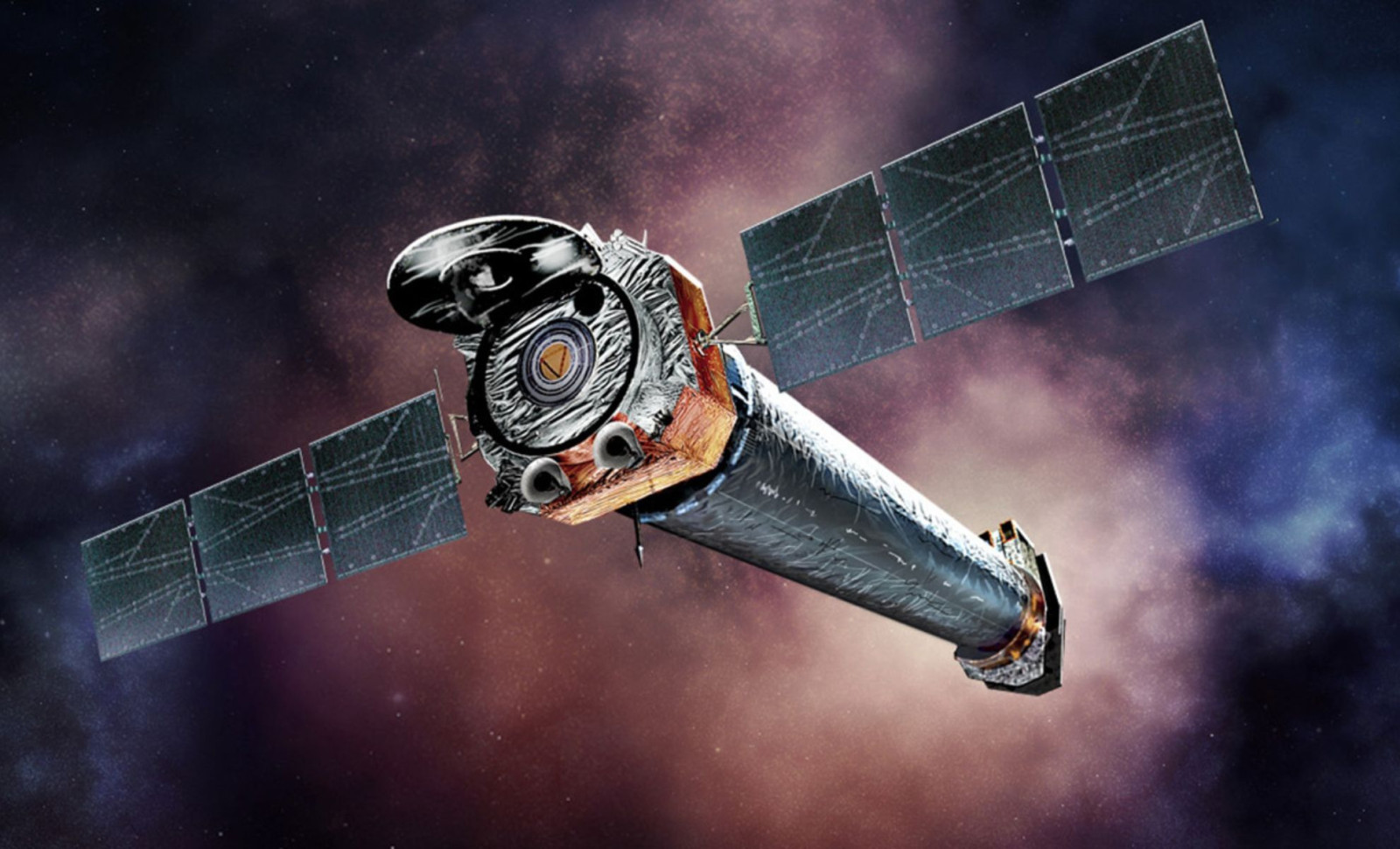
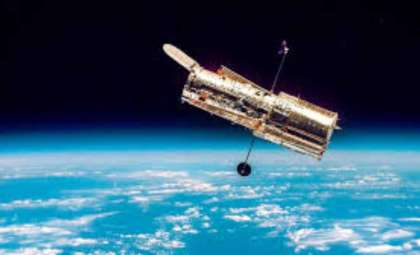
NASA has unveiled a remarkable time-lapse video documenting the transformation of Kepler’s Supernova Remnant — the remains of an intense stellar explosion. Using data collected by the Chandra X-ray Observatory over more than 25 years, this video offers a detailed perspective on the remnant’s expansion since the original supernova was observed in 1604. It stands as the longest-running video ever created from Chandra's observations, highlighting a significant achievement in studying stellar explosions.
Kepler’s Supernova Remnant is the cosmic debris left after a white dwarf star exceeded a critical mass and detonated in a Type Ia supernova. This specific event holds importance in astrophysics because Type Ia supernovae serve as key tools for measuring the universe’s expansion. Tracking this remnant over a quarter-century has given researchers critical clues about the aftermath of such explosions and their impact on stellar evolution.
Chandra’s Long-Term Observational Effort
NASA’s Chandra X-ray Observatory has continuously monitored Kepler’s Supernova Remnant for over 20 years, collecting vital X-ray data. This extensive dataset enables scientists to examine how the debris from the exploded star has shifted and expanded. Graduate student Jessye Gassel, who leads the research, explained:

Ever wonder what happens in the aftermath of a supernova?
— NASA (@NASA) January 6, 2026
In this video, you’re watching the glowing remnants of a stellar explosion disperse over a period of 25 years, making this @chandraxray’s longest-spanning video ever released. https://t.co/suIQHKdWM0 pic.twitter.com/Q3q5aietA3
“Kepler's story is just beginning to be uncovered,” she remarked. “It’s incredible to witness these fragments from the shattered star colliding with previously expelled material.”
The video assembles observations from the years 2000, 2004, 2006, 2014, and 2025, capturing the remnant’s changing form across multiple decades. This visualization vividly illustrates the expanding cloud of debris as it interacts with the surrounding cosmic medium.
Exploring the Expansion Speeds of the Remnant
The time-lapse reveals that various regions of the remnant are expanding at different velocities. NASA scientist Brian Williams notes that the fastest fragments reach speeds of up to 13.8 million miles per hour—around 2% of light speed—while slower parts move at approximately 4 million miles per hour, or 0.5% the speed of light. These speed variations are influenced by the density of the interstellar gas into which the remnant is expanding.
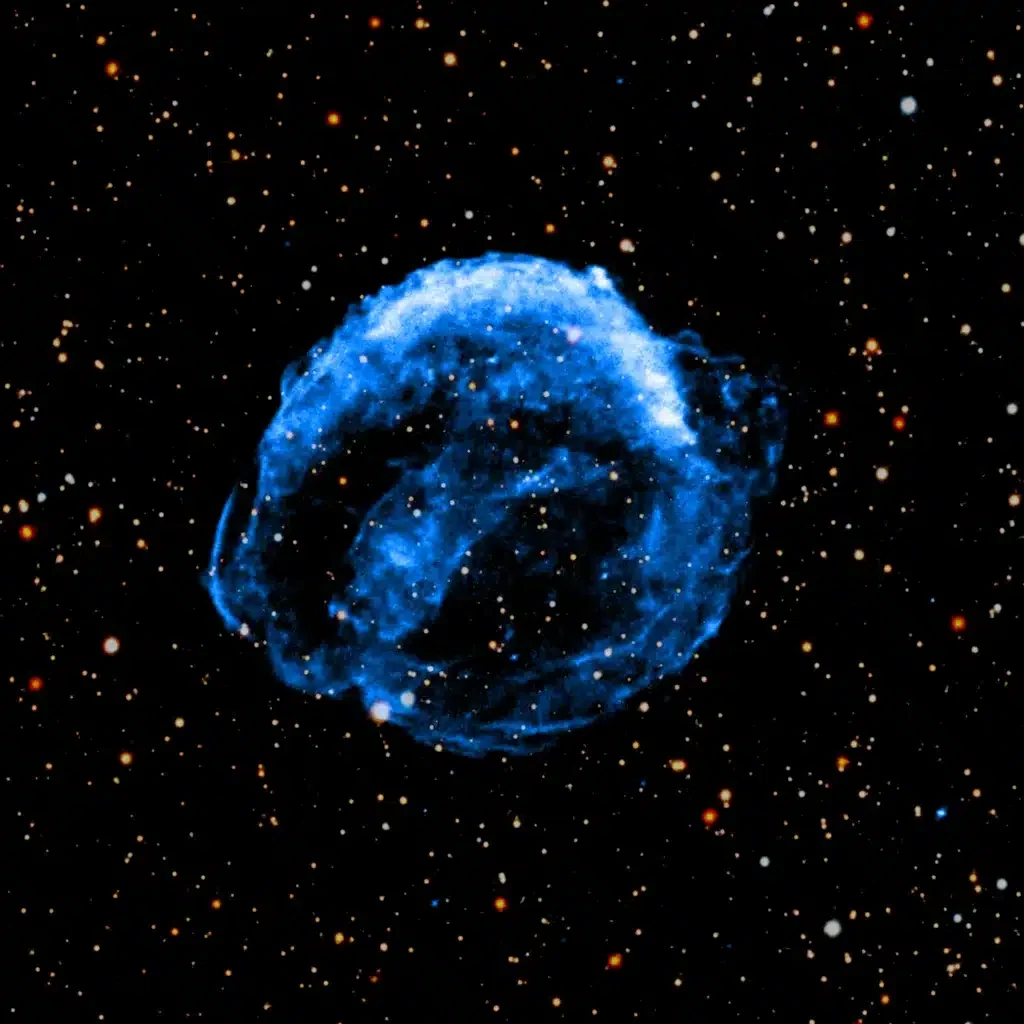
Observing these speed differences provides valuable information about the environment surrounding the original white dwarf explosion. This insight aids astronomers in understanding the interplay between supernova debris and the interstellar medium.
Supernova Remnants: Catalysts of Cosmic Change
Remnants like Kepler’s play a pivotal role in unraveling the complex life cycle of stars and the evolution of our cosmos. Principal investigator Brian Williams explains:
“Supernova explosions and the elements they hurl into space are the lifeblood of new stars and planets.” The elements ejected by the explosion of stars like Kepler’s are essential for the creation of new celestial bodies, as they provide the raw materials for the formation of future stars and planetary systems.
By analyzing the aftermath of a supernova, researchers can better comprehend the long-term influence these events have on their galactic neighborhoods. The X-ray observations gathered by Chandra over 25 years have been instrumental in revealing the behavior and impact of these remarkable leftovers.
- Categories:
- Space



0 comments
Sign in to Comment