
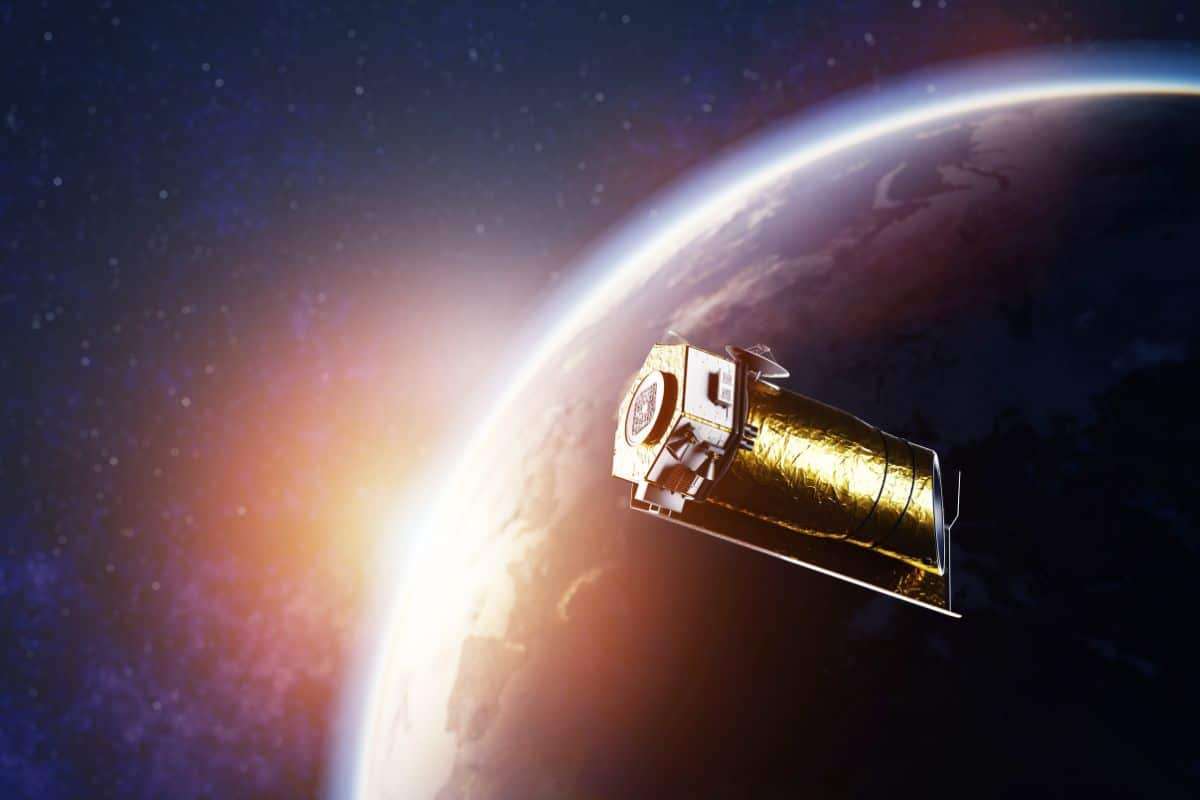
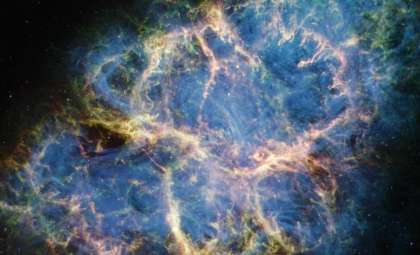
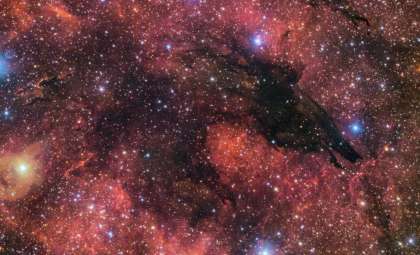
The Hubble Space Telescope has produced a stunning new image of the Veil Nebula, an immense supernova remnant that has been growing for over ten millennia.
This dazzling cloud is the aftermath of a colossal star, approximately 20 times heavier than the Sun, which exploded and left behind luminous strands of gas captured in this recent Hubble snapshot.
Situated in the Cygnus constellation at a distance of about 2,400 light-years from Earth, the Veil Nebula continues to be a vital subject in astrophysical research.
Capturing a Moment in Cosmic Transformation
Hubble’s latest image, taken with the Wide Field Camera 3 (WFC3), focuses on a limited section of the nebula, offering fresh insights into its changing structure.

This image emphasizes emissions from hydrogen, sulfur, and oxygen atoms, unveiling fine details of the nebula's glowing network.
Using three distinct filters to isolate these emissions, astronomers gain a clearer understanding of the complex gas interactions shaping the nebula.
Dimensions of an Expansive Nebula
Though this capture highlights a small part of the scene, it is a fragment of the much larger Veil Nebula, which extends over 50 light-years in breadth. To visualize this, the nebula spans an area roughly equivalent to placing six full Moons side by side.
The image allows scientists and viewers alike to appreciate both the breathtaking complexity and the enormous scale of this cosmic remnant. Overlay features help contextualize the full size of the nebula as it stretches across the sky.
Monitoring Gas Movement in the Remnant
Beyond its visual appeal, the fresh data is instrumental for scientific study. By comparing these observations with those taken by Hubble in 1994, researchers can monitor the displacement of individual gas knots and filaments over decades.
Such comparative analysis deepens understanding of how the nebula evolves, offering insights into shock waves and the interaction between ejected material and the interstellar environment following the supernova event.
Supernova’s Influence on Nebula Formation
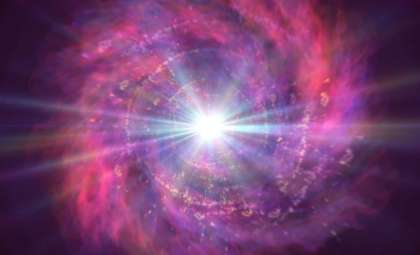
It is believed that the cataclysmic star explosion responsible for the Veil Nebula took place around 10,000 years ago. This supernova blast expelled the star’s outer layers violently into space, producing the expanding cloud of gas and dust visible today.
The Veil Nebula remains a crucial laboratory for studying how such remnants influence the interstellar medium and help seed the formation of new stars and planetary systems over cosmic timescales.
- Categories:
- Space





0 comments
Sign in to Comment