

NASA has introduced a novel alloy that promises to transform the design of space telescopes, providing unparalleled stability necessary to identify habitable exoplanets. This innovative material features a rare negative thermal expansion (NTE) property, enabling structures to maintain their shape and precision amidst extreme temperature shifts. Highlighted in NASA’s recent announcement, this advancement marks a major leap in the pursuit of planets beyond our solar system and the enhancement of space observation instruments.
Advancing Exoplanet Detection with Enhanced Telescope Stability
Central to NASA’s mission to explore life beyond Earth is the challenge of reliably detecting exoplanets capable of supporting life. By analyzing starlight filtered through distant planetary atmospheres, researchers can gain insight into their composition and habitability. While significant discoveries have emerged over the last twenty years, refining the technology to observe such remote worlds remains a formidable hurdle.
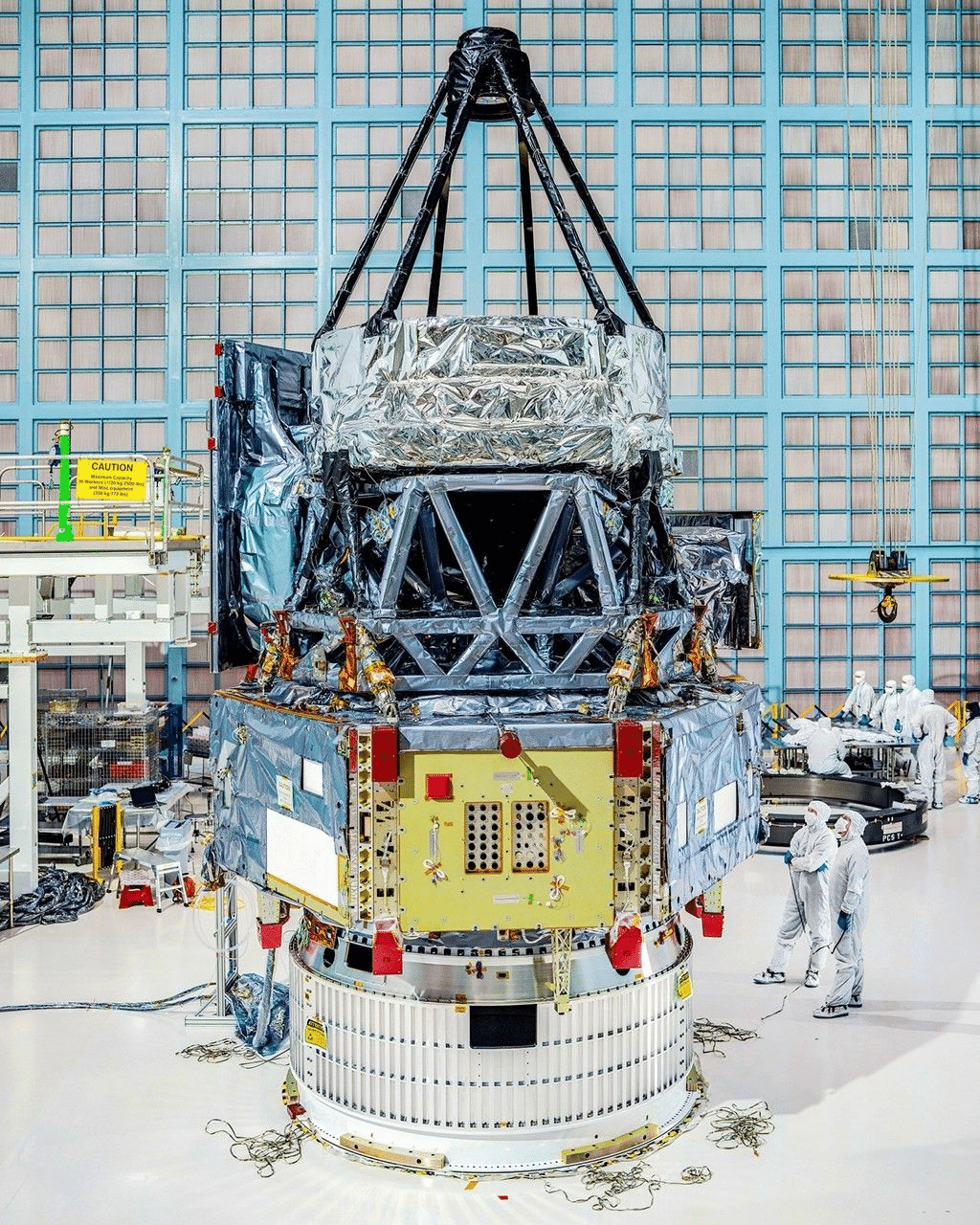
A chief technical challenge is maintaining extreme stability in observational equipment. Although telescopes like the James Webb have pushed boundaries, forthcoming missions such as the Habitable Worlds Observatory demand even more precise technology to detect Earth-sized planets. Achieving a contrast ratio of one to one billion requires revolutionary materials and engineering tailored for this delicate task.

Exploiting Negative Thermal Expansion for Telescope Precision
Traditional telescope materials suffer dimensional changes due to temperature fluctuations, expanding when heated and shrinking when cooled. These variations introduce distortions, compromising the accuracy of mirrors and components.
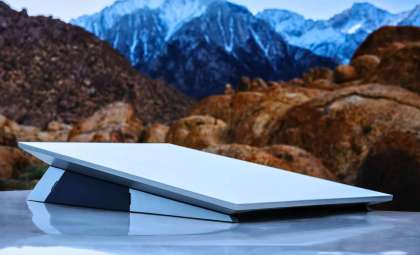
The ALLVAR Alloy 30 presents a groundbreaking alternative with its negative thermal expansion characteristics—it contracts upon heating and expands when cooled. This counterintuitive behavior enables the alloy to offset the expansion and contraction of standard materials within the telescope structure, dramatically boosting overall stability.
Collaborative Efforts to Validate the Alloy’s Performance
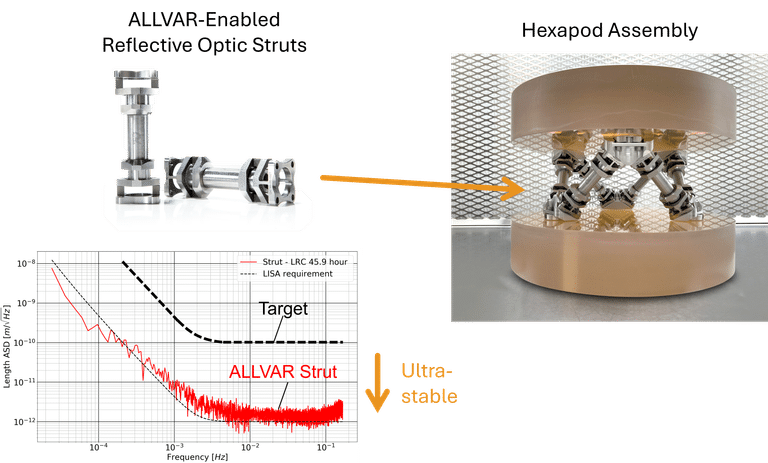
Collaborating with ALLVAR, a leader in advanced alloy technology, NASA developed a hexapod framework designed to hold mirror components with minimal thermal expansion. This arrangement neutralizes dimensional changes arising from temperature shifts, simulating conditions anticipated for the Habitable Worlds Observatory.
The experimental outcomes exceeded expectations, achieving thermal stability of just 11 picometers—well beneath the 100 pm target and nearing the observatory’s stringent 10 pm requirement, a scale one-tenth the diameter of an atom.
Transforming Space Exploration and Beyond with NTE Materials
Incorporating ALLVAR Alloy 30 in telescope construction could enhance thermal stability by a factor of 200 compared to conventional materials such as aluminum, titanium, and carbon fiber composites. This opens new possibilities for instruments capable of detecting distant exoplanets with unprecedented clarity.
Beyond astronomy, this alloy’s unique properties have already found applications in other NASA missions. It is integrated into the cryogenic components of the Nancy Grace Roman Space Telescope’s coronagraph, improving heat transfer efficiency. Additionally, it supports the Lunar Surface Electromagnetics Experiment-Night (LuSEE Night) aboard the Blue Ghost Mission 2 scheduled for lunar deployment.
- Categories:
- News







0 comments
Sign in to Comment