
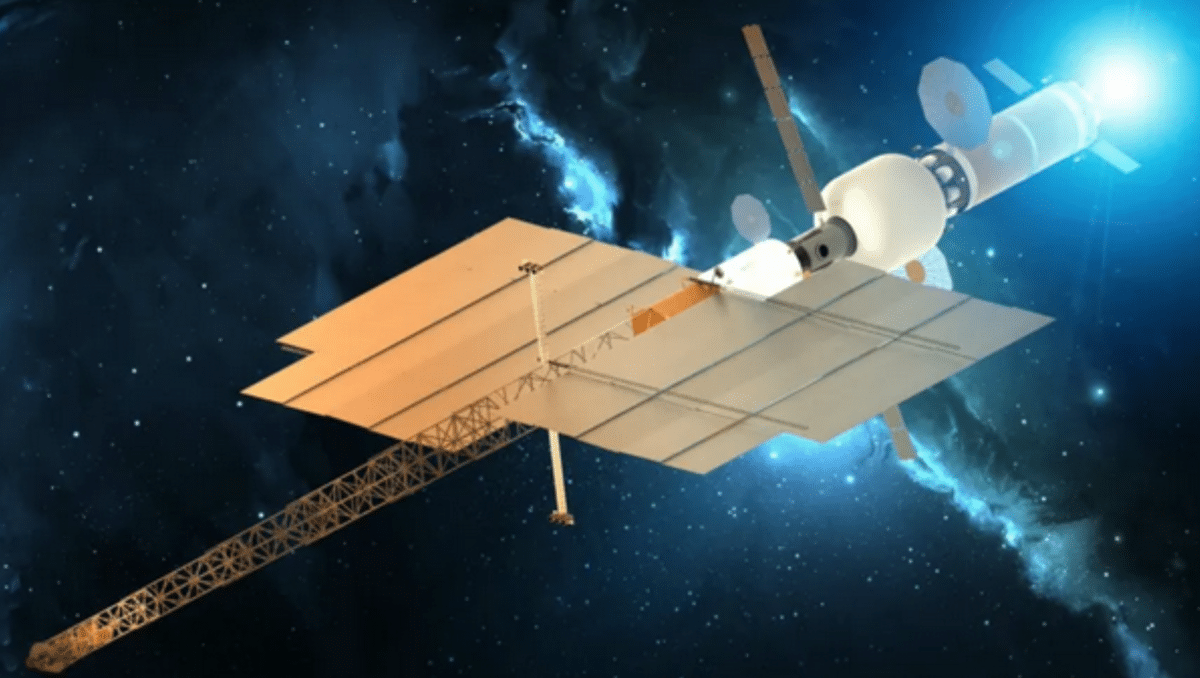
NASA is revolutionizing interplanetary travel with an audacious strategy to drastically reduce the journey time to Mars. The agency is developing a nuclear-powered spacecraft designed to complete the trip in merely 45 days. This challenging objective stems from an initiative launched under former President Donald Trump, who urged NASA to achieve human Mars landings within a four-year timeframe. Success in this venture could transform space exploration and bring the Red Planet closer than ever before.
Challenges Slowing Down Mars Expeditions
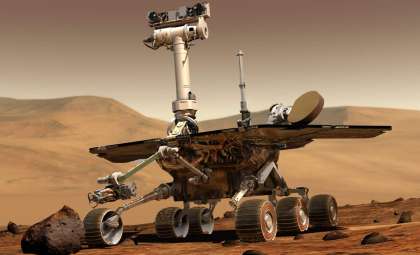
Trips to Mars have traditionally required extended durations. For example, the Perseverance rover’s voyage lasted approximately seven months. Traveling near 24,233 mph, it had to depart during a specific launch window when Earth and Mars were optimally aligned, an opportunity that arises only every 26 months. Although effective, this approach underscores the limitations of current propulsion technologies and the necessity for innovation.
The issue goes beyond trip length. Unlike the swift Apollo lunar missions, Mars missions cannot be brief. After landing, astronauts must wait for Earth and Mars to realign for their return journey; otherwise, the distance to cover increases dramatically from about 37,282,271 miles to a daunting 248,548,477 miles.

Obstacles of Extended Space Travel
Prolonged spaceflights pose significant risks. Crew members face potentially harmful solar cosmic radiation and health complications from extended weightlessness and confinement. Additionally, ensuring sufficient food supplies remains a critical concern. Traditional rocket fuel proves inefficient due to its heavy weight relative to the thrust it provides.
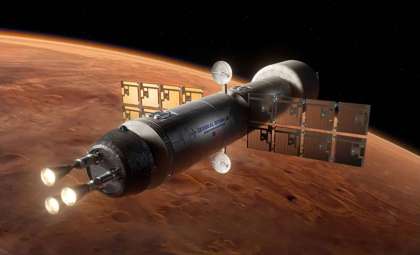
NASA’s Langley Research Center in Hampton, Virginia is investigating Nuclear Electric Propulsion (NEP) technology to address these challenges. NEP operates by ionizing propellant to produce a modest initial thrust that builds over time. This method could achieve velocities surpassing 37,282 mph, marking a breakthrough for future missions.
Introducing MARVL: Advancing Spacecraft Design
Central to NASA’s effort is the MARVL initiative, focused on spacecraft equipped with advanced heat dissipation mechanisms like extensive radiators. Two spacecraft configurations are being considered: the Quad-Wing and Bi-Wing designs. The Quad-Wing fits into the Space Launch System (SLS) rockets used in the Artemis program but demands more fuel due to its complexity and size. Conversely, the Bi-Wing model would be assembled in orbit following multiple commercial launches and is favored for its simpler structure.
Orbital assembly is a proven concept demonstrated by the International Space Station (ISS), which spans the size of a football field. For MARVL, robotic systems would carry out construction duties while operating in microgravity around Earth.
When Can We Expect to See This Technology?
NASA aims to develop a demonstration prototype of this cutting-edge spacecraft within the next two years, signaling a determined effort to advance human space exploration boundaries.
Reflecting on this vision, it recalls a witty remark by a former French president who described Mars as “‘beautiful,’ but ‘it’s far.’” With these groundbreaking endeavors, Mars might soon feel less distant.
This project epitomizes NASA’s unwavering commitment to pushing the envelope of human space travel and invites us to contemplate the vast possibilities beyond our planet and the timetables in which we may reach them.
- Categories:
- Nasa






0 comments
Sign in to Comment