
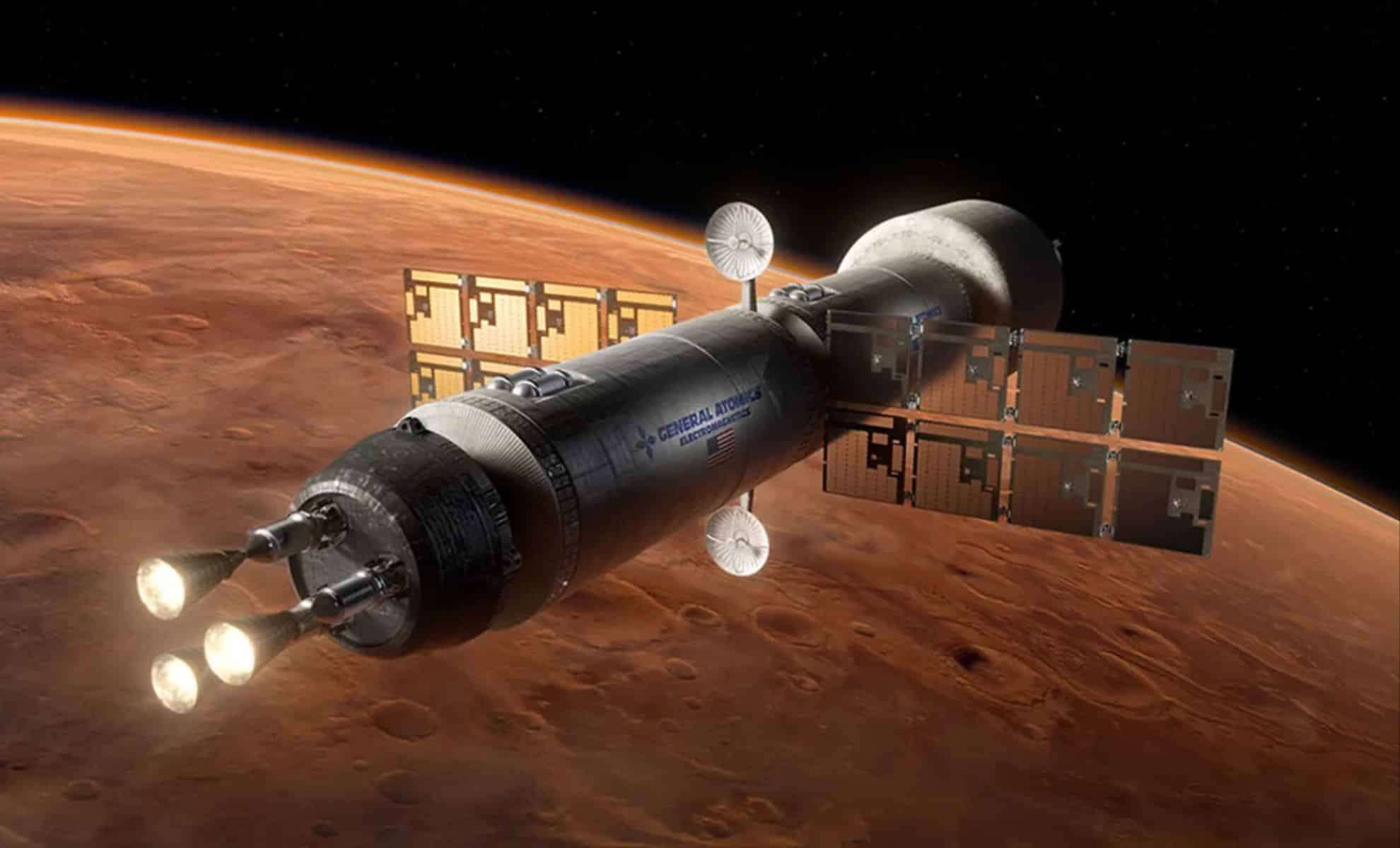
NASA has reached a pivotal breakthrough by successfully testing cutting-edge nuclear thermal propulsion (NTP) fuel at the Marshall Space Flight Center (MSFC). Developed in partnership with General Atomics Electromagnetic Systems (GA-EMS), this technology promises to dramatically shorten manned mission durations to Mars—from around six months to a mere 45 days. Such a reduction holds significant benefits for astronaut safety, mission complexity, and the feasibility of deep-space exploration.
Understanding Nuclear Thermal Propulsion
NTP technology operates on principles far more efficient than traditional chemical rockets. As described by the US Office of Nuclear Energy, “NTP systems function by channeling a liquid propellant, typically hydrogen, through a nuclear reactor core. Inside, uranium atoms undergo fission, releasing heat that converts the propellant into high-velocity gas expelled to create thrust.”
This method enables spacecraft to travel at speeds two to three times greater than chemical propulsion can achieve, making it a revolutionary approach for lengthy space missions.

NASA’s Compact Fuel Element Environmental Test (CFEET) facility recently subjected the fuel to intense conditions mimicking deep space: rapid temperature fluctuations in hydrogen-rich environments exceeding 2,727°C (4,940°F). These tests ensured the fuel's durability in extreme operational circumstances.
Overcoming Mars Mission Challenges
The vast distance between Earth and Mars—averaging 140 million miles—poses enormous obstacles for human travel. Conventional chemical rockets require about six months one-way, presenting issues such as prolonged cosmic radiation exposure, equipment failure risks, and limited medical support.
A NASA statement noted, “With communication delays of up to 20 minutes each way, astronauts must be prepared for emergencies and resource rationing with limited assistance from Earth-based teams.”
Implementing NTP could cut transit time to roughly 45 days, significantly lowering exposure to hazards and reducing logistical complications, thereby increasing mission viability and crew safety.
Validating NTP Fuel Performance
The joint NASA and GA-EMS test series marked a major step towards validating NTP fuel's resilience. Scott Forney, president of GA-EMS, stated, “These test outcomes are a vital confirmation that the fuel can endure the punishing high temperatures and hydrogen gas conditions experienced during space operations. This brings us closer to realizing dependable nuclear thermal propulsion for deep-space travel.”
Dr. Christina Back, GA-EMS Nuclear Technologies and Materials VP, added, “We are likely the first company to utilize NASA MSFC’s CFEET facility to confirm fuel survival under thermal cycling in hydrogen at representative temperatures and rates.”
Additional tests in non-hydrogen settings at GA-EMS’s laboratories further confirmed exceptional fuel stability at temperatures up to 3000 K (2,727°C, 4,940°F), supporting NTP systems’ enhanced efficiency over chemical engines.
Opening New Horizons in Space Travel
The advancement of NTP fuel signifies a transformative leap in space propulsion. With higher speeds and improved efficiency, nuclear thermal propulsion broadens the scope of missions possible within our solar system. Scott Forney emphasized ongoing collaboration, stating, “We look forward to continuing work with NASA to refine fuel capabilities for future cislunar and Mars mission designs.”
This technology may also accelerate exploration beyond Mars, facilitate human settlements on the Moon and Mars, and boost cargo capacity, helping realize long-term plans for human expansion into space.
Next Directions
While highly promising, NTP technology requires additional development to be mission-ready. NASA is partnering with industry leaders like GA-EMS to optimize and fully qualify NTP systems for operational deployment. Upcoming initiatives such as the Artemis program and the planned Mars missions in the 2030s could benefit greatly from these innovations.
As NASA pushes the envelope of propulsion technology, the dream of rapid, safe, and efficient interplanetary journeys grows ever closer. The successful demonstration of NTP fuel marks a critical technical achievement and a momentous advance toward humanity’s exploration of the stars.
- Categories:
- Nasa











0 comments
Sign in to Comment