

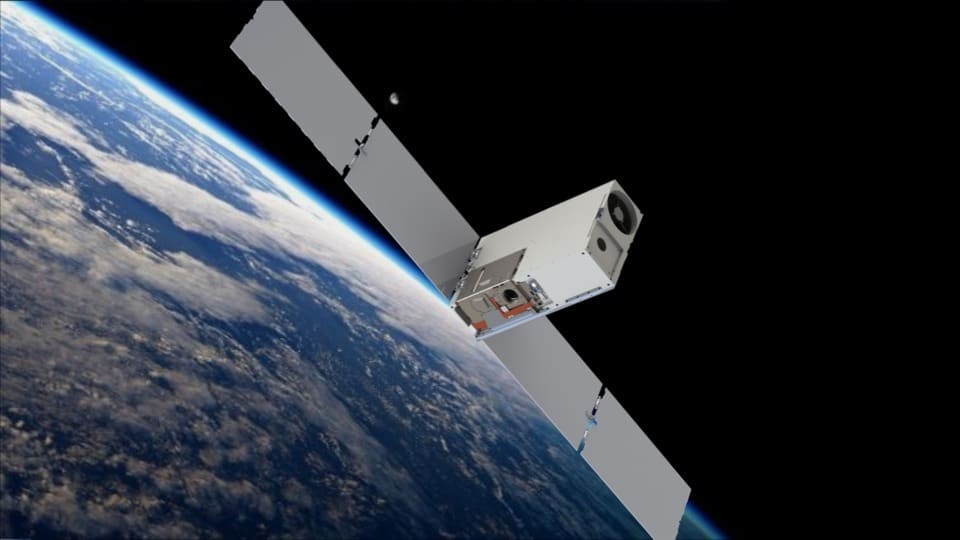
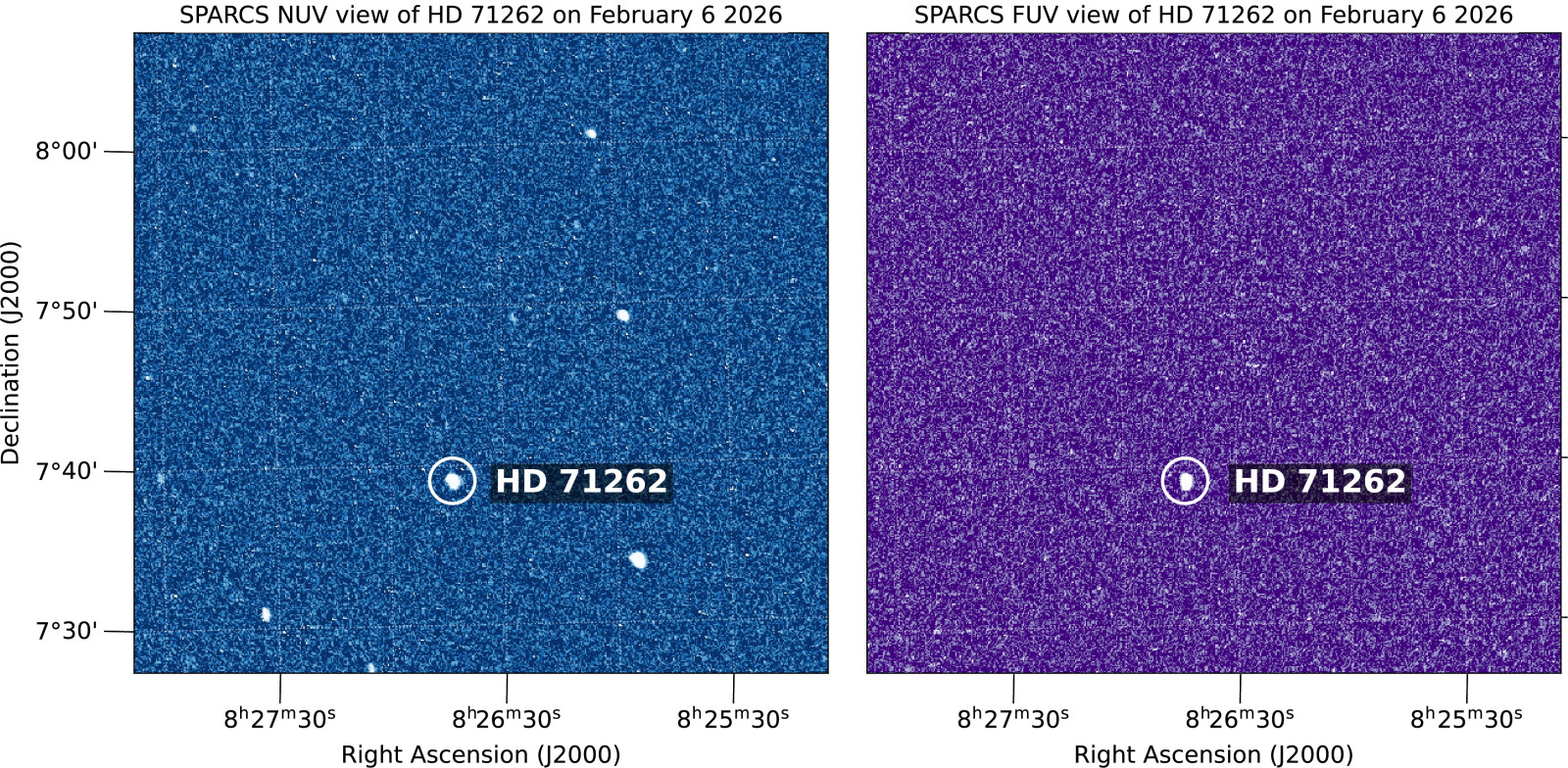
The SPARCS spacecraft, a NASA mission, has transmitted its inaugural images, marking a significant step in exploring low-mass stars and their capacity to support habitable planets. Launched in January 2026, SPARCS is entering its primary phase: tracking the dynamic activity of some of the Milky Way's most prevalent stars to uncover how such activity may influence their surrounding planets. These initial images herald the start of what promises to be a pioneering journey into understanding faraway stellar systems.
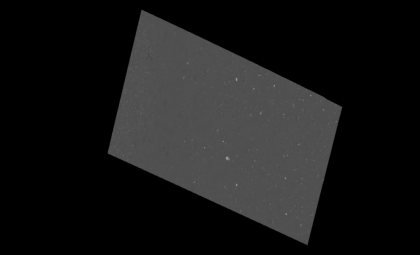
SPARCS, an acronym for Star-Planet Activity Research CubeSat, represents the inaugural mission focused on persistent ultraviolet (UV) monitoring of low-mass stars. These stars, which are smaller and cooler than the Sun, frequently emit flares, and their energetic behavior can greatly affect nearby planets. The early February 2026 images demonstrate that SPARCS’ instruments are functioning optimally and primed for full scientific operations.
A New Approach to Investigating Low-Mass Stars
Low-mass stars comprise the majority of the Milky Way's stellar population. Although they are less bright and much smaller than the Sun, they dominate the galaxy and often host planets within their habitable zones—regions where liquid water might survive. Gaining insight into their typical behavior, especially their regular flare events and sunspot phenomena, is crucial to determining whether their orbiting planets have conditions suitable for life.

Evgenya Shkolnik, SPARCS’ principal investigator, confirmed that the spacecraft is successfully capturing ultraviolet emissions from these stars as designed.
“Seeing SPARCS’ first ultraviolet images from orbit is incredibly exciting,” Shkolnik said. “They tell us the spacecraft, the telescope, and the detectors are performing as tested on the ground and we are ready to begin the science we built this mission to do.”
Cutting-Edge Equipment Aboard SPARCS
Among the mission’s standout features is SPARCS’ advanced detection technology. It is fitted with UV-sensitive sensors specially designed for detailed observation of low-mass stars’ ultraviolet emissions.
These silicon-based detectors, akin to those found in smartphone cameras but fine-tuned for ultraviolet light, provide enhanced sensitivity. This capability enables SPARCS to capture precise images and minimize interference from other wavelengths.
Shouleh Nikzad, lead engineer for the SPARCS camera at NASA’s Jet Propulsion Laboratory, highlighted that the filters are integrated directly into the detectors, increasing the system’s responsiveness and eliminating extra filter components.
“I am so excited that we are on the brink of learning about exoplanets’ host stars and the effect of their activities on the planets’ potential habitability,” Nikzad said.
The Road Ahead for SPARCS
Over the coming year, SPARCS will monitor roughly 20 low-mass stars with observation windows lasting from five to 45 days. The mission aims to analyze how their stellar flares and energetic episodes influence the atmospheres and possible habitability of exoplanets in orbit.
The gathered data will deepen scientific understanding of these remote stellar environments and their role in shaping conditions on orbiting worlds. SPARCS is a component of NASA’s CubeSat Launch Initiative, fostering more affordable opportunities for space exploration. David Ardila, instrument scientist on the SPARCS team at JPL, commented
“By watching these stars in ultraviolet light in a way we’ve never done before, we’re not just studying flares. These observations will sharpen our picture of stellar environments and help future missions interpret the habitability of distant worlds.”
- Categories:
- Nasa





0 comments
Sign in to Comment