

The James Webb Space Telescope (JWST) from NASA has uncovered an extraordinary cosmic formation—a question mark shape created by the gravitational interplay of two distant galaxies.
Observed within the expansive galaxy cluster MACS-J0417.5-1154, this rare phenomenon sheds light on the complex mechanisms behind galaxy evolution and the nascent stages of galactic encounters. The discovery highlights the astonishing effects of gravitational lensing combined with Webb’s outstanding observational precision targeting remote galaxies.
Gravitational Lensing: Crafting the Cosmic Question Mark
The distinctive question mark shape captured stems from a process called gravitational lensing, where the strong gravitational pull of a massive object, like a galaxy cluster, bends space-time and thereby warps the light from even farther galaxies behind it. This bending magnifies and distorts those background galaxies, often producing multiple stretched images. In this instance, a fortuitous alignment between galaxies, cluster, and observer resulted in this iconic cosmic punctuation mark.

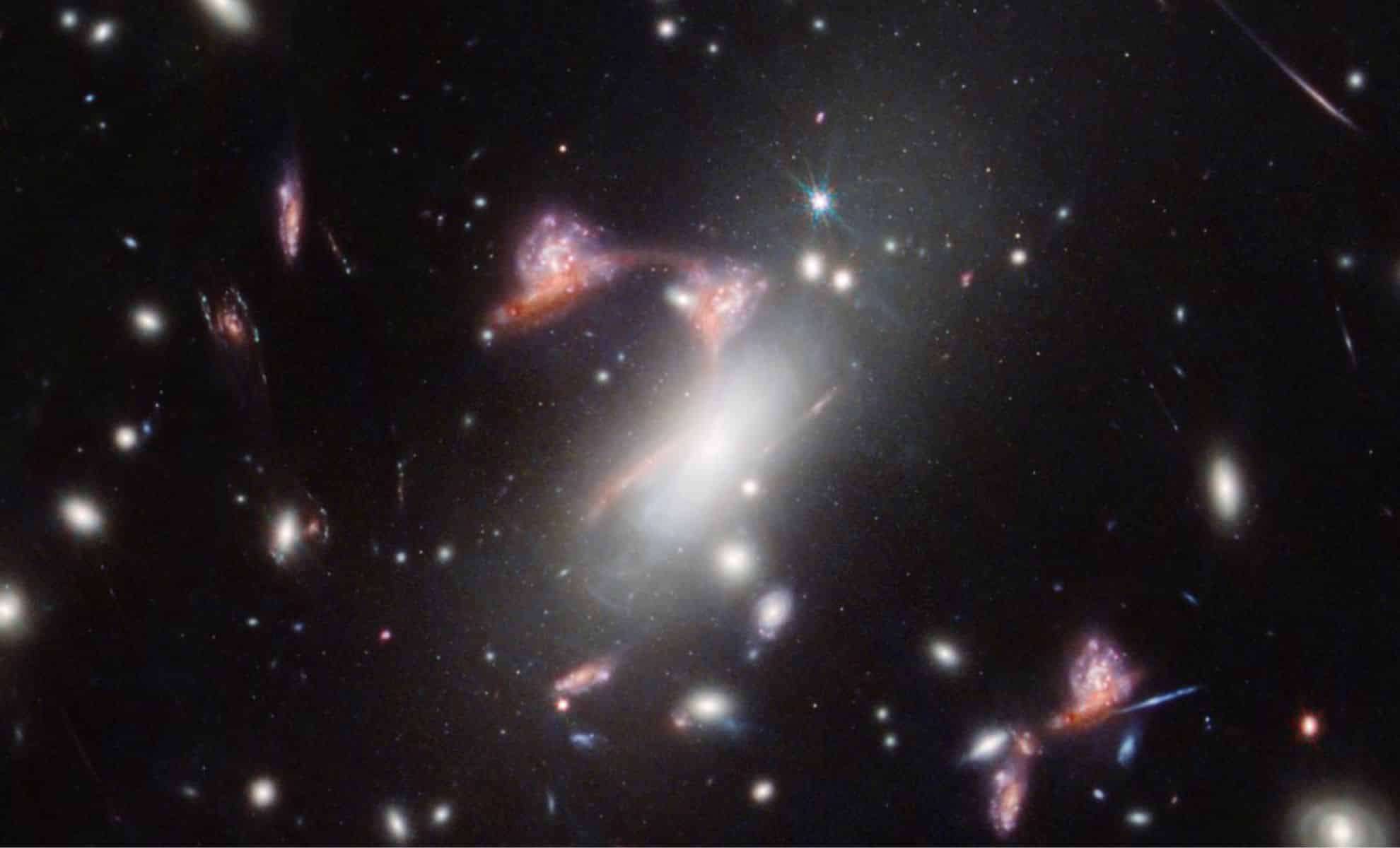
“Only a handful of such gravitational lensing patterns have been recognized across the observable universe, making this find particularly remarkable,” stated Guillaume Desprez of Saint Mary’s University in Nova Scotia, part of the research team unveiling Webb’s results. The phenomenon, a hyperbolic umbilic gravitational lens, amplified two interacting galaxies fivefold, curving their light to form the question mark’s shape. A third, unrelated galaxy aligned perfectly to create the punctuation’s dot.
Beyond its visual appeal, this lensing effect is a powerful scientific tool, enabling astronomers to study galaxies that are otherwise too remote or dim to detect. Gravitational lensing serves as a natural cosmic lens, magnifying and revealing details deep from billions of light-years away.
Galactic Interactions: Insights into Early Galaxy Mergers
The interacting galaxies behind the question mark lie billions of light-years distant, offering key clues about the dynamics during early galactic collisions. JWST’s instruments, including the NIRCam and NIRISS, reveal these galaxies in the first phases of merging. As their gas and dust clouds collide, they ignite concentrated regions of vigorous star formation.
“Both galaxies in the question mark system exhibit bursts of star birth in tight clusters, likely triggered by their colliding gaseous material,” explained lead scientist Vicente Estrada-Carpenter from Saint Mary’s University. This collision-driven star formation marks an important evolutionary stage. Though merging has started, their original shapes remain fairly intact, indicating a relatively young interaction.
This galactic encounter resembles a formative period thought to have occurred in our own Milky Way Galaxy billions of years ago. “These galaxies, observed in an epoch when star production peaked, have masses similar to what the Milky Way had back then,” noted team member Marcin Sawicki. This offers a rare peek into processes that shaped galaxies, including our own, during their early growth.
Infrared Vision of Webb: Peering Through Cosmic Dust
Webb’s ability to observe in infrared light was key to this breakthrough. Previous images of MACS-J0417.5-1154 from the Hubble Space Telescope had exposed some galaxy details, but much light was obscured by dust. JWST’s infrared instruments pierced through these clouds, unveiling the red, dusty galaxy forming the arc of the question mark.
“It’s visually stunning—images like this sparked my passion for astronomy early on,” remarked Sawicki, underscoring the excitement Webb’s unprecedented precision brings. The image exemplifies Webb’s superior sensitivity and resolution, revealing objects once hidden and illuminating the distant universe’s structural and evolutionary facets.
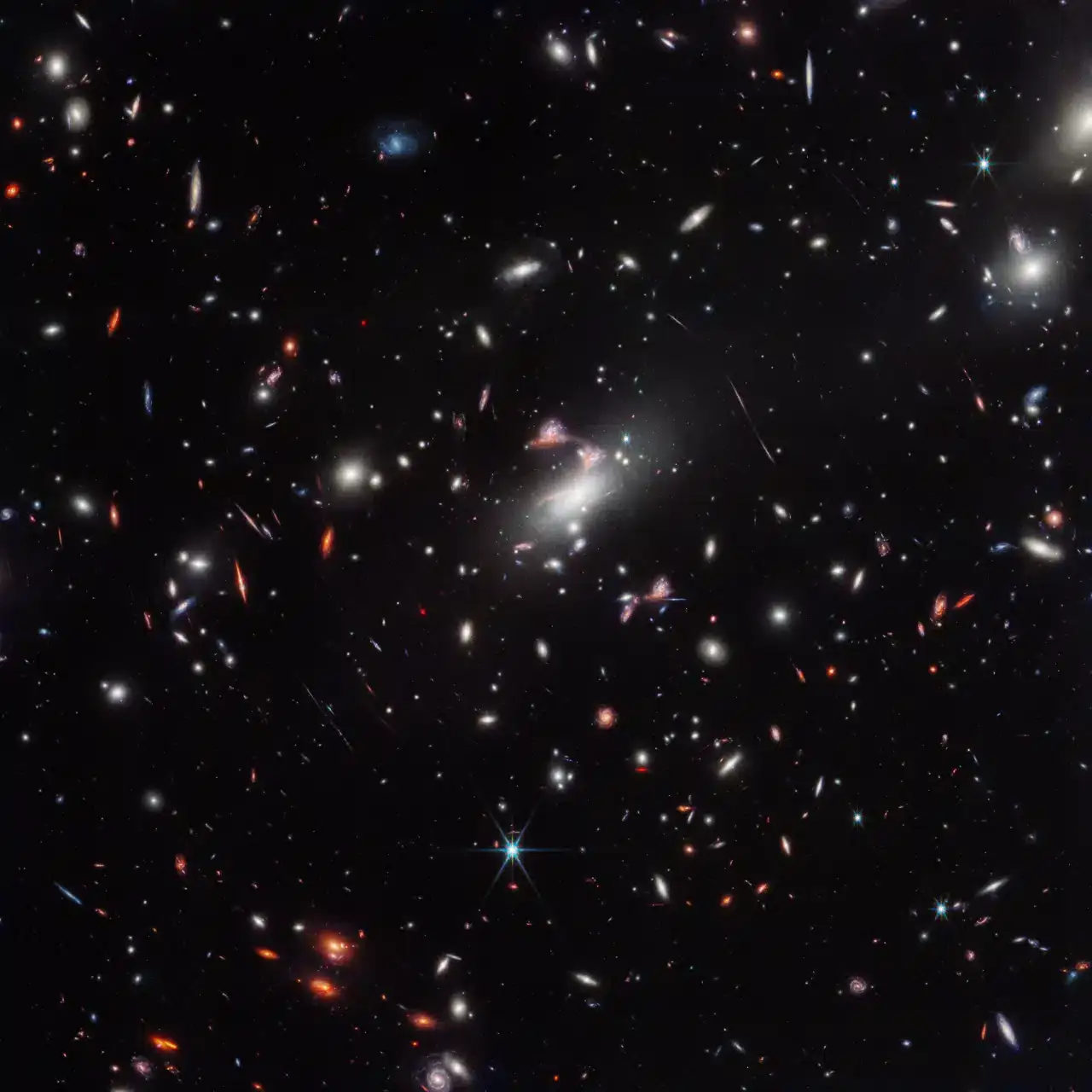
NASA highlighted that Webb’s infrared range allows the detection of the faint glow from ancient galaxies formed near the period when cosmic star formation began to wane. Data from NIRCam and NIRISS observations will aid astronomers in decoding how dust and gas influence galaxy formation and change. “Webb’s infrared sight opens views of galaxies that were previously unreachable, advancing our understanding of galaxy growth over billions of years,” a NASA spokesperson shared.
Implications for Galaxy Evolution Research
This cosmic question mark discovery also carries important implications for unraveling galaxy evolution. The galaxies studied date back to when the universe was roughly 7 billion years old, midway through its current lifetime and a phase where star formation was beginning to slow. Exploring these remote galaxies and their interactions helps scientists understand galaxy development, especially during merger-driven star formation spurts.
“Establishing the timing and location of star formation within galaxies is essential to piecing together galaxy evolution throughout cosmic history,” explained Estrada-Carpenter. As galaxies collide and merge, gravitational forces reshape their structures, sparking fresh bursts of star formation and possibly feeding central supermassive black holes. These interactions are thought to significantly influence the growth of major galaxies like the Milky Way.
The insights gained here will refine models of galaxy formation and development, offering a clearer view of the cosmic processes that have governed galaxy growth over immense time spans.
- Categories:
- Astronomy ,
- News ,
- Space ,
- Nasa





0 comments
Sign in to Comment