
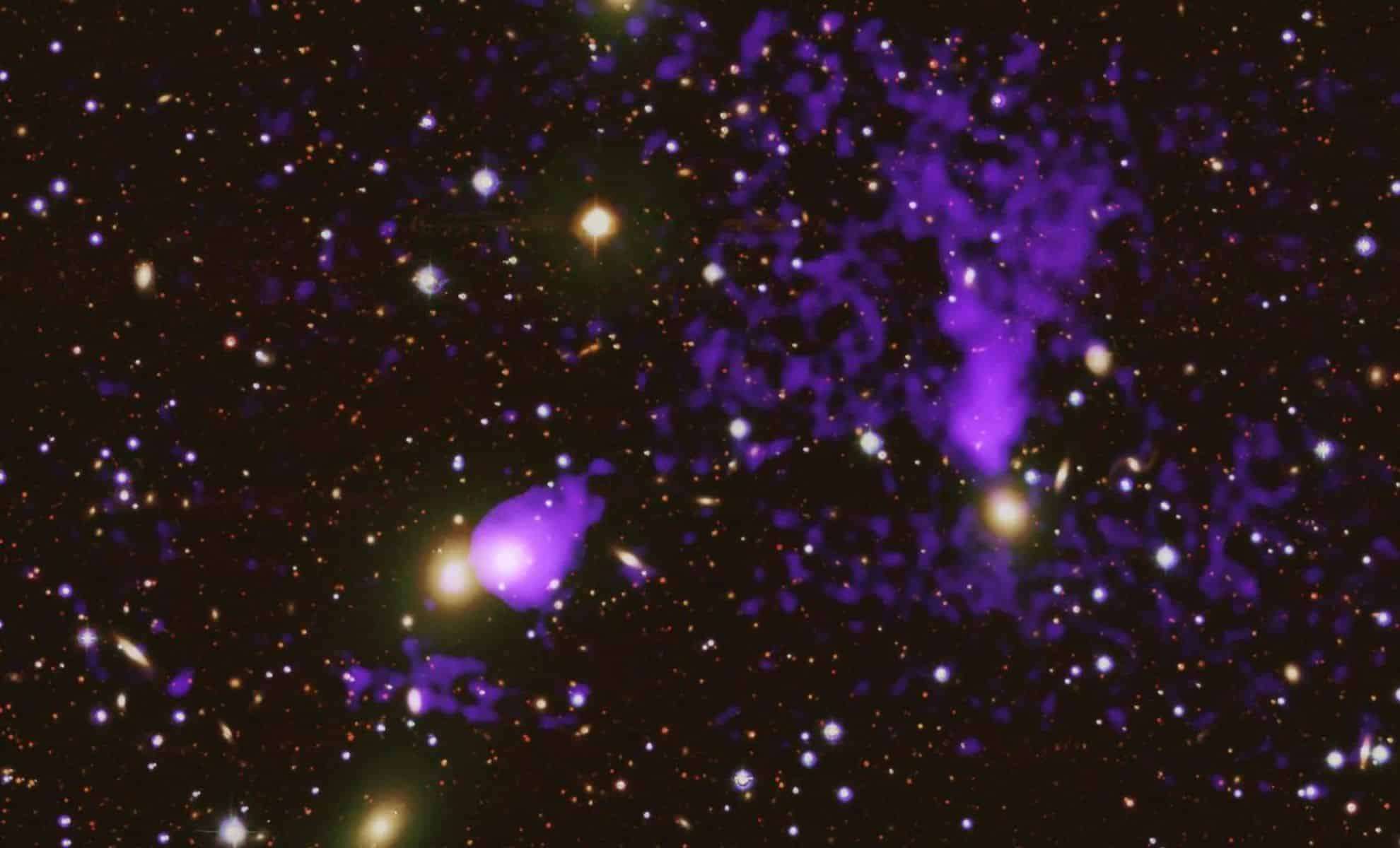
Researchers utilizing NASA's Chandra X-ray Observatory have identified a remarkable feature within the galaxy cluster Zwicky 8338 (Z8338).
Situated approximately 670 million light-years away, this cluster hosts two intersecting flows of extremely hot gas, an uncommon and intricate occurrence that enhances our understanding of galaxy cluster development. This phenomenon offers valuable clues about the interactions among galaxies and the enveloping hot plasma, crucial for comprehending galaxy growth and transformation on a cosmic scale.
Unveiling Altered Galaxy Streams in Zwicky 8338
Detailed observations of Z8338 uncovered an immense tail of heated gas, extending over 1.6 million light-years, trailing behind one of the cluster’s galaxies. This gas tail formed as the galaxy moved rapidly through the surrounding plasma, losing gas due to the pressure exerted by its swift passage. What sets this discovery apart is the tail's division into two separate streams, a rarity in such cosmic environments.

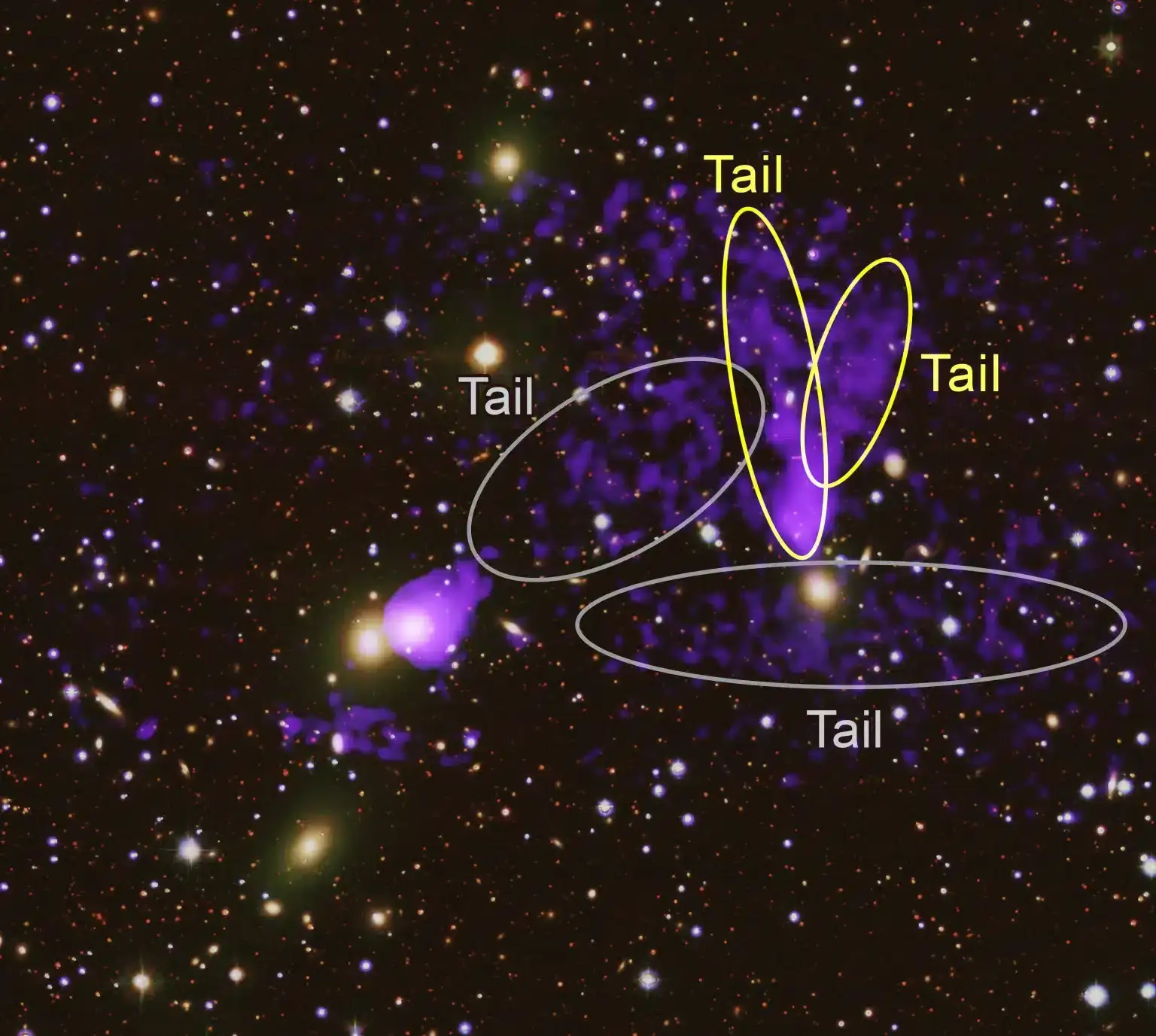
This newly seen extensive tail complements an earlier detection of a pair of shorter gas tails originating from another galaxy within the same cluster. These revelations were made possible through Chandra’s deeper X-ray data, enabling the detection of faint emissions from the gas streams. NASA scientists propose these streams are generated by strong galactic interactions as they traverse the cluster, fragmenting the gas into multiple channels.
Chandra’s observations revealed a dense network of galaxies, superheated gas, and shock fronts, all confined within a compact section of space. It is believed these gaseous tails result from the turbulent collision of two galaxy clusters that formed Z8338, generating chaotic forces that strip gas and stretch it into elongated, comet-like structures.
The Importance of Intersecting Gas Flows
The overlapping superheated gas streams in Z8338 have significant implications for understanding the behavior of galaxy clusters. Galaxy clusters are the universe's largest gravitationally linked formations, consisting of thousands of galaxies combined with vast reservoirs of hot gas. When they collide, shock waves similar to sonic booms travel through the medium, leading to complex gas interactions.
In Z8338, scientists have recorded direct evidence that these collisions cause gas flows to cross paths and separate from their host galaxies. The interaction where one galaxy’s gas trail intersects with another’s tail appears to drive the formation of these dual streams. Such mechanisms likely influence the cluster’s overall evolution by dispersing gas widely and potentially sparking the birth of new stars and planetary bodies.
NASA researchers highlighted that the cooler gas clouds found at the forefront of the separated tail can survive for over 30 million years after detachment. During this period, these clouds may condense, leading to the creation of new stars and planetary systems, marking this observation as essential for grasping galaxy lifecycles within clusters.
Multi-wavelength Data Enhances Understanding
The analysis from Chandra was complemented by optical observations from the Dark Energy Survey, conducted at the Cerro Tololo Inter-American Observatory in Chile. This combination of datasets provided a detailed picture of the cluster, showcasing both the hot gas distribution and the galaxies themselves. The X-ray imagery traced the gas being removed from galaxies, while optical data highlighted the galaxies’ locations.
In the combined images of Z8338, the heated gas manifests as purple streaks, while galaxies shine as vibrant red and yellow points scattered throughout the field. This synthesized view allows astronomers to track the entire sequence of gas stripping, stream interaction, and tail evolution in unprecedented depth.
A notable feature visible in the X-ray data is an original gas tail approximately 800,000 light-years in length, appearing as a vertical structure. This feature consists of cool gas stripped from a large galaxy moving through the cluster, with the tail's front now roughly 100,000 light-years away from the galaxy's core, underlining the scale of gas loss caused by these environments.
Impacts on Understanding Galaxy Cluster Growth
The identification of intersecting gas streams in Z8338 enriches knowledge not just about this cluster but also about the broader processes of galaxy cluster evolution. These massive structures are dynamic, with galaxies continually interacting and exchanging material with the surrounding intracluster medium. These exchanges strip gas, redistribute matter, and influence where and how new stars are likely to form.
Results from Z8338 imply that crossing gas flows might be a frequent phenomenon within merging clusters, shaping their structure significantly. Investigating these processes helps scientists understand the growth and transformation of clusters over billions of years and how galaxies lose their star-forming fuel as they journey through these dense cosmic environments.
This research also highlights how turbulent motions within galaxy clusters can generate new formations, laying the groundwork for future stellar and planetary systems. As the Chandra X-ray Observatory continues to observe additional clusters, astronomers aim to uncover more examples of these intriguing processes, piecing together the evolutionary story of the cosmos’ largest assemblies.
- Categories:
- Astronomy ,
- News ,
- Nasa




0 comments
Sign in to Comment