
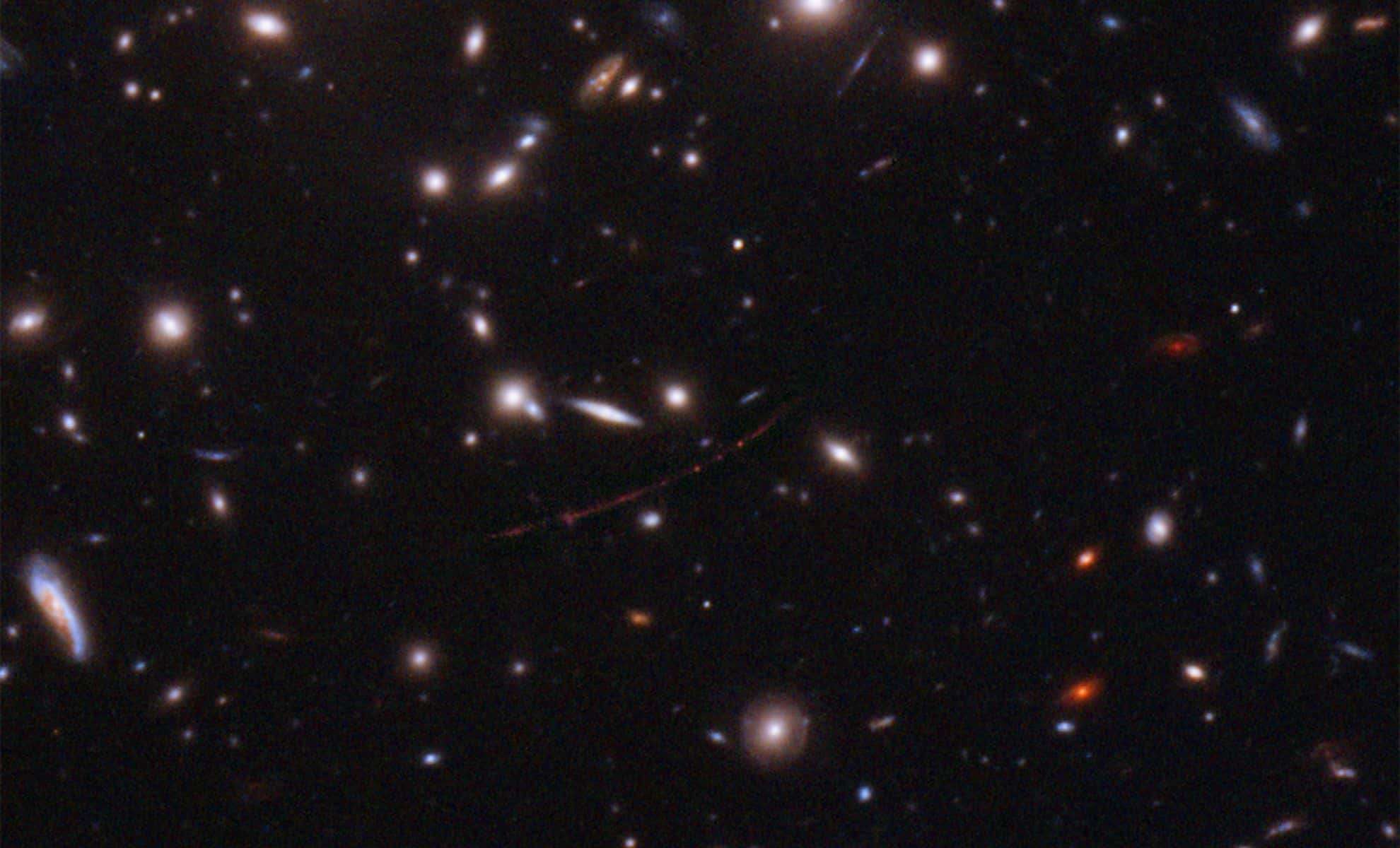
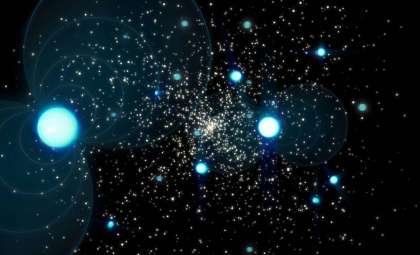
The James Webb Space Telescope (JWST) has brought a surprising new perspective on Earendel, once hailed as the most distant individual star known. Originally identified as a solitary massive star located roughly 12.9 billion light-years away, Earendel’s identity is now being reconsidered. According to a recent paper published in The Astrophysical Journal, Earendel might actually be a compact cluster of stars formed together from the same clouds of gas and dust. Using the enhanced observational power of JWST, astronomers have gained new insights into this cosmic relic, raising compelling questions about the earliest star formations in the universe’s infancy.
The groundbreaking discovery of Earendel by the Hubble Space Telescope in 2022 was a landmark event. Detected as a luminous point dating back to a time just 900 million years after the Big Bang, Earendel initially appeared as a single star shining with about a million times the luminosity of our Sun. However, enhanced spectral observations from JWST have introduced the intriguing possibility that Earendel is instead a globular star cluster—dense, ancient assemblies of stars commonly seen in today’s universe. These findings reshape our understanding of early stellar systems, though additional investigation is required to confirm this scenario.
Reexamining Earendel Through JWST’s Lens
Initial Hubble data indicated Earendel might be an isolated giant star with extraordinary brightness. Yet, new spectroscopic evidence from JWST’s Near Infrared Spectrograph (NIRSpec) reveals more complex details. The telescope’s precision allowed astronomers to dissect the light from Earendel, comparing its spectral signature with known globular clusters, which are invaluable keys to understanding ancient cosmic environments.

Massimo Pascale, a doctoral candidate at the University of California, Berkeley and lead author of this study, explained in an email to Live Science, “If Earendel is truly a star cluster, that fits well with existing models of how the globular clusters we observe nearby today might have looked during the cosmos’s first billion years.”
The Role of Gravitational Lensing in Revealing Earendel
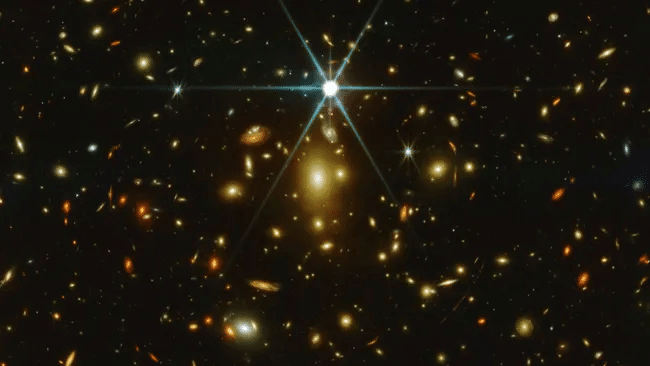
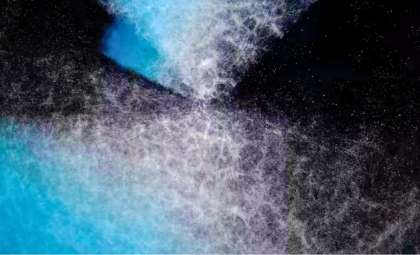
Observing Earendel at such a vast distance was made possible through gravitational lensing, a phenomenon predicted by Einstein’s general relativity. Massive galaxy clusters between Earth and Earendel bend and magnify its light, functioning like a powerful cosmic magnifier. This effect amplified Earendel’s brightness by a factor of about 4,000 and distorted its apparent size, which led astronomers to reconsider whether they were observing a single star or something more elaborate.
This rare alignment is invaluable for probing distant objects yet complicates data interpretation. The distortion encouraged researchers to entertain the notion that Earendel could be a star cluster, prompting more targeted analysis.
Investigating the Star Cluster Possibility
The reassessment of Earendel’s nature derives from its spectral characteristics, including its age and metallicity. JWST’s data show similarities between Earendel’s light and that of local globular clusters—ancient, compact star groups that contain hundreds of thousands of stars formed from the same primordial material. Such a structure aligns with the expected properties of early-universe stellar populations.
Pascale emphasized, “Discovering that Earendel might be larger than originally thought encouraged us to consider the star cluster explanation seriously.” His team proposes that Earendel’s measured size and composition are compatible with it being an ancient cluster dating back to the initial billion years of cosmic history.
Limitations and the Road Ahead
Despite supportive evidence, the study stops short of definitively classifying Earendel as a star cluster. Brian Welch, a postdoctoral fellow at the University of Maryland and NASA Goddard Space Flight Center who helped discover Earendel with Hubble, cautions that JWST’s spectral resolution might not differentiate a lensed single star from a cluster conclusively. “The spectra of highly magnified stars and clusters can appear very similar at this resolution,” Welch noted. “A comprehensive approach considering all data is essential to confidently identify these distant objects.”
Welch also pointed out the study’s narrow focus, suggesting alternative explanations—such as Earendel being a binary star system or another kind of astronomical object—remain plausible. “The data analysis is robust, but concentrating solely on the cluster hypothesis limits the wider interpretation,” he added.
Future Prospects for Unraveling Earendel’s Mystery
The question of what Earendel truly is remains open. Both Pascale and Welch highlight that tracking brightness fluctuations over time could be key. Microlensing effects, caused by smaller foreground masses briefly warping an object’s light, are more pronounced for individual stars than clusters, offering a method to distinguish between the possibilities.
“Upcoming JWST observational programs hold great promise for clarifying Earendel’s nature,” Pascale remarked, expressing hope that this cosmic enigma will soon be resolved.
- Categories:
- News






0 comments
Sign in to Comment