
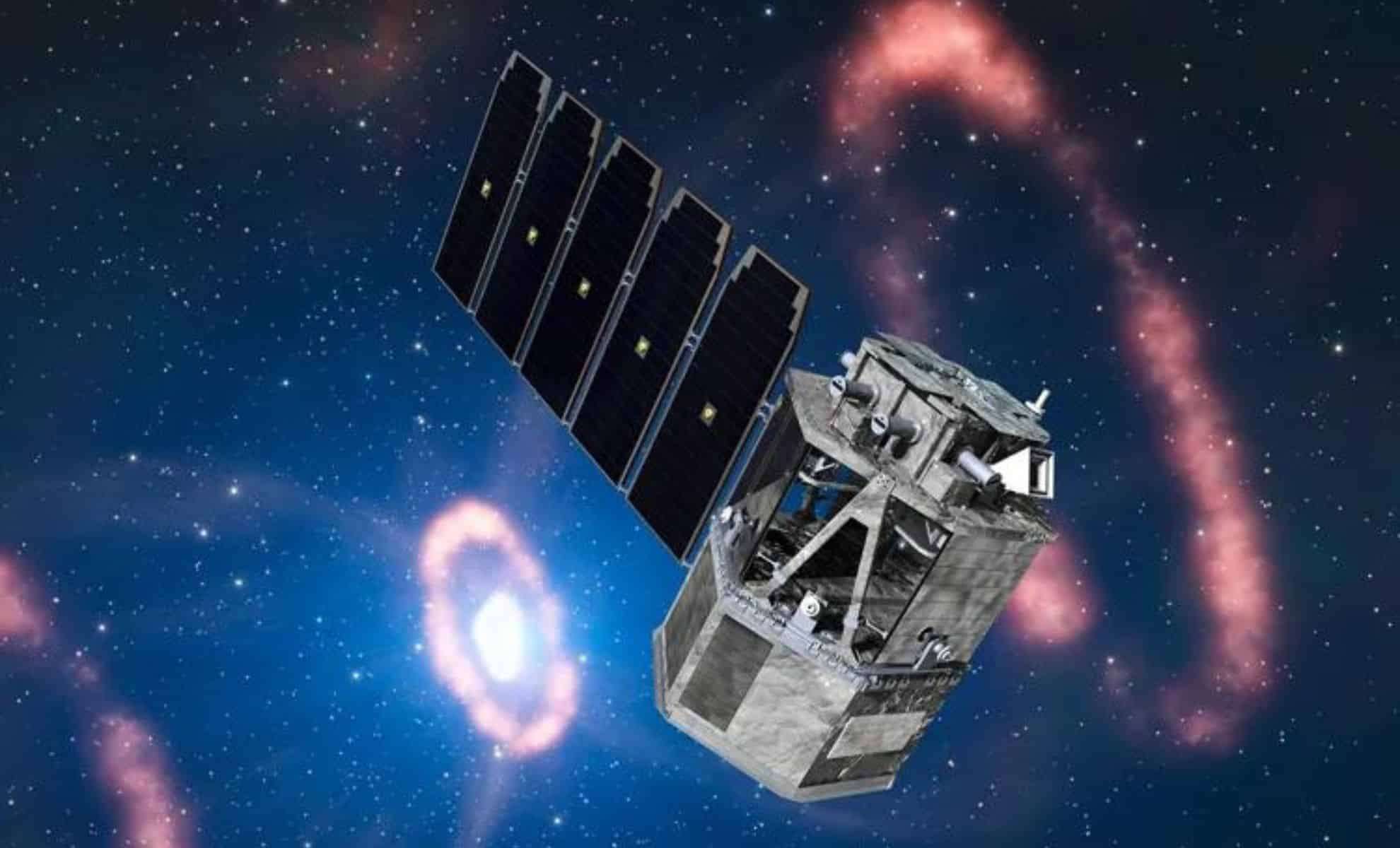
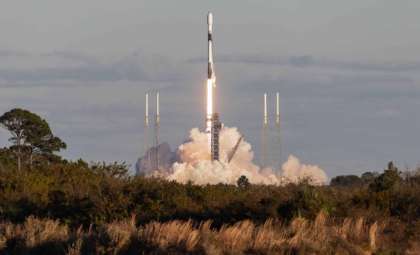
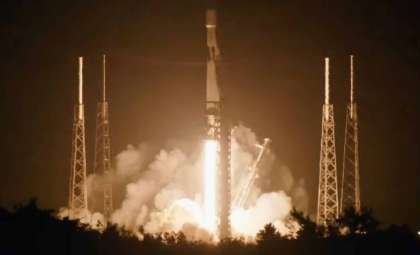
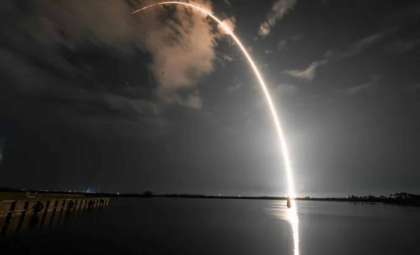
NASA has selected SpaceX to deliver the Compton Spectrometer and Imager (COSI) into orbit, marking a major leap forward in gamma-ray astrophysics. The launch is scheduled for August 2027 aboard a Falcon 9 rocket from the Cape Canaveral Space Force Station.
Exploring the Cosmos with NASA’s Gamma-ray Telescope
The COSI instrument, developed under NASA's Small Explorer-class (SMEX) initiative, is designed to study gamma-ray emissions emanating from our Milky Way galaxy and surrounding regions. Valued at $69 million, the contract covers launch services and related operations, enabling the observatory to probe phenomena including matter-antimatter interactions, the death throes of stars, and the origins of galactic positrons.
SpaceX awarded $69 million NASA contract to launch the COSI telescope in Aug. 2027:
Add Cosmo Herald as a Preferred SourceCOSI (Compton Spectrometer and Imager) is a wide-field gamma-ray telescope. https://t.co/EBV602sfIq pic.twitter.com/3abUrZtZxl
— Michael Sheetz (@thesheetztweetz) July 2, 2024

Key Scientific Aims
The core mission of COSI is to trace the sources of positrons — the antimatter counterparts to electrons — within the Milky Way. These positrons are born in extreme cosmic environments like supernova explosions and black hole vicinities. By detecting the gamma rays produced when positrons annihilate with electrons, COSI will map their distribution and origins, shedding light on antimatter production across our galaxy.
Another crucial objective is identifying sites of nucleosynthesis, the cosmic process where new atomic nuclei form, generally occurring during supernovae and within the envelopes of massive stars. By measuring gamma rays emitted by radioactive elements synthesized in these stellar events, COSI promises to deepen our understanding of how the universe’s elemental makeup comes into being.
Furthermore, COSI will analyze gamma-ray polarization to reveal details about magnetic fields and physical conditions in regions generating high-energy emissions. These polarization measurements will aid scientists in deciphering processes such as particle acceleration in supernova remnants and jets from active galactic nuclei.
In addition, the mission seeks to link gamma-ray signals to multi-messenger astronomical phenomena. By combining gamma-ray observations with other cosmic messengers like gravitational waves and neutrinos, COSI will provide a more comprehensive view of powerful cosmic events like neutron star collisions and black hole mergers.
Partnerships and Mission Development
The COSI initiative is a team effort involving leading research institutions. The University of California, Berkeley’s Space Sciences Laboratory spearheads the project, drawing on its extensive background in gamma-ray astrophysics.
Complementing Berkeley’s efforts are the University of California, San Diego and the Naval Research Laboratory, who supply expertise in space science and engineering. Mission planning and operations receive critical backing from NASA’s Goddard Space Flight Center, while Northrop Grumman offers vital technical and logistical support to the program.
Oversight of mission development falls under NASA’s Astrophysics Explorers Program at Goddard Space Flight Center, coordinating the activities among various contributors. The launch logistics are managed by NASA’s Launch Services Program based at Kennedy Space Center, ensuring the spacecraft’s precise deployment into orbit.
Funding Challenges and Timeline Adjustments
Selected for development in 2021, COSI has experienced schedule delays attributed to funding difficulties, postponing its original 2025 launch to 2027. These financial constraints have similarly impacted other Explorer-class missions like the Ultraviolet Explorer (UVEX), now delayed from 2028 to 2030. NASA slowed Phase B design work on COSI to control early costs, but this strategy lengthened the project timeline and increased overall expenses.
Despite these hurdles, NASA has achieved cost reductions for the COSI launch, reflecting savings in the 2025 fiscal budget. A lower estimated price for the launch vehicle contributed to these savings, which helps NASA maintain a balanced portfolio of both large flagship and smaller-scale missions, continuing a steady stream of astrophysical discoveries.
- Categories:
- Astronomy ,
- Space ,
- Nasa ,
- Aircraft





0 comments
Sign in to Comment