
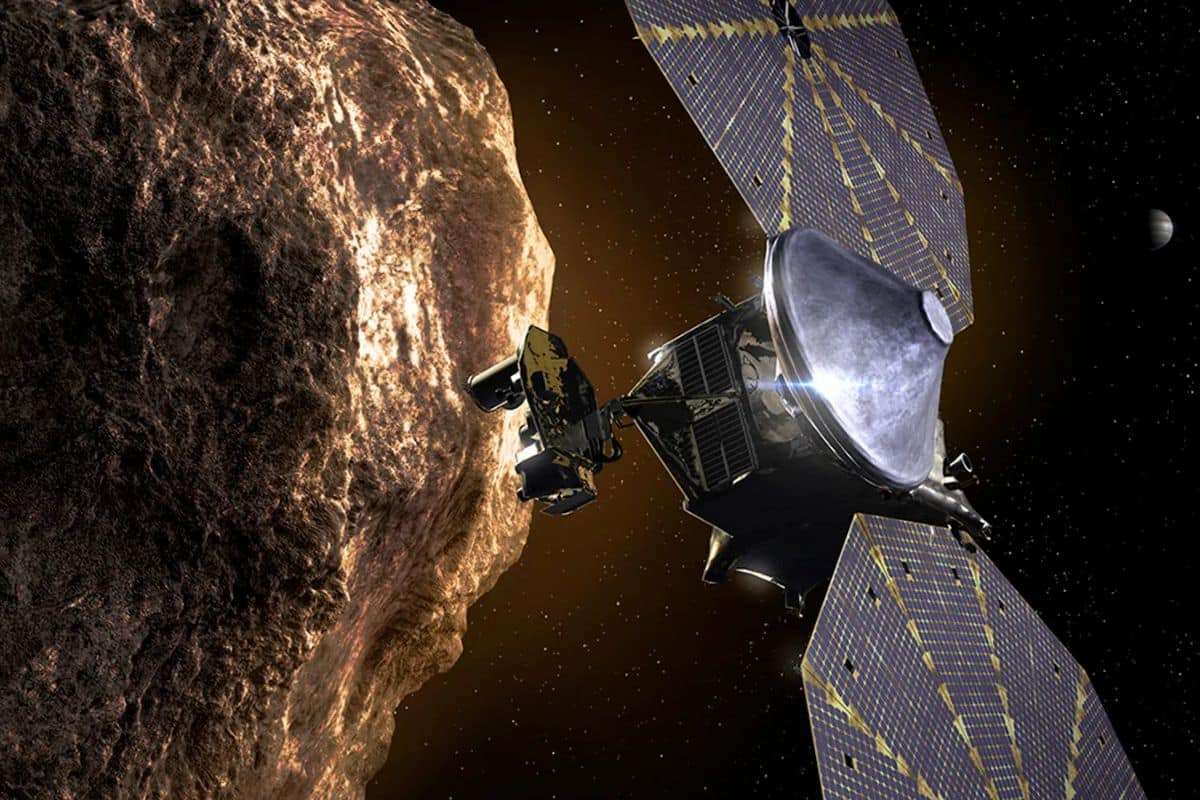
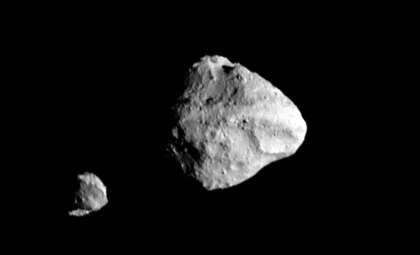
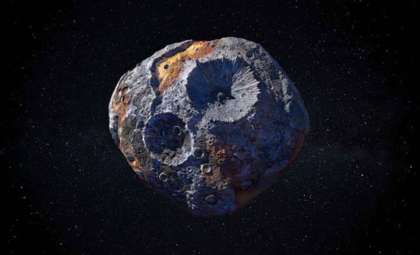
On April 20, 2025, NASA’s Lucy mission will perform a close flyby of (152830) Donaldjohanson, a main belt asteroid believed to be a remnant of a larger parent body that shattered more than 150 million years ago. This encounter represents an important milestone in Lucy’s extensive expedition to the Jupiter Trojan asteroids, providing a unique chance to test its instruments and gather crucial information on an ancient piece of the solar system’s early history.
Named to honor the paleoanthropologist who helped discover the famous Lucy hominin fossil, the asteroid’s name carries symbolic weight for a mission aimed at investigating the “fossils” of planetary assembly. The observations planned may improve understanding of asteroid evolution, focusing on their collisional pasts and the development of their surface layers. Recent research published in The Planetary Science Journal highlights spectral and morphological features in similar asteroids that suggest long-term surface changes caused by tiny meteorite impacts and thermal stress, phenomena that Donaldjohanson may also reveal during this mission phase.
An Unusual Asteroid With a Fascinating History
Discovered in 1984, Donaldjohanson bears the name of the paleontologist who uncovered the iconic Lucy fossil, significantly advancing our knowledge of human origins. This asteroid is now poised to contribute comparably important insights within planetary science.

Current analysis indicates Donaldjohanson broke off from a larger asteroid, creating the Erigone family of collisional fragments. Its orbit and spin have evolved considerably over time, likely due to thermal forces slowing its rotation. Scientists are particularly intrigued by its , which make it an excellent subject for further examination, as noted in a recent study.
Dr. Simone Marchi, the deputy principal investigator of the Lucy mission, points out that this asteroid stands apart from others observed via telescope. “Deciphering Donaldjohanson’s origin could clarify its distinctive properties,” he commented.
Crucial Preparation Before Examining Jupiter’s Trojans
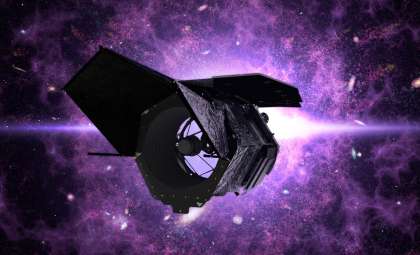
The Lucy spacecraft, launched on October 16, 2021, is undertaking a 12-year voyage destined to investigate 11 asteroids, particularly the Trojan asteroids that share Jupiter’s orbit and trace back to the solar system’s origins.
Prior to reaching the Trojans, Lucy’s encounter with Donaldjohanson acts as both a scientific examination and a trial run for the spacecraft’s navigation technologies. Researchers aim to study the asteroid’s surface geology, shape, and cratering features to confirm theoretical models and build readiness for upcoming, more demanding rendezvous.
Dr. Hal Levison, mission principal investigator, stresses the significance of this stage: “Interactions with main belt asteroids provide detailed views of these objects and serve as valuable testing platforms for the spacecraft’s advanced navigation systems ahead of the key Trojan asteroid investigations.”
Connections to Other Notable Asteroids
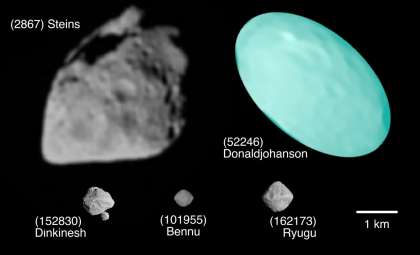
Situated within the inner main asteroid belt, Donaldjohanson orbits near the regions linked to the origins of near-Earth asteroids Bennu and Ryugu. These bodies have been explored by NASA’s OSIRIS-REx and JAXA's Hayabusa2 missions, which retrieved samples revolutionizing knowledge about planetary building materials.
However, Donaldjohanson shows substantial differences compared to Bennu and Ryugu. While both Bennu and Ryugu are characterized by loose, rubble-pile structures rich in carbon, Donaldjohanson is likely composed chiefly of silicate minerals, possibly incorporating clay and organic compounds. The approaching Lucy flyby aims to clarify whether these objects share any formative relationships.
Anticipated Scientific Gains
Up to this point, observations from Earth and models have only delivered limited perspectives on Donaldjohanson’s precise shape, makeup, and structural attributes.
The Lucy spacecraft, outfitted with high-resolution cameras and spectrometers, will be the first to capture detailed images and data at close range.
Dr. Keith Noll, the Lucy project scientist at NASA’s Goddard Space Flight Center, underscores the flyby’s value: “We eagerly await the encounter because Donaldjohanson’s traits appear quite different from Bennu and Ryugu, although we might uncover surprising connections.”
- Categories:
- News





0 comments
Sign in to Comment