
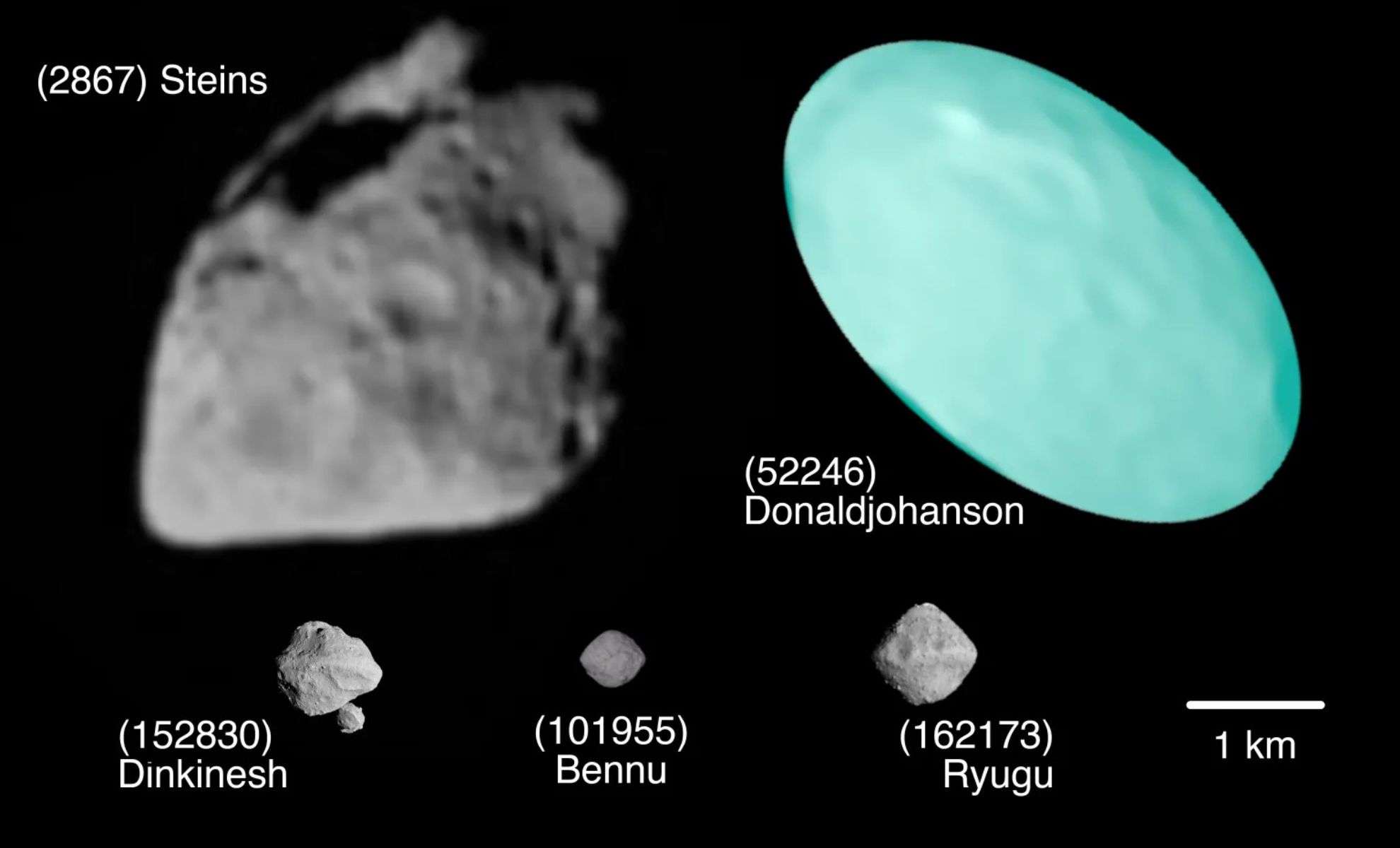
NASA’s Lucy spacecraft is preparing for an important close approach to the asteroid Donaldjohanson on April 20, 2025. Lucy's mission focuses on exploring the Trojan asteroids orbiting Jupiter, and new research offers fresh insights into its next target. Advanced simulations indicate that Donaldjohanson, which belongs to the Erigone collisional asteroid family, may have originated from the breakup of a much larger parent asteroid roughly 150 million years ago. Details shared in a NASA article help pave the way for a better grasp of this asteroid’s unique makeup, history, and characteristics. The Lucy mission serves not only to investigate remote asteroids but also to rehearse maneuvers for its journey through the Trojan swarms.
Tracing the Origins of Asteroid Donaldjohanson
The asteroid Donaldjohanson intrigues scientists owing to its unique identity within the Erigone collisional group, which formed after a large parent asteroid disintegrated millions of years ago. Despite belonging to this group, Donaldjohanson exhibits features that distinguish it from its relatives.
Simone Marchi, deputy principal investigator for Lucy at Southwest Research Institute, comments, “Ground observations suggest that Donaldjohanson is an unusual object. Studying how it came to be could reveal the root of its distinct attributes.” This highlights the mission’s goal to examine the asteroid thoroughly, especially since Donaldjohanson’s traits differ notably from asteroids previously explored by NASA missions like Bennu and Ryugu.

This upcoming encounter is expected to deepen our understanding of asteroid formation and evolutionary dynamics. The data collected during the flyby may shed light on whether Donaldjohanson’s development aligns with that of other Erigone family members or if it followed a unique evolutionary history.
Donaldjohanson’s Unusual Shape and Slow Spin
A defining characteristic of Donaldjohanson is its elongated form, which has puzzled researchers. David Vokrouhlický, professor at Charles University in Prague, explains, “Analysis suggests it’s notably stretched out and rotates slowly, likely due to thermal forces gradually altering its spin.” These forces stem from the Sun’s heating and cooling effects, which cause cycles of surface expansion and contraction, slowly modifying the asteroid’s rotation rate over millions of years. This makes Donaldjohanson an especially intriguing object among known asteroids.
The Lucy mission team eagerly anticipates new discoveries regarding this unusual rotation. Marchi notes, “We are excited for the flyby since Donaldjohanson’s distinctive features set it apart from Bennu and Ryugu, though unexpected links may emerge.” This suggests the mission could reveal fresh clues about our early solar system and the formation of celestial bodies.
Advancing Solar System Science Through Lucy’s Exploration
Lucy will play a vital role in expanding knowledge about asteroid characteristics. Keith Noll, Lucy project scientist at NASA’s Goddard Space Flight Center, states, “Piecing together what we know about this asteroid is thrilling. However, Earth-based studies and models have limits — close-range observations from Lucy will allow us to refine these models and gather detailed data.”
This highlights the importance of Lucy’s upcoming encounter with Donaldjohanson, which will validate or challenge existing assumptions about the asteroid’s size, morphology, and rotational behavior.
Beyond a single target, the Lucy mission aims to study 11 asteroids over a 12-year span. Its primary focus centers on the Trojan asteroids clustered in swarms that lead and trail Jupiter along its orbital path. Dr. Hal Levison, principal investigator for Lucy, explains, “This ambitious NASA mission plans to visit 11 asteroids within a dozen years, touring Jupiter’s Trojan swarms.”
In addition to scientific objectives, the mission also functions as a practical testbed for the spacecraft’s advanced navigation technologies, essential for managing complex asteroid encounters. Investigating main belt asteroids like Donaldjohanson will help improve these techniques before focusing on the Trojans.
Insights Gained from Lucy’s Mission and Its Broader Implications
The fundamental goal of the Lucy mission is to decode the building blocks of the solar system. Trojan asteroids represent ancient remnants dating back over 4.5 billion years, offering clues to the conditions and processes that shaped planetary formation.
Studying Donaldjohanson and its possible connection to the Erigone asteroid family could illuminate how asteroid fragments form and evolve, enriching our knowledge of solar system history and origins.
As Levison emphasizes, “Encounters with main belt asteroids provide close-up views and enable engineering tests of novel navigation systems before our primary mission focusing on the Trojans. These ancient bodies are essentially fossils of planetary formation, holding critical information to decode our solar system’s past.” The upcoming Donaldjohanson flyby marks a pivotal step in this expansive quest to understand asteroids and the dawn of our cosmic neighborhood.
- Categories:
- News







0 comments
Sign in to Comment