
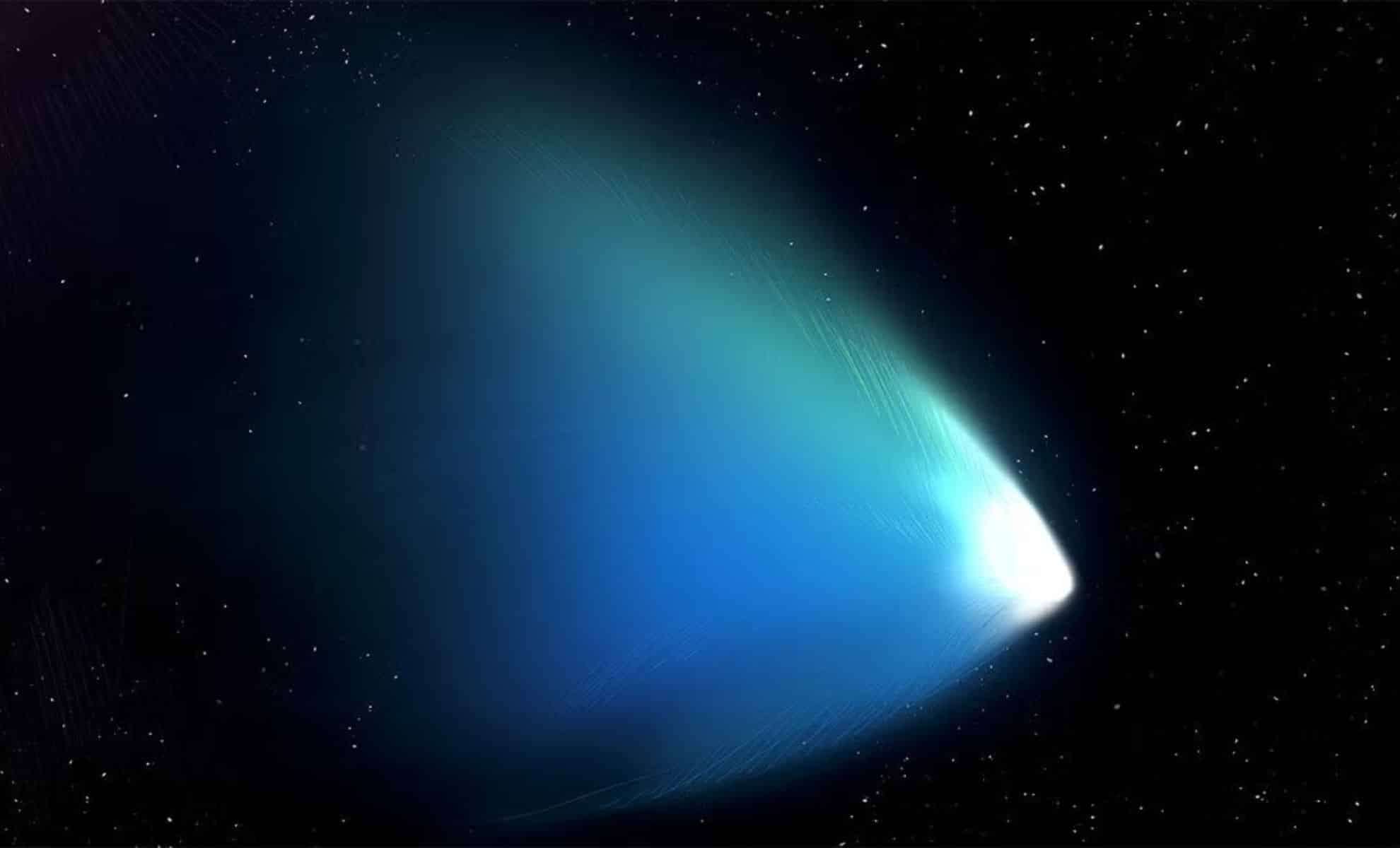
The cosmos is a vast enigma, where each celestial body offers vital clues about the origins of our universe. Among these objects, Chiron stands out as a fascinating hybrid, blending characteristics of both asteroids and comets. Orbiting in the region between Jupiter and Neptune, Chiron challenges traditional classifications and provides a unique window into the early solar system’s formation.
Thanks to the advanced capabilities of the James Webb Space Telescope (JWST), astronomers have captured unprecedented details unveiling Chiron’s complex chemistry and ongoing activity. Such discoveries hold the potential to transform our understanding of centaurs—a mysterious group of mixed celestial objects—and their role in solar system history.
Centaurs: Windows into Our Planetary Past
Centaurs are distinctive bodies that show traits typical of both asteroids and comets. Positioned between the massive planets Jupiter and Neptune, their orbits are unstable and constantly shifting. These objects are believed to be icy relics from the solar system’s infancy, preserved in cold regions far from the Sun. They serve as natural archives, holding vital clues about the primordial conditions from billions of years ago.

Chiron, first spotted in 1977, is one of the best-known members of this group. Its hybrid nature—displaying a subtle coma typical of comets along with solid asteroid-like qualities—makes Chiron an exceptional subject for investigating the overlap between these two types of celestial bodies.
Lead researcher Dr. Noemí Pinilla-Alonso highlights the value of studying centaurs: “Small solar system bodies provide messages about the system’s ancient past.” Chiron’s unique activity and composition offer crucial information for piecing together how planets and other bodies formed and evolved.
Unveiling Chiron’s Chemical Complexity
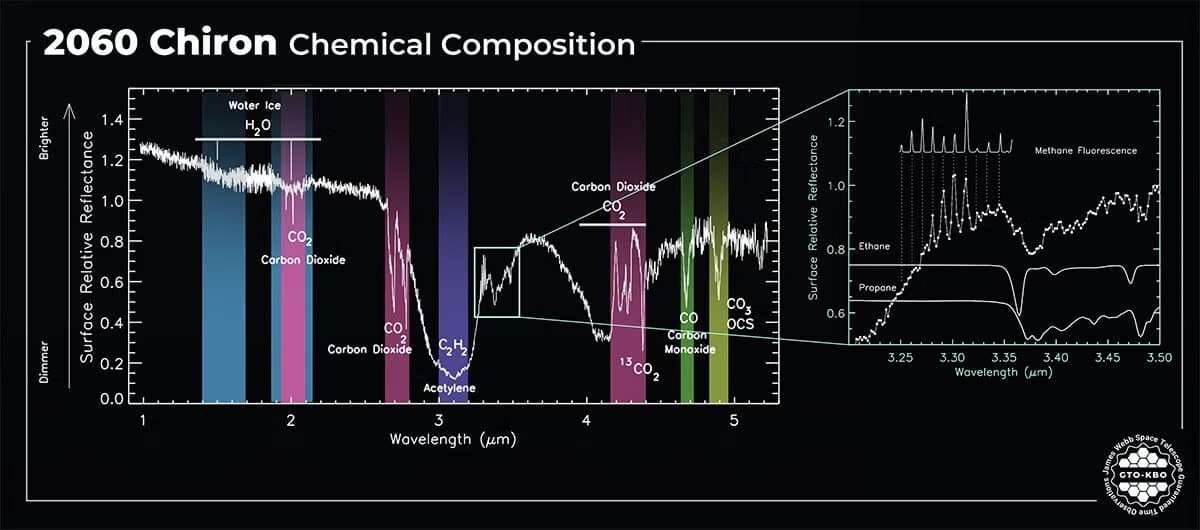
Recent JWST studies have uncovered a diverse range of chemicals on Chiron’s surface. Scientists identified ices of carbon dioxide and carbon monoxide, along with a thin coma containing methane and other volatile compounds. Such a rich chemical environment is unprecedented among centaurs.
Unlike typical comets that develop a coma only when near the Sun, Chiron maintains its gaseous envelope throughout its orbit, even when farthest away. This persistent activity contradicts established comet models and suggests more complex interactions between sunlight and its surface.
“These observations are unparalleled in their detail,” said Dr. Charles Schambeau, co-author of the research.
The coexistence of ancient ices alongside newly altered compounds offers a snapshot of how solar radiation reshapes distant icy objects over time.
Chiron: A Peculiar Member of the Centaur Family
Chiron’s unusual persistence in activity distinguishes it from most centaurs, which generally become inactive when distant from the Sun. Its thin but enduring coma presents a rare chance to study both surface and atmospheric conditions simultaneously.
“The ability to observe Chiron’s surface and coma together is extremely rare,” Dr. Pinilla-Alonso stated. This dual approach offers valuable insights into what governs the behaviors of objects that straddle the classification line between asteroid and comet.
Studying these distinctive traits may reveal common threads connecting centaurs to other solar system bodies, helping to unravel the broader narrative of planetary system evolution.
Chiron’s activity stems from complex interactions between solar energy and its icy surface layers, causing gases to escape and continually modify its composition.
Distinctive Features of Chiron
Insights into Solar System Evolution from Chiron
Originating from the remote trans-Neptunian zone, where primordial ices condensed, Chiron was later gravitationally nudged inward by giants like Jupiter into its current orbit. This shifting journey exposes it to varying sunlight intensity, driving changes in its ice and gas layers.
“Thanks to JWST, we now have unprecedented insight into Chiron’s internal makeup and distinct activity,” Dr. Schambeau remarked.
Investigating Chiron’s traits enables researchers to better grasp the conditions and transformations experienced by icy bodies throughout the solar system, shedding light on the materials that contributed to forming planets, moons, and even Earth.
- Categories:
- News







0 comments
Sign in to Comment