
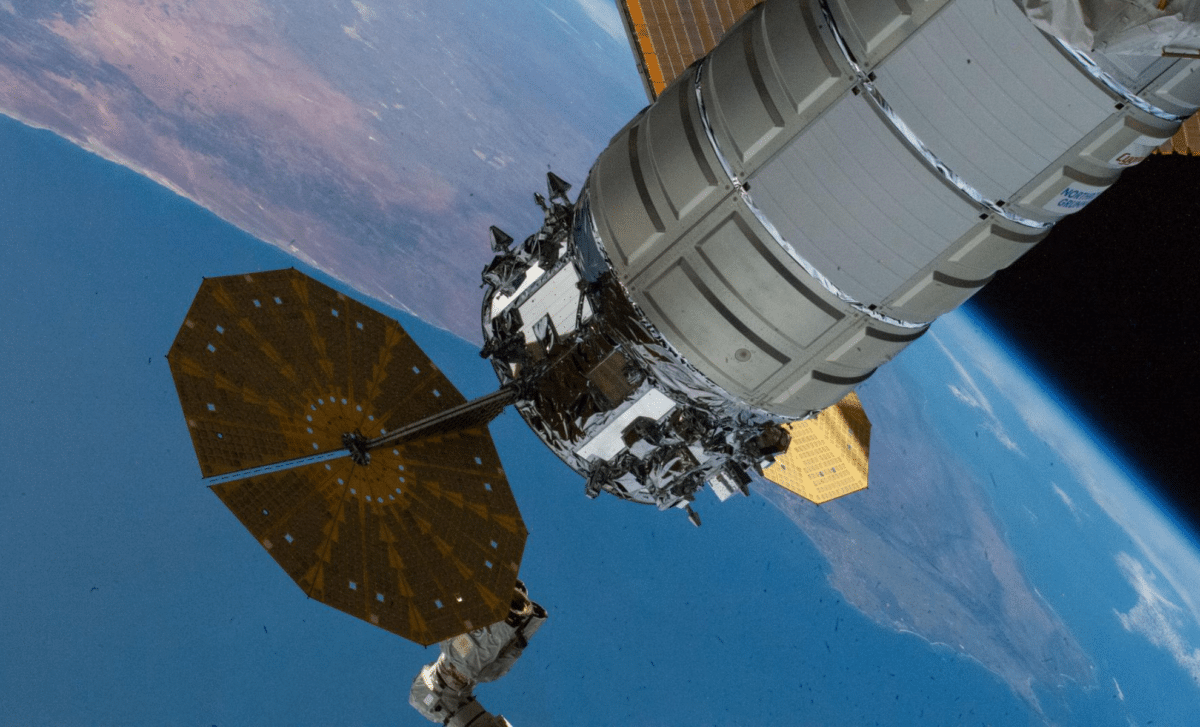
The Expedition 74 team aboard the International Space Station (ISS) is currently focused on vital spacewalk preparations paired with innovative scientific experiments. As the Northrop Grumman Cygnus XL cargo vehicle readies for its departure, NASA advances its mission objectives by both preparing to upgrade the ISS’s solar array system and conducting important studies in vascular health and artificial intelligence. These endeavors support NASA’s long-term goals of better understanding human adaptation to space and enhancing spacecraft functionality through AI advancements.
Advancing Solar Power: Spacewalk Activities to Boost ISS Energy Systems
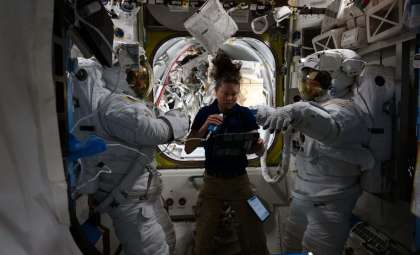
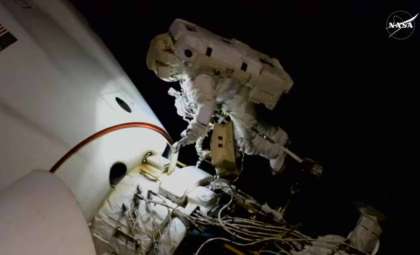
A key highlight for Expedition 74 involves gearing up for a spacewalk that will significantly enhance the ISS’s solar power infrastructure. NASA astronauts Jessica Meir and Chris Williams, together with their crewmates, have been rigorously training to execute this mission. The spacewalk’s focus is to install a modification kit and route cabling on the station’s port side, laying the groundwork for the subsequent installation of the seventh roll-out solar array.
The arrival of this new solar array will be pivotal in bolstering the station’s power supply, supporting its aging systems, and meeting the increasing energy demands of future crews. Scheduled to last roughly six and a half hours, the spacewalk will position components and establish the necessary hardware to enable the full deployment of the new solar panels. ForNASA, enhancing ISS power is essential to sustain long-term human presence in orbit and upcoming exploratory missions.

This work exemplifies NASA’s commitment to maintaining and upgrading aging space infrastructure, addressing critical challenges as orbital missions extend in duration. Updating the ISS’s power framework is a strategic move ensuring the station’s continued operational excellence.
Biomedical Insights: Studying Vascular Health in Microgravity
Alongside these technical preparations, the Expedition 74 team has been pursuing critical biomedical experiments focusing on how microgravity affects vascular health over extended periods. Cosmonauts Sergey Kud-Sverchkov and Sergei Mikaev have utilized sophisticated sensors placed on their foreheads, fingers, and toes to monitor blood flow dynamics in space.
These sensors transmit vital information via Bluetooth, allowing researchers on Earth to analyze changes in vascular function. Understanding these physiological shifts is key to protecting astronaut health during prolonged missions, particularly for cardiovascular well-being. Data collected contributes to refining health protocols instrumental for future long haul journeys, including potential manned Mars missions.
Artificial Intelligence: Streamlining Operations and Communication in Orbit
Artificial intelligence research is another critical endeavor on the ISS. The Expedition 74 astronauts are trialing AI-driven tools designed to support daily station operations and improve communication channels with mission control. The increased integration of AI aims to make astronaut workflows more efficient and responsive.
Roscosmos flight engineer Andrey Fedyaev is actively testing AI applications that facilitate smoother interactions within the crew and mission teams. These systems can assist in real-time decision-making, easing workloads and enhancing safety in the demanding environment of space.
Utilizing AI to manage communications can dramatically boost the productivity of routine and emergency tasks. As NASA expands its space exploration ambitions, AI technologies represent an essential asset in modernizing space mission capabilities.
- Categories:
- Nasa







0 comments
Sign in to Comment