
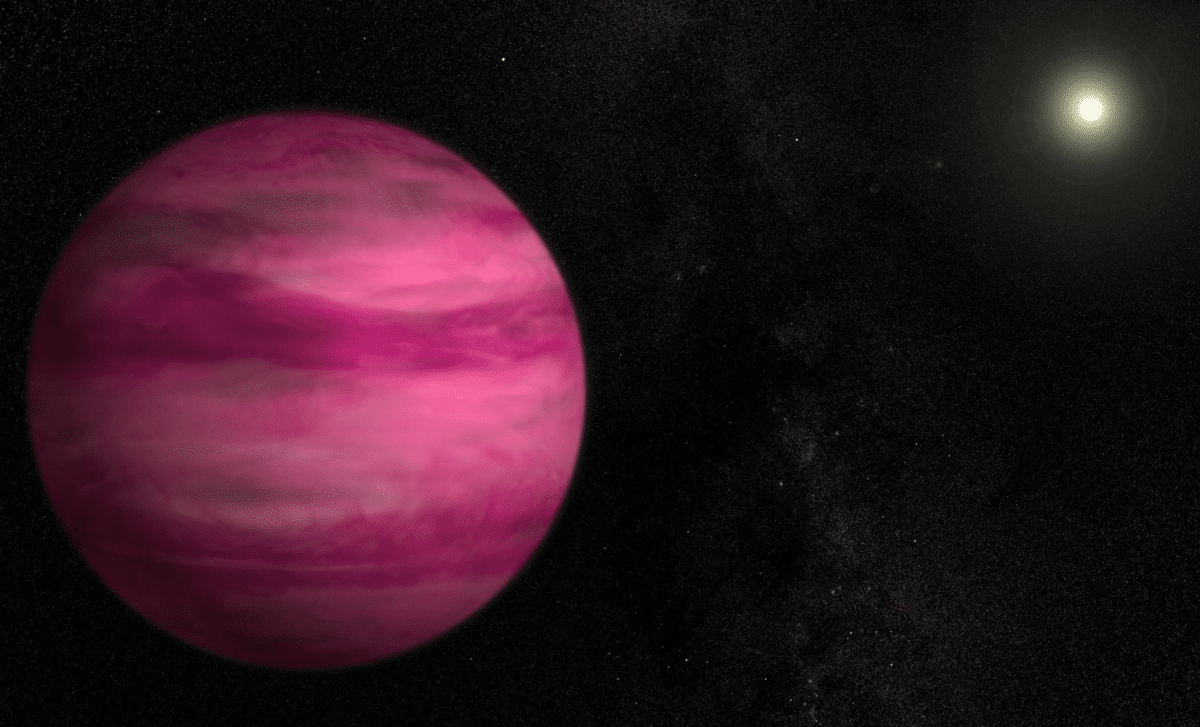
The Living Worlds Working Group has introduced an innovative strategy for identifying life on planets beyond our solar system. Their report, part of the conceptual planning for NASA’s Habitable Worlds Observatory (HWO), investigates how striking hues like green oceans or purple planetary surfaces could act as significant indicators of extraterrestrial life. By analyzing a broad range of light and distinguishing biological traits from non-biological ones, HWO could revolutionize the search for inhabited exoplanets.
Introducing the Habitable Worlds Observatory
The Habitable Worlds Observatory represents a transformative advance in detecting exoplanets. Differing from instruments like the James Webb Space Telescope (JWST), which utilizes transit spectroscopy (observing starlight filtered through planetary atmospheres), HWO plans to directly capture images of exoplanets through a coronagraph—a tool that obstructs stellar glare, unveiling nearby faint planetary bodies.
This direct-imaging ability will allow researchers to study not only atmospheric chemistry but also potential surface characteristics. The arXiv paper explains that achieving this goal mandates a very high signal-to-noise ratio and sensing light across a vast spectral range from visible to near-infrared. These requirements are crucial to differentiate planets featuring oceans, plant life, or even primitive microbial ecosystems.

The report stresses that wide spectral coverage is essential, not just a technical enhancement. Without it, HWO might overlook critical biosignatures, especially those linked to primitive photosynthetic life that shaped early Earth.
Uncovering Life Through Color: From Purple Worlds to Green Oceans
One intriguing aspect of the Living Worlds Working Group report is its focus on how coloration can serve as a marker for alien life. During Earth’s early epochs, before chlorophyll-based plants emerged, purple microbes called anoxygenic phototrophs flourished. These organisms absorbed green light but reflected red and blue wavelengths, giving their environment a distinct purple shade.
Modern relatives like Halobacteria still inhabit salt-rich areas today, coloring salt ponds in deep pinks and magentas. If HWO detects a similar spectral signature from exoplanets, recognizing this “Purple Earth” phase—thought to have lasted over 1.5 billion years—would require sensitivity beyond visible light and into the infrared.
The idea of a “Green Ocean” is equally compelling. Between 4 and 2.5 billion years ago, Earth’s seas may have appeared green due to iron-laden waters reflecting green light. Microbes such as cyanobacteria might have evolved pigments to harness this reflected light, which could parallel life forms on other planets. However, teasing apart biological signals from mineral reflections demands highly precise spectral analysis.
Avoiding False Positives: When Rocks Mimic Life
Identifying life from distant planetary light is a complex task of separating biological signals from geological imitations. The arXiv study warns that abiotic substances can resemble biosignatures. For example, iron oxides (rust) produce a “red slope” in spectral data akin to the “red edge” linked to photosynthetic vegetation. Likewise, minerals like cinnabar and elemental sulfur reflect specific wavelengths that could be mistaken for organic pigments.
To prevent misinterpretation, HWO must provide exceptional clarity and spectral accuracy. Only by detecting subtle differences in reflected light can astronomers discern if a planet’s color arises from living organisms or non-living minerals.
This challenge highlights the tension between engineering objectives and funding limitations. While the Living Worlds Working Group imagines a telescope capable of differentiating “green,” “purple,” and “red” planets, budget constraints could restrict its ultimate abilities. Nonetheless, the scientific rewards of discovering extraterrestrial life make this endeavor highly worthwhile.
Marking a New Chapter in Life Discovery
NASA’s Habitable Worlds Observatory signals a paradigm shift from merely finding exoplanets toward assessing their potential for life. The concepts outlined in the arXiv report highlight how surface colors—once overlooked—may emerge as distinctive signatures of alien biospheres.
By capturing light over a wide spectral range and discerning intricate reflectance patterns, HWO could soon identify planets covered by microbial mats, iron-rich green seas, or even vegetation-like continents. These breakthroughs would not only address whether life exists elsewhere but also reveal evolutionary parallels across the cosmos.
- Categories:
- Nasa












0 comments
Sign in to Comment