
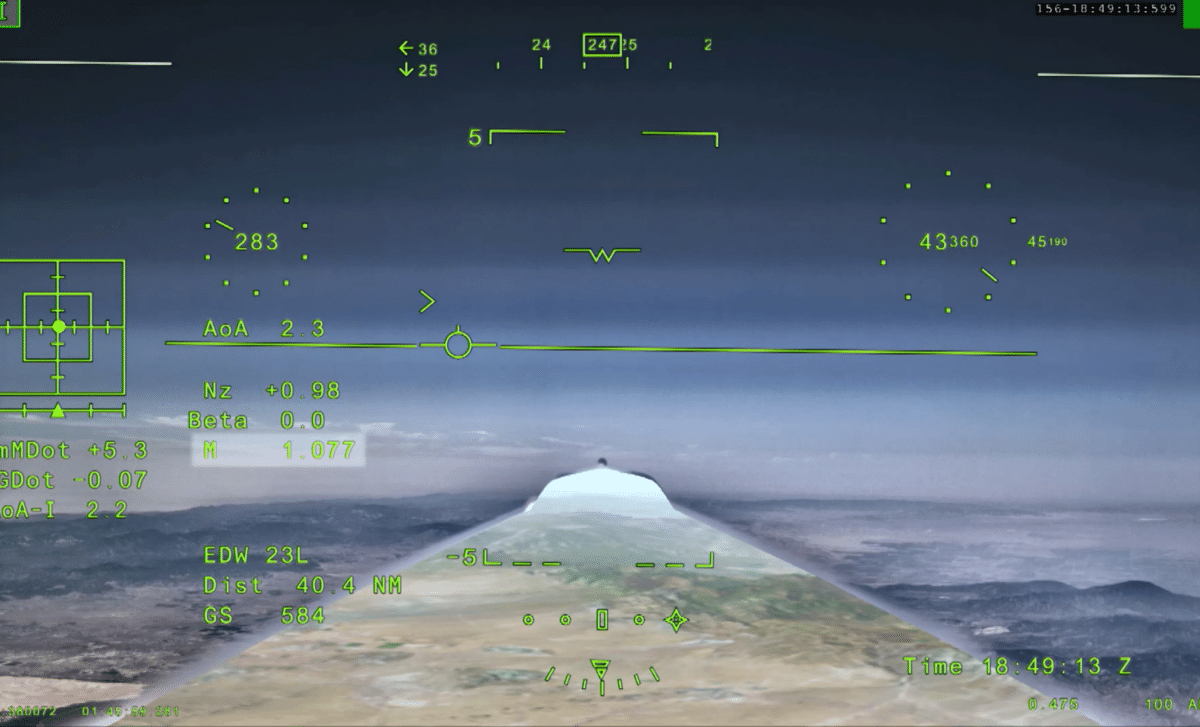
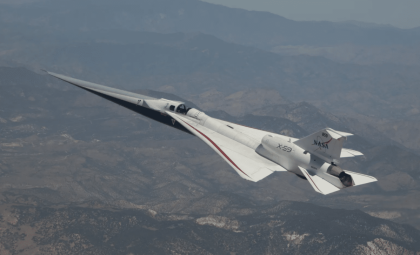
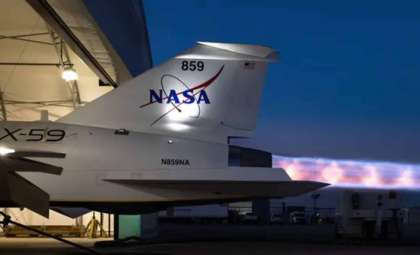
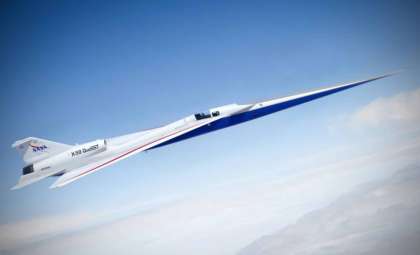
The NASA X-59 experimental aircraft has successfully surpassed the sound barrier, marking a key breakthrough in developing quiet supersonic flight. On June 5, 2026, this innovative plane took to the skies over Edwards Air Force Base in California, hitting Mach 1.1. This achievement demonstrates the potential for supersonic travel with significantly reduced sonic boom impact, promising a new chapter in aviation history.
Transforming the Future of Supersonic Flight
During its first supersonic journey, the X-59 remained airborne for 81 minutes, lifting off at 11:08 a.m. PDT, piloted by NASA’s Jim “Clue” Less. The aircraft ascended to 43,400 feet while smoothly accelerating past the speed of sound, maintaining stable and controlled flight throughout subsonic and supersonic speeds alike.
As part of NASA’s Quesst mission, the X-59 is engineered to eliminate the loud sonic booms typical of past supersonic jets, replacing them with a subtle “quiet thump.” This quieter noise signature allows scientists to study public responses to supersonic sounds and collect vital information that will inform future noise regulations. The data gathered could help enable commercial supersonic flights over land without disturbing communities.

Advancing Toward Mach 1.4 Goals
NASA Administrator Jared Isaacman praised the swift progression of the X-59 program: “Since its maiden flight on Oct. 28, 2025, the X-59 has flown 16 times in the past 90 days as we refine our testing processes. We are preparing to push the aircraft to Mach 1.4 soon. I deeply appreciate the efforts of the NASA team and Lockheed Martin Skunk Works that have brought us here. This marks just the beginning of revitalizing NASA’s X-plane legacy.”
The upcoming flight will target Mach 1.4 at around 55,000 feet, mimicking cruising altitudes expected for supersonic overland travel. A chase aircraft will accompany the X-59 to track its performance and precisely measure noise levels, crucial for validating the aircraft’s quiet supersonic capabilities.
Showcasing U.S. Excellence in Aerospace Innovation
Michael Kratsios, Assistant to the President for Science and Technology and Director of the Office of Science and Technology Policy, commented on the broader impact of the X-59 flight:
“The X-59’s first supersonic flight is a testament to America’s enduring leadership in science, engineering, and aerospace innovation. This achievement comes as the Trump Administration continues work to unleash supersonic flight and enable American ingenuity.”
This accomplishment exemplifies the United States’ continued dedication to pushing the envelope in aeronautics. With cutting-edge aerodynamic designs, noise mitigation technologies, and extensive testing, the X-59 ushers in a new era where supersonic travel may soon become commercially practical while meeting community and safety expectations.
Quiet Supersonic Innovation Shaping Tomorrow’s Air Travel
At the heart of the Quesst mission, the X-59 will contribute vital design methodologies and proven technologies paving the way for next-generation quiet supersonic airliners. These advances aim to drastically reduce disruptive sonic booms during high-speed flights over inhabited areas.
NASA’s strategy involves thorough flight experiments, performance envelope expansion, and acoustic validations. The insights gained will support U.S. and international agencies in establishing evidence-based noise standards. Ultimately, the vision is for supersonic commercial jets to routinely provide faster cross-country travel, revolutionizing how passengers experience flight.
- Categories:
- News


0 comments
Sign in to Comment