
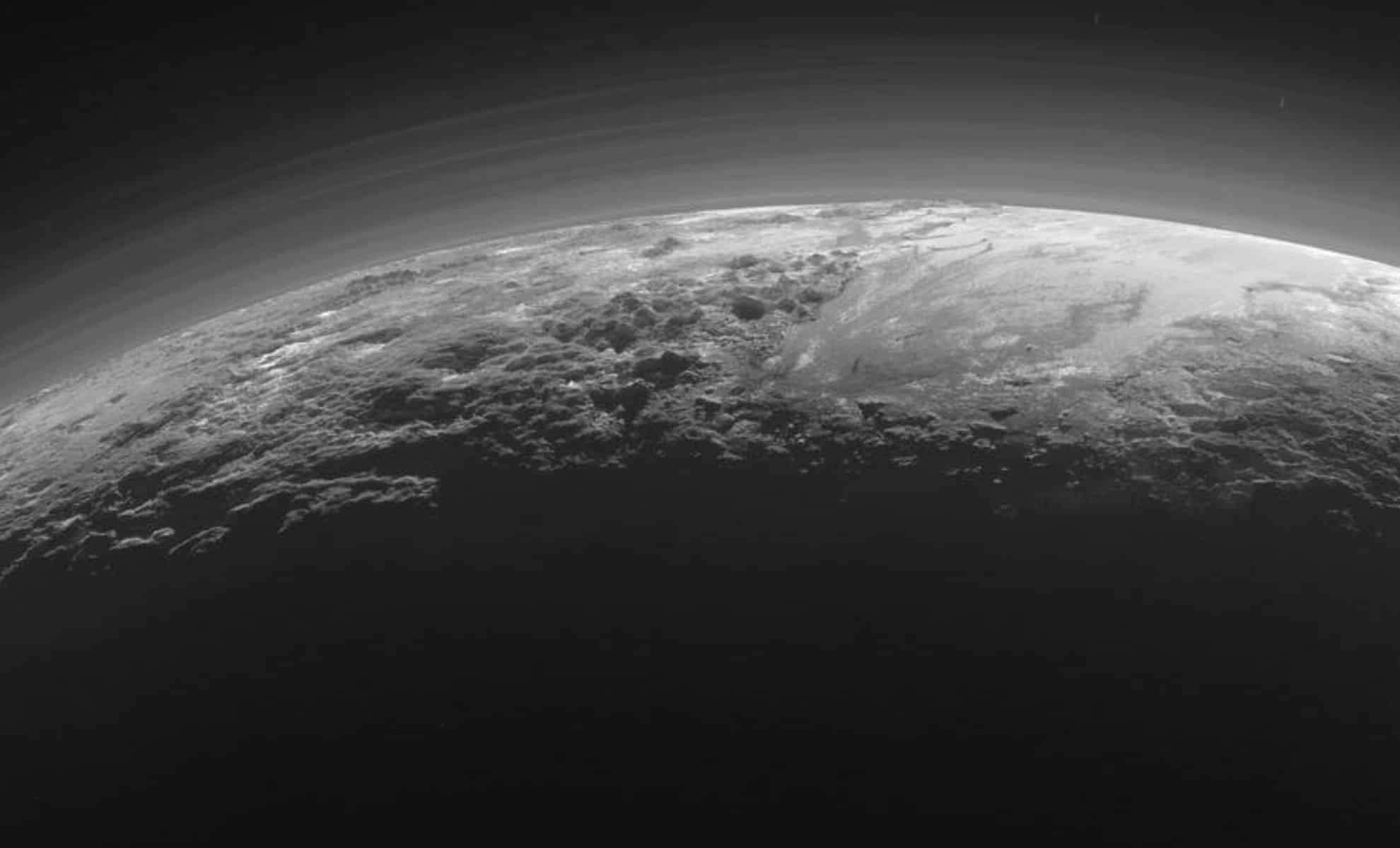
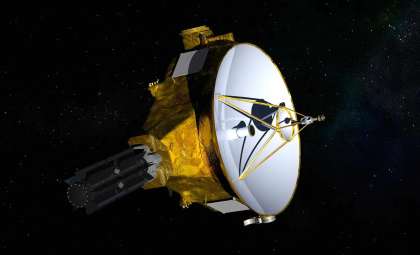
NASA’s New Horizons spacecraft has achieved a breakthrough in cosmic navigation by successfully performing the first-ever stellar navigation test in deep space. Operating from an extraordinary distance exceeding 5.5 billion miles from Earth within the Kuiper Belt, this accomplishment signals a major advancement in how spacecraft might navigate the vast stretches between stars. Led by an international coalition of astronomers, the test involved the spacecraft imaging two nearby stars, Proxima Centauri and Wolf 359. Serving as a critical proof-of-concept, the experiment demonstrated the viability of using stellar parallax—the apparent displacement of stars caused by changing viewpoints—for navigation beyond our solar system. The findings, accepted by The Astronomical Journal, may pave the way for precise interstellar spacecraft navigation in the future.
Understanding Stellar Navigation Through Parallax
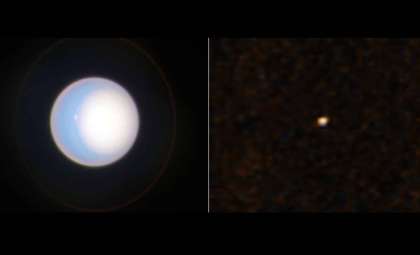
Stellar navigation, a promising approach for guiding deep space voyages, depends on observing shifts in star positions from different locations in space. This technique is based on stellar parallax, where a star’s apparent movement results from the observer’s motion. During the test, New Horizons captured images of Proxima Centauri, located 4.2 light-years away, and Wolf 359, which is 7.86 light-years distant. Using the spacecraft’s remote vantage point beyond the solar system, the team measured how these stars appeared to move against the celestial background, enabling them to calculate the spacecraft’s position with high precision. This test broke new ground by showing stellar parallax can be employed effectively for interstellar navigation.
Though not aiming for research-grade results, the test offered a meaningful demonstration: the spacecraft’s position was pinpointed within about 4.1 million miles—roughly equivalent to the distance between New York City and Los Angeles. This accuracy highlights stellar navigation’s potential as a navigation method for future deep space exploration. As New Horizons continues its journey outward, these results serve as a key benchmark for subsequent missions venturing into interstellar space.

Launching a New Age of Cosmic Navigation
This milestone is more than a theoretical demonstration; it is a tangible advance toward a new era of space travel across vast interstellar distances. “Capturing simultaneous images from both Earth and the spacecraft made stellar parallax vividly clear,” said Tod Lauer, lead author and astronomer at NSF’s NOIRLab. Observing stars from two different locations provided direct evidence of parallax from deep space. Lauer noted the experiment’s educational impact by transforming an abstract concept into an observable phenomenon. The success of the New Horizons team reflects the increasing sophistication of space missions aimed at exploring farther than ever before.
“Understanding the theory is one thing, but witnessing it work in practice is truly remarkable,” Lauer added. The successful use of stellar navigation underscores its potential as a vital technology for future missions that will travel past the familiar boundaries of our solar neighborhood.
Impact on Upcoming Deep Space Missions
This stellar navigation demonstration holds significant implications beyond the New Horizons probe itself. As agencies like NASA plan ventures into far-off parts of the galaxy, precise navigation across interstellar space will be indispensable. Having already revolutionized our view of Pluto during its 2015 flyby, New Horizons has now contributed essential knowledge that could make missions to exoplanets and beyond more practical.
Continuing its extended quest, the probe studies the heliosphere’s outer limits and moves toward the frontier of interstellar space. This navigation success suggests future spacecraft could similarly employ stellar parallax to chart courses through the cosmos, enhancing our understanding beyond the solar system. In the near future, New Horizons is expected to cross the “termination shock,” marking the beginning of true interstellar space, a milestone that promises new insights into the universe’s outer reaches.
Charting the Future of Stellar Exploration
Originally tasked with exploring Pluto and its moons, New Horizons has evolved into a trailblazer for interstellar navigation. This stellar navigation test in deep space may revolutionize how humanity extends its reach across the stars. Perfecting such methods will empower space agencies to undertake bold expeditions, including journeys to planets orbiting other stars. As this technology advances, the dream of exploring distant star systems and the vast interstellar void edges ever closer to reality.
Approaching the boundary of interstellar space, New Horizons sets a precedent with its stellar navigation breakthroughs. These advances underscore NASA’s leadership in deep space exploration and highlight the growing expertise within the broader scientific community, illuminating a future where routes through the stars can be accurately plotted.
- Categories:
- News






0 comments
Sign in to Comment