
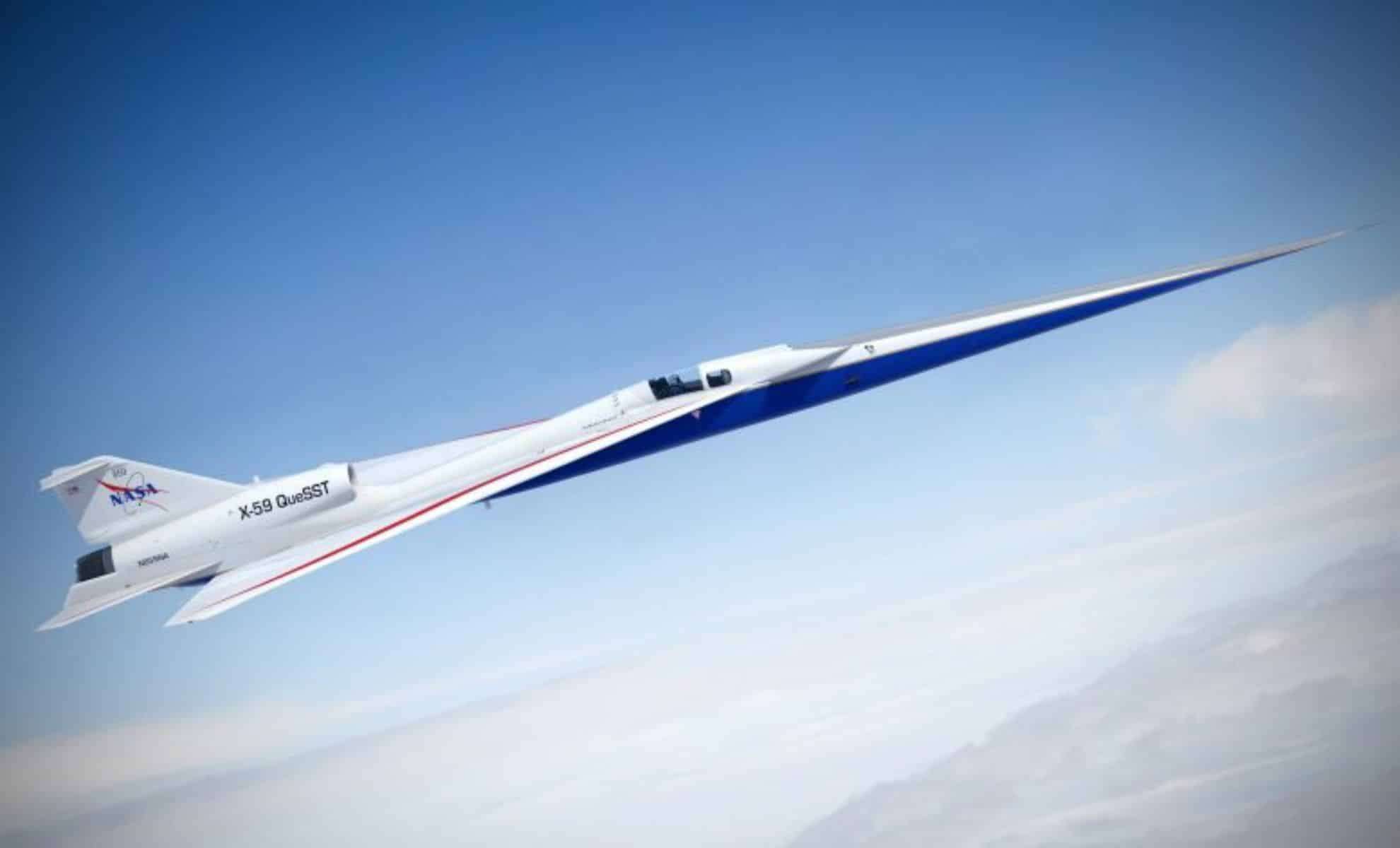
NASA’s innovative X-59 QueSST (Quiet Supersonic Technology) aircraft is nearing a major breakthrough as it approaches its inaugural flight.
Engineered to surpass the speed of sound without the typical disruptive sonic boom, the X-59 aims to transform supersonic travel.
Featuring a refined aerodynamic shape and cutting-edge technology, this aircraft could herald a new chapter in supersonic capabilities, especially by enabling quieter flights over populated areas—a challenge unresolved since the days of the Concorde.

NASA, working alongside Lockheed Martin, is completing final evaluations to confirm the X-59 is prepared for its historic mission.
Advancing Low-Noise Supersonic Flight
One of the key barriers to supersonic commercial aviation over land has been the immense sonic boom produced when aircraft exceed Mach 1, often causing significant public disturbances and leading to stringent flight restrictions. The X-59 seeks to address this by generating a significantly softer sonic signature known as a “sonic thump,” intended to be far less intrusive than traditional sonic booms.
The aircraft’s slender, elongated body and sophisticated aerodynamic framework are critical to limiting shockwave intensity during flight. This design approach minimizes noise pollution generated by supersonic speeds. If successful, this advancement could usher in widespread supersonic travel, substantially shortening transcontinental flights without compromising communities below.
The project’s lead engineers remain confident about the aircraft’s transformative potential. “Our testing evaluates not just the structural integrity but also the stresses the aircraft will encounter once airborne,” explained Walt Silva, a senior scientist at NASA’s Langley Research Center in Virginia. NASA’s Quesst Mission is instrumental in demonstrating that quiet and efficient supersonic flights over land are achievable.
Comprehensive Ground Testing Validates Aircraft Reliability
As the X-59 edges closer to its debut flight, teams have undertaken a battery of rigorous tests to affirm its durability and operational safety. Assessments of structural strength are central, focusing on how the fuselage, wings, and flight control surfaces—such as ailerons, flaps, and rudder—respond to the intense forces encountered at supersonic velocities.
Among critical procedures, structural coupling tests were performed wherein control surfaces were actuated via computer models to verify proper function during flight conditions. “These tests yield valuable data, highlighting areas of strength and aspects needing refinement,” noted Silva. “This iterative process drives continuous improvement toward optimal performance.”
The team has also scrutinized the X-59’s response to aerodynamic vibrations throughout supersonic flight. Early 2022 saw foundational proof tests gauging structural endurance, while more recent experiments employed mechanical “shakers” to simulate real-world vibrational stresses and confirm airframe robustness.
Final Preparations for the X-59’s Launch
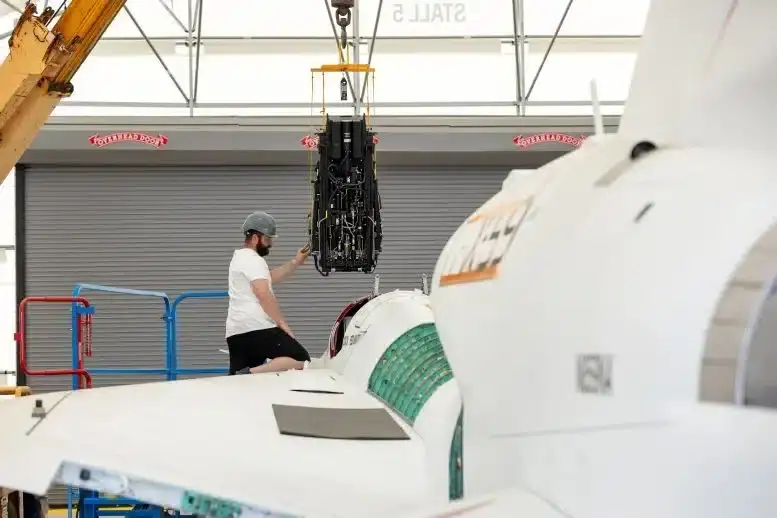
A pivotal milestone was reached with the installation of the ejection seat, a vital safety apparatus designed to protect the pilot during emergencies. This installation and subsequent inspection mark an important step toward flight readiness. Alongside other security features, the ejection seat provides layered protections during test flights and potential future operations.
The team is now concentrating on additional testing aimed at guaranteeing system dependability, including comprehensive evaluations of avionics and wiring to detect and mitigate electromagnetic interference risks. Simulations conducted in controlled environments help verify the aircraft’s consistent performance across diverse conditions.
Furthermore, ground-based taxi trials will soon be executed to ascertain the X-59’s agility and control on runways prior to takeoff. These procedures are fundamental in certifying the aircraft’s capacity for a seamless transition from ground movement to supersonic flight initiation.
Excitement Grows as First Flight Approaches
Anticipation is mounting among engineers and scientists involved with the X-59 as it nears its initial flight. “First flights always bring a mix of tension and excitement,” shared Natalie Spivey, aerospace engineer at NASA’s Armstrong Flight Research Center in California. “We’re eager to evaluate how the aircraft performs in real flight conditions—it’s a thrilling milestone.”
The success of the X-59 inaugural flight holds the potential to redefine air travel worldwide. Proving that supersonic speed can be achieved without generating disruptive sonic booms, NASA’s Quesst Mission may open doors for commercial airlines to offer fast, quiet flights over populated areas. Ultimately, this advancement could significantly reduce journey durations, making global travel quicker and more accessible.





0 comments
Sign in to Comment