
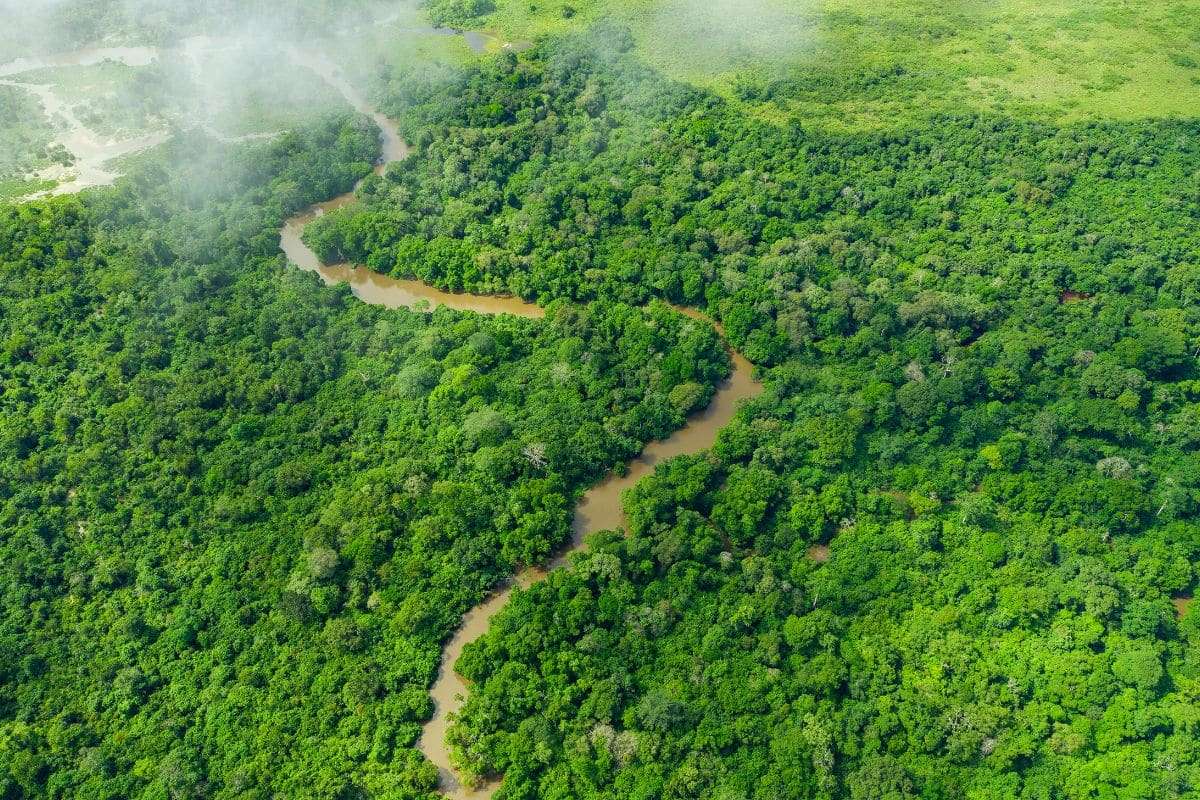
For many years, it was widely assumed that early humans steered clear of rainforest habitats due to their dense vegetation and perceived scarcity of resources. These environments were thought to be too challenging for sustainable human life.
Recent findings, however, overturn this narrative. Research now indicates that Homo sapiens were established in African rainforests at least 150,000 years ago, pushing back the timeline by 80,000 years compared to earlier estimates.
Revisiting Human Evolution Perspectives
Historically, scholars believed early human populations favored open landscapes such as grasslands and savannas, which offered easier access to food and visibility. Rainforests, with their dense canopy, humid atmosphere, and hidden threats, were considered inhospitable.

Nevertheless, a groundbreaking investigation by the Human Palaeosystems Research Group has challenged this outlook. The team uncovered traces of human activity in Côte d’Ivoire’s rainforests dating back roughly 150,000 years.
Uncovering a Long-Forgotten Site
This discovery traces back to the 1980s, when Professor Yodé Guédé from l’Université Félix Houphouët-Boigny led excavations in Côte d’Ivoire during a joint Ivorian-Soviet project.
At the time, the group found ancient stone tools buried deep in the soil, suggesting past human occupation. Yet, they were unable to accurately date the artifacts or reconstruct the environmental conditions of that era.
Today, with advanced analytical techniques, Professor Eleanor Scerri and her colleagues revisited the site. They were motivated by climate models hinting the region may have served as a rainforest refuge during past dry spells when forest patches fragmented.
Redefining When Humans Settled Rainforests
By applying sophisticated dating tools like Optically Stimulated Luminescence (OSL) and Electron Spin Resonance (ESR), they dated the artifacts at approximately 150,000 years old.
Before this, the earliest secure evidence of humans in African rainforests was only about 18,000 years old, while the oldest rainforest habitation worldwide was dated to roughly 70,000 years ago in Southeast Asia.
This groundbreaking data more than doubles the known chronology for rainforest occupation, revealing early human adaptability to complex tropical environments much earlier than previously thought.
Dr. Eslem Ben Arous, the lead scientist behind the published study in Nature, highlighted the significance of these findings:
“This pushes back the oldest known evidence of humans in rainforests by more than double the previously known estimate.”
Insights into Ancient Rainforest Life
Detailed analysis of sediment samples helped reconstruct the ancient environment surrounding the excavation. Researchers examined pollen grains, phytoliths—microscopic plant remains—and leaf wax isotopes to piece together the past ecosystem.
The data demonstrated that a dense rainforest canopy covered the area, featuring towering trees, rich undergrowth, and a moist climate, refuting earlier ideas that early humans exclusively inhabited open landscapes. Low levels of grass pollen indicated this was an extensive, thriving rainforest rather than a narrow forest corridor.
Professor Guédé expressed optimism for future investigations:
“This groundbreaking discovery is likely just the start. Numerous other sites in Côte d’Ivoire remain to be explored to better understand human occupation in rainforest environments.”
Early Humans' Remarkable Flexibility
This revelation adds complexity to the narrative of human evolution, showing early Homo sapiens successfully adapted to diverse habitats beyond savannas and grasslands.
Professor Scerri remarks, “Compelling evidence affirms that ecological variety was central to our species’ history. Different groups occupied varied regions and habitat types, reflecting a nuanced pattern of population dynamics.”
- Categories:
- Evolution










0 comments
Sign in to Comment