
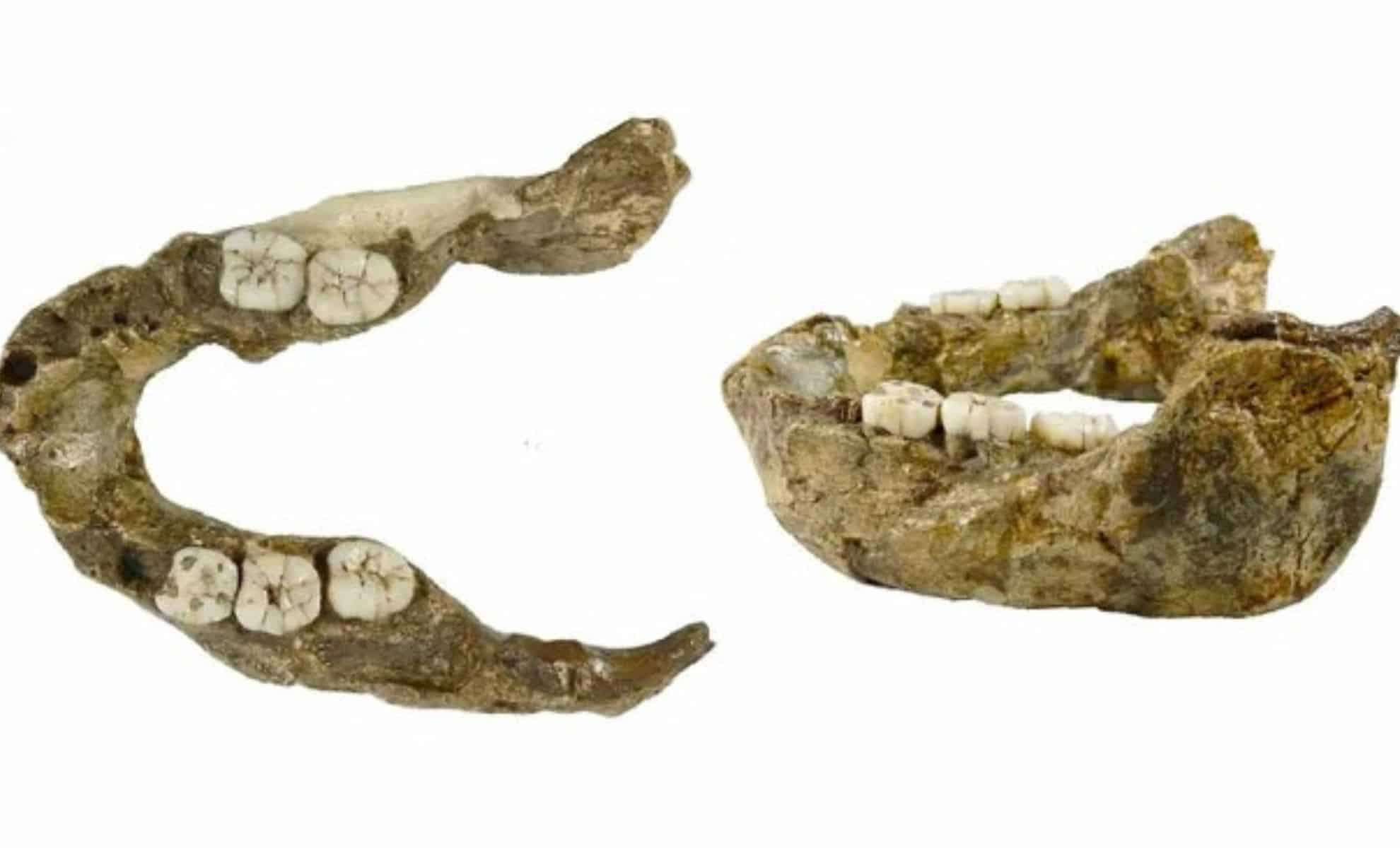
Researchers have uncovered a previously unidentified human ancestor through a 1.4-million-year-old fossilized jawbone, prompting a new perspective on early hominin evolution. Discovered in South Africa’s Swartkrans Cave, this specimen was initially assigned to the ancient human species Homo ergaster. However, a recent investigation using cutting-edge X-ray technology and 3D modeling demonstrates that the jaw does not align with any known member of the Homo genus. Instead, it represents a completely newly identified species within the Paranthropus genus, an extinct group recognized for their heavy jaws and large molars.
Published in the Journal of Human Evolution, this discovery marks the first new Paranthropus species classification since the 1970s. The evidence points to a landscape in southern Africa over a million years ago where multiple human-like species thrived simultaneously, complicating previous simplistic evolutionary models.
Reevaluating a Fossil After Seven Decades
The jawbone, cataloged as SK 15, was excavated in 1949 at Swartkrans Cave, well-known for fossils of early Homo species and Paranthropus robustus. Initially thought to belong to Homo ergaster, a presumed ancestor of modern humans, persistent questions about its atypical jaw configuration and tooth shape remained unanswered for decades.

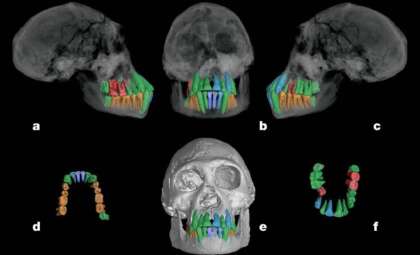
In an effort to clarify its origins, Clément Zanolli, a paleoanthropologist from the University of Bordeaux, led a team that conducted high-resolution X-ray scanning and 3D digital reconstructions. Their analysis uncovered clear distinctions between SK 15 and all known Homo species, indicating it belonged to an entirely different evolutionary branch.
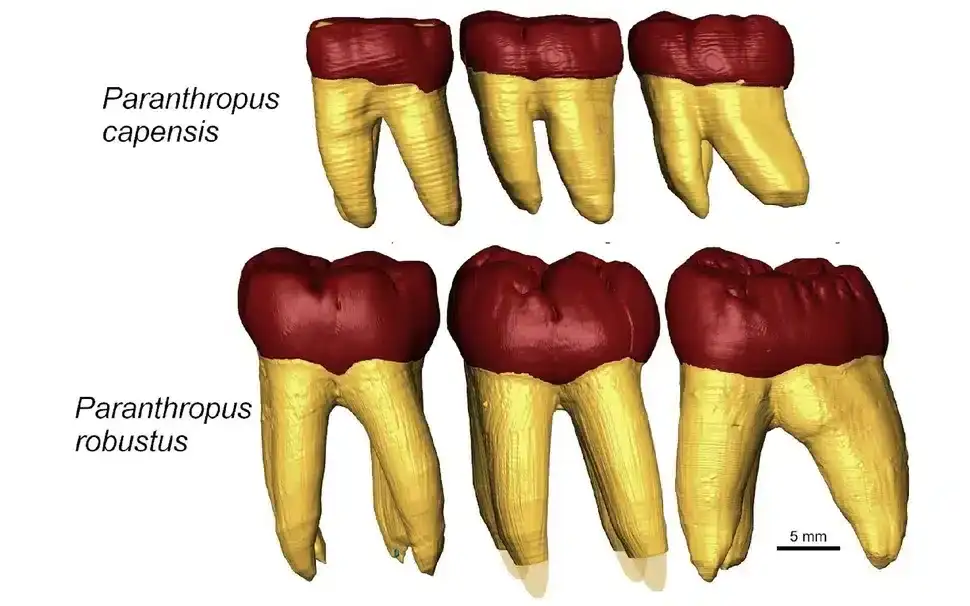
While SK 15 externally resembled H. ergaster, Zanolli explained it appeared “a bit unusual for Homo.” The jawbone is notably thicker, and its molars are larger and more rectangular than those typically seen in early humans, which usually have smaller, rounded teeth. A closer examination of the dentine beneath the enamel further confirmed SK 15’s unique identity compared to any known Homo species.
“This represents the first new Paranthropus species described since the 1970s,” Zanolli stated. This fossil was assigned to a newly named species, Paranthropus capensis.
The Significance of Paranthropus
The Paranthropus lineage, often nicknamed the “Nutcracker Man”, inhabited parts of Africa from about 2.7 million to 1 million years ago. These hominins are characterized by exceptionally strong jaws, large molars, and powerful chewing muscles adapted for processing tough, fibrous vegetation.
Before this new identification, the genus consisted of three recognized species:
- P. aethiopicus, an ancient species from East Africa,
- P. boisei, the most robust and heavily built known species,
- P. robustus, native to southern Africa.
Adding P. capensis to this list reveals a distinctive Paranthropus species that is smaller and less specialized compared to its relatives. Unlike P. robustus with its exceptionally large jaws suited for a very tough diet, P. capensis featured smaller teeth and a comparatively lighter jaw structure.
Zanolli suggested they likely occupied different ecological niches. The highly robust P. robustus probably had a diet requiring intense chewing power, while P. capensis's less robust jaw and smaller teeth hint at a potentially more varied diet and different food sources.
This finding challenges the long-held view that Paranthropus species were evolutionary dead ends. Instead, it implies some species were more flexible, coexisting alongside early Homo species for extended periods.
A Diverse Hominin Ecosystem
The recognition of P. capensis enriches our understanding of the diversity of early hominins. Around 1.4 million years ago, southern Africa was home to several hominin species—Homo erectus, Homo habilis, P. robustus, and now P. capensis.
This diversity prompts fresh inquiries about the dynamics of their existence. How did these species coexist and compete? Did they occupy distinct ecological roles? The overlap suggests an intricate ecosystem where various hominin species evolved side by side rather than through simple extinction-replacement cycles.
Zanolli emphasized the value of Swartkrans Cave as a critical site to explore hominin variety and interactions, describing the human evolutionary record as a complex network of species adaptations and survival strategies.
Future research hopes to uncover more fossils of P. capensis, which could illuminate whether this species persisted for a long time or represented a brief evolutionary experiment.
Implications for Understanding Our Origins
The discovery of Paranthropus capensis represents a pivotal advancement in analyzing early human evolution. It stresses that our ancestry resembles a branching, intricate tree rather than a single straight lineage from ape-like species to modern humans.
It also opens up vital questions for ongoing research:
- Did early Homo and Paranthropus species interact or influence each other?
- What factors led to the success of Homo and the extinction of Paranthropus?
- Could more unknown Paranthropus species still be undiscovered, reshaping our evolutionary narrative?
Advances in 3D morphology, genetic techniques, and fossil dating promise to reveal further surprises like P. capensis. Excavations continuing at Swartkrans Cave and other rich fossil sites are expected to uncover forgotten branches of our evolutionary history.
Ultimately, this finding underscores that the origins of humans are far more complex and intertwined than formerly imagined.







0 comments
Sign in to Comment