
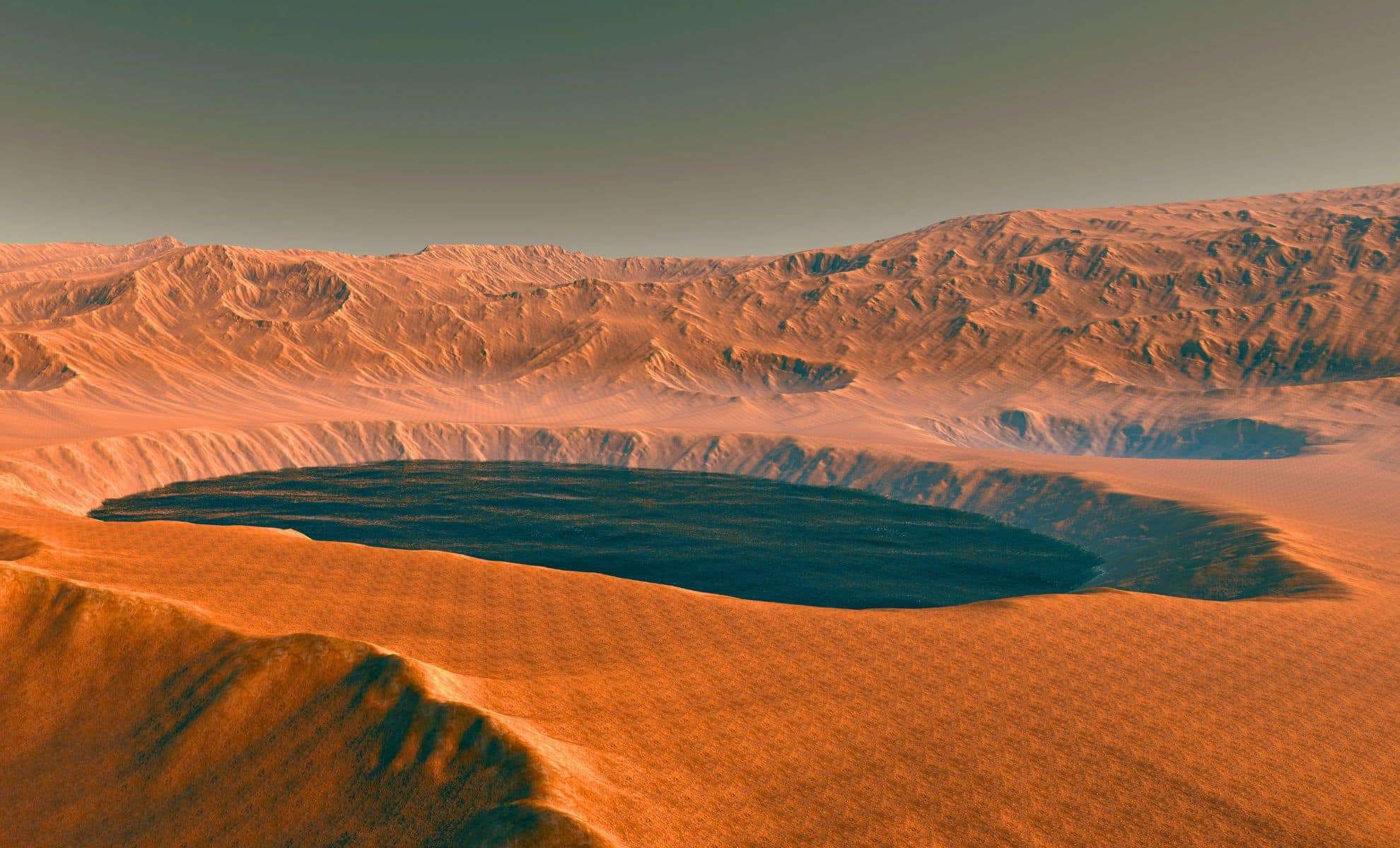
Contrary to the cold and arid landscape we associate with Mars today, fresh findings from the University of Arkansas indicate that billions of years ago, the planet featured extensive rivers that fed into a huge ocean located in its northern region.
Published in the latest issue of Geophysical Research Letters, this research expands upon prior evidence of Martian water bodies such as lakes and rivers. It notably presents the strongest case yet that Mars harbored not only flowing rivers but also a sizeable ocean.
Uncovering Evidence in Ancient Martian River Systems
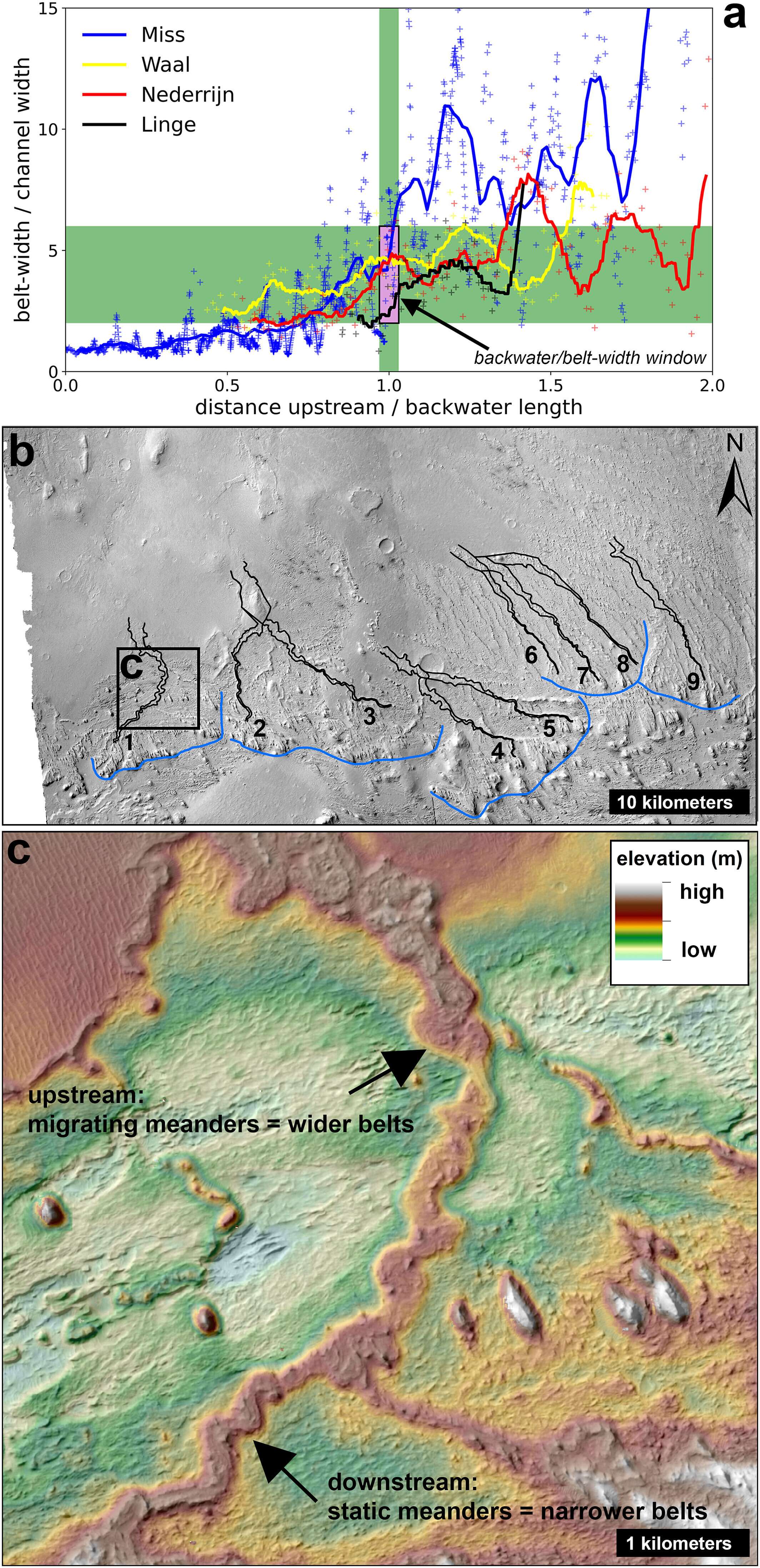
The new study centers on the identification of expansive river deltas and backwater areas—where river currents decelerate before joining larger water bodies. Cory Hughes, the study’s principal investigator, suggests these formations serve as powerful indicators that Mars once contained a large, tranquil water body, potentially an ocean.

Similar to Earth, where rivers form deltas upon entering oceans due to slowing flow, Martian river channels exhibit comparable sedimentary structures on Mars. Hughes and his colleagues observed these patterns that imply sediment accumulation from river water flowing into a vast sea or ocean. He emphasizes that these deltas are mature and well-developed, reflecting a dynamic and sustained hydrological environment.
Hughes elaborates, “These deltas show significant maturity, strongly supporting the presence of a former ocean or at least a large sea,” reinforcing the concept of Mars having a complex water system instead of an entirely dry surface.
Topographic Inversion Sheds Light on Martian Riverbeds
Researchers employed a technique called topographic inversion to validate that these riverbeds are remnants of an ancient ocean. This process, well-documented on Earth, reveals former river paths after soft sediments erode away, exposing harder materials like sandstone that form ridges.
Because Mars lacks significant tectonic shifts, these inverted river channels have survived in remarkable condition. Both Hughes and his advisor, John Shaw, studied this phenomenon locally in Northwest Arkansas, where they surprisingly found a rare case of an inverted river delta. Hughes remarks, “I came seeking this phenomenon without knowing it was right in my backyard. It was truly a serendipitous discovery.”
Implications for Life on Mars: Rivers to Oceans
Since liquid water is essential for life as we understand it, Hughes points out, “No known lifeform exists without access to liquid water, whether on Earth or elsewhere in the cosmos.” The discovery of abundant water bodies in Mars’ past improves the possibility that it might have once supported living organisms.
Finding ancient rivers feeding into a massive ocean strengthens ongoing efforts to investigate Mars’ potential habitability. Although direct evidence of Martian life remains elusive, this research indicates that Mars may have been a far more welcoming environment than previously believed.
- Categories:
- News










0 comments
Sign in to Comment