
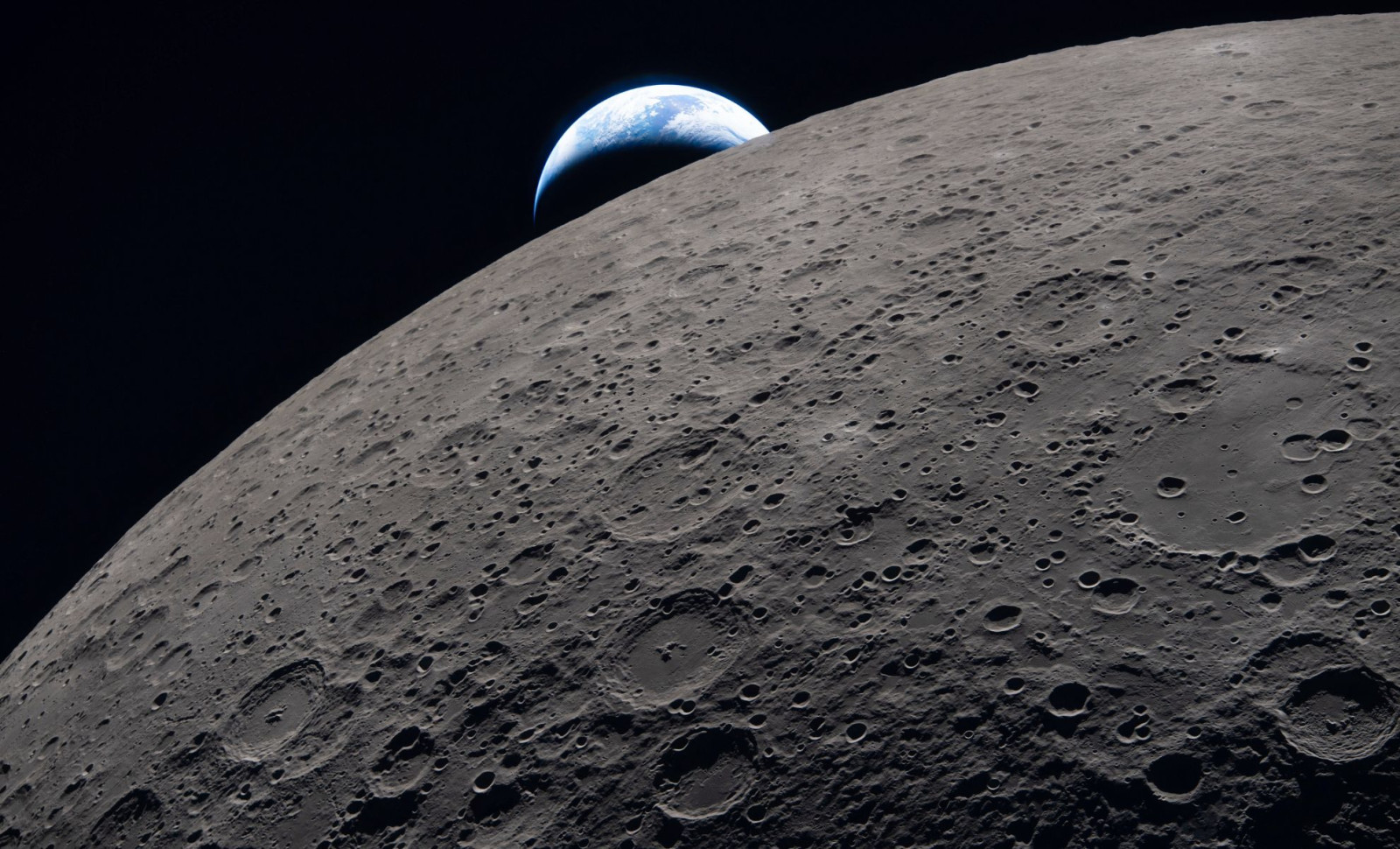
Scientists have identified a previously unknown route from Earth to the moon that significantly cuts fuel requirements for spacecraft. This path exploits gravitational pulls while guaranteeing continuous Earth communication, eliminating signal losses experienced during earlier missions.
The team underscored the importance of refining lunar flight paths, noting that even slight fuel savings can lead to substantial cost benefits in space expeditions.
Utilizing cutting-edge computational modeling, the researchers employed the functional connections theory to lower the complexity of simulating orbital behavior. Their published study in the journal Astrodynamics reveals they explored 30 million candidate routes, narrowing down to 280,000 promising trajectories for in-depth examination.

Harnessing Gravity to Propel Spacecraft
Rather than relying heavily on propulsion systems, spacecraft often maneuver by leveraging gravity. The newly discovered trajectory taps into the interplanetary transportation network, a web of gravitational corridors created by celestial mechanics. Researchers determined that approaching the moon’s orbit variate from the Earth-opposite side allows a more efficient gravitational assist. Vitor Martins de Oliveira, a postdoctoral fellow at the University of São Paulo, clarified:
“Instead of assuming it’s easier to choose the part of the variate closest to Earth, we can use systematic analysis with faster methods to try to find nontrivial solutions.”
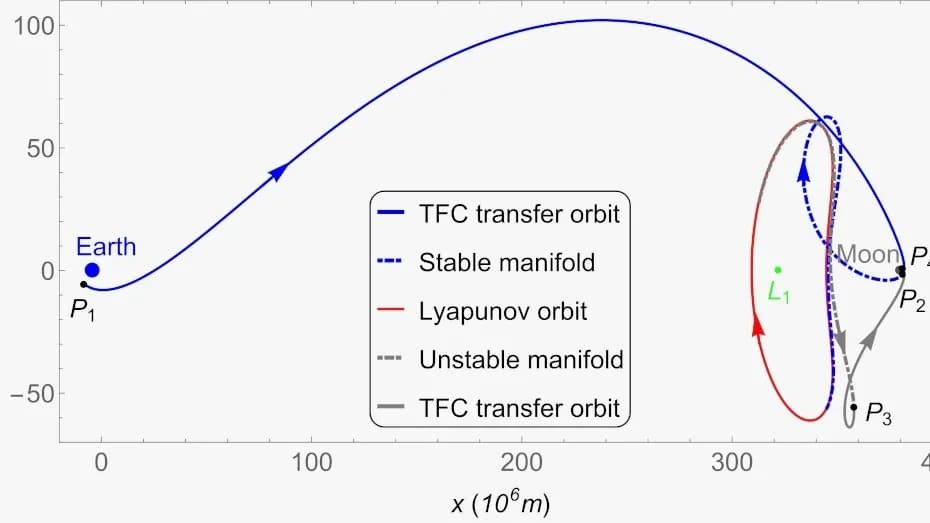
This method decreases fuel consumption by 58.80 meters per second compared to the previous best-known option, marking a subtle yet impactful enhancement for mission design.
Ensuring Constant Contact With Earth
This newly found lunar approach also maintains nonstop communication with ground control. Earlier missions like Artemis 2 encountered communication dropouts when traversing behind the moon. Oliveira pointed out that this innovative orbit removes that issue.
“The Artemis 2 mission, for example, lost communication with Earth for a while because it was directly behind the moon,” he said. “The orbit we propose is a solution that maintains uninterrupted communication.”
Reliable real-time contact is crucial for lunar operations, enabling constant spacecraft monitoring and swift action if problems arise.
Implications for Upcoming Moon Missions
Though the research primarily accounted for Earth and lunar gravitational effects, scientists believe that incorporating influences like solar gravity can reveal even more optimal routes. Allan Kardec de Almeida Júnior, the lead researcher from the University of Coimbra, Portugal, stated:
“The systematic analysis we applied in our work is something that could be adopted more widely going forward.”
Featured in the April 10 edition of Astrodynamics, this work highlights how comprehensive simulations reveal trajectories overlooked by traditional techniques. The findings underscore how gravitational influences can streamline space travel, cut fuel consumption, and boost mission dependability.
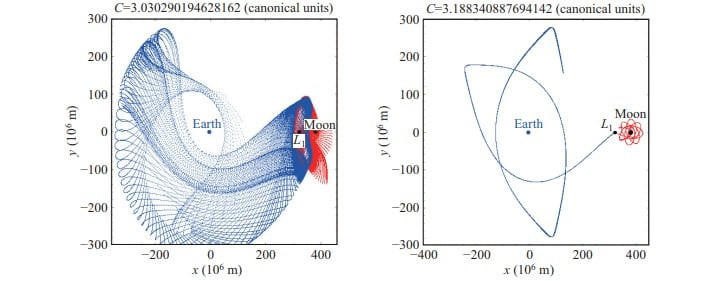
By bringing this concealed lunar corridor to light, the study paves the way for future exploration endeavors. This trajectory blends efficiency, safety, and reliable communication, offering space agencies a practical strategy to enhance both human and robotic lunar missions.
- Categories:
- Space








0 comments
Sign in to Comment