
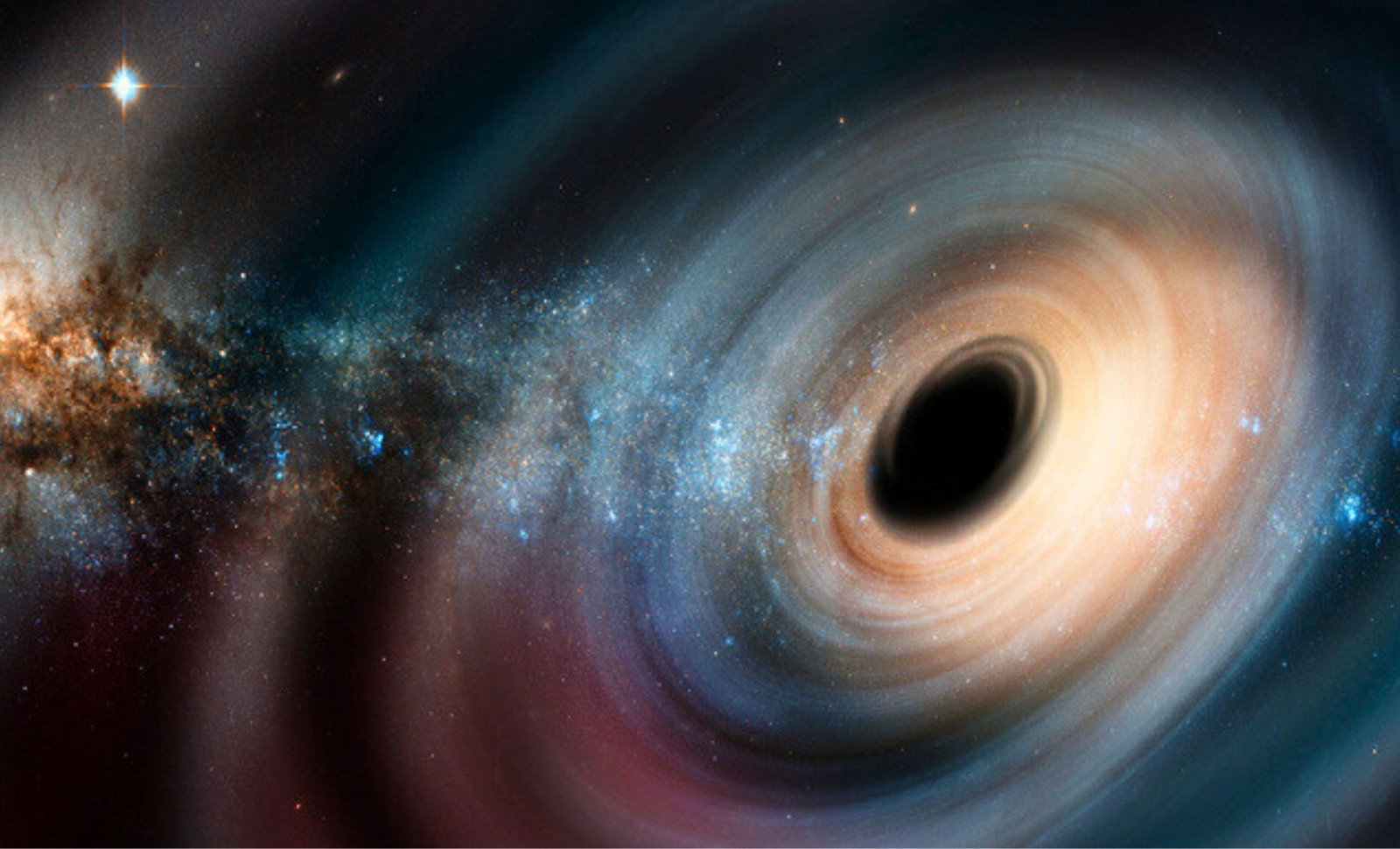
A team of astrophysicists has discovered a slender hot plasma formation extending outward from the Local Hot Bubble (LHB) encompassing the Sun toward remote galactic regions. This newly detected feature, described as an interstellar plasma corridor, may be a rare passage within the interstellar medium, potentially forged by ancient supernova explosions.
The discovery was made through an extensive examination of the soft X-ray background using observations from the eROSITA telescope, which operates aboard the Spectrum-Roentgen-Gamma (SRG) mission. This space observatory surveyed the sky with exceptional sensitivity, pinpointing structures in the hot, diffuse gas occupying the Solar System's vicinity and adjacent sections of the Milky Way.
Latest research published in Astronomy & Astrophysics details the identification of several tunnel-like plasma formations within the Local Hot Bubble. These narrow, elongated features, aligned in directions toward constellations such as Centaurus and Canis Major, act as low-density highways linking our Solar environment to distant galactic domains.

The researchers constructed a comprehensive map of the western Galactic hemisphere using over 2,000 spatial bins. The plasma distribution revealed supports longstanding hypotheses that multiple supernova explosions have not only carved vast cavities but also shaped extended conduits through the hot interstellar plasma.
Soft X-ray data reveal plasma corridors adjacent to the Sun
The investigation was spearheaded by scientists at the Max Planck Institute for Extraterrestrial Physics, analyzing data from eROSITA’s inaugural all-sky survey (eRASS1), acquired during a phase of diminished solar activity. This timing minimized interference caused by solar wind charge exchange, a known source of noise in X-ray background measurements.
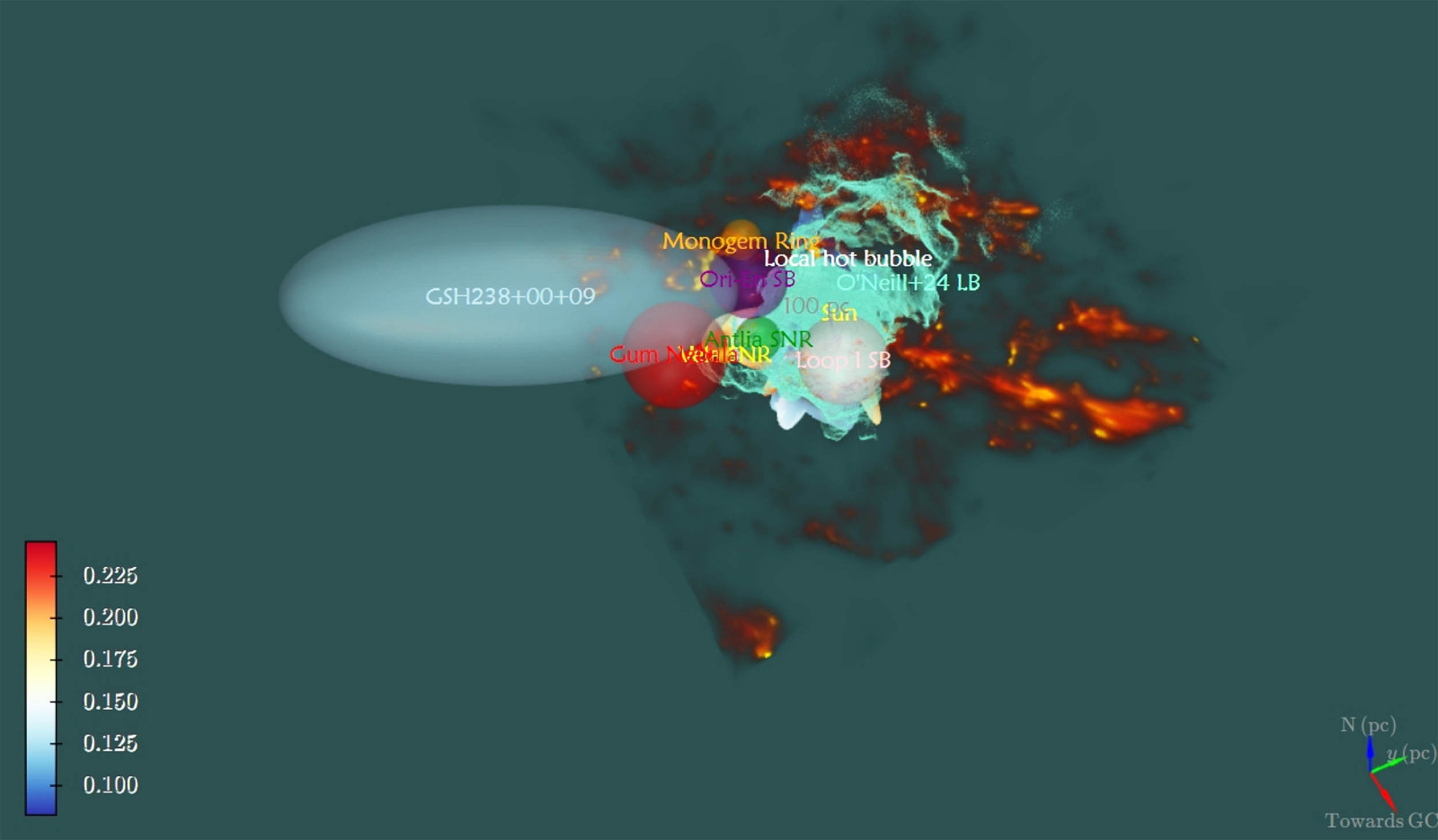
Designed to capture diffuse X-ray emissions from hot gas and plasma, eROSITA was integrated with historical data from the ROSAT satellite and combined with neutral hydrogen and dust datasets from HI4PI and Planck. Together, these enabled the creation of a precise three-dimensional model of the Local Hot Bubble and its extensions.
A highlight of the study is the revelation of elongated, low-density cavities filled with hot plasma. These areas, characterized by reduced dust presence and intensified X-ray emissions, appear in directions such as Centaurus and Canis Major. The researchers interpret these as tunnels carved through the surrounding interstellar gas.
The Earth.com news coverage suggested this finding offers confirmation for longstanding theories about hidden cosmic structures. Observations back models proposing these interstellar plasma pathways are sculpted by large-scale feedback from stellar evolution processes.
The publication discusses how the emission measure maps of the LHB show notable anti-correlation with local interstellar dust, bolstering the concept of vast structures with coherent geometries. Additionally, they note that the average thermal pressure within the bubble is lower than typical values found in isolated supernova remnants, implying the bubble may be open in certain directions, especially at elevated Galactic latitudes.
Shaping of the galactic environment by ancient supernova activity
The Local Hot Bubble is a well-characterized feature encompassing our Solar neighborhood, spanning about 300 light-years. It is believed to have originated from multiple supernova detonations occurring roughly 10 to 20 million years ago. These events swept away cooler interstellar material, leaving behind a hot plasma cavity detectable via soft X-ray emission.
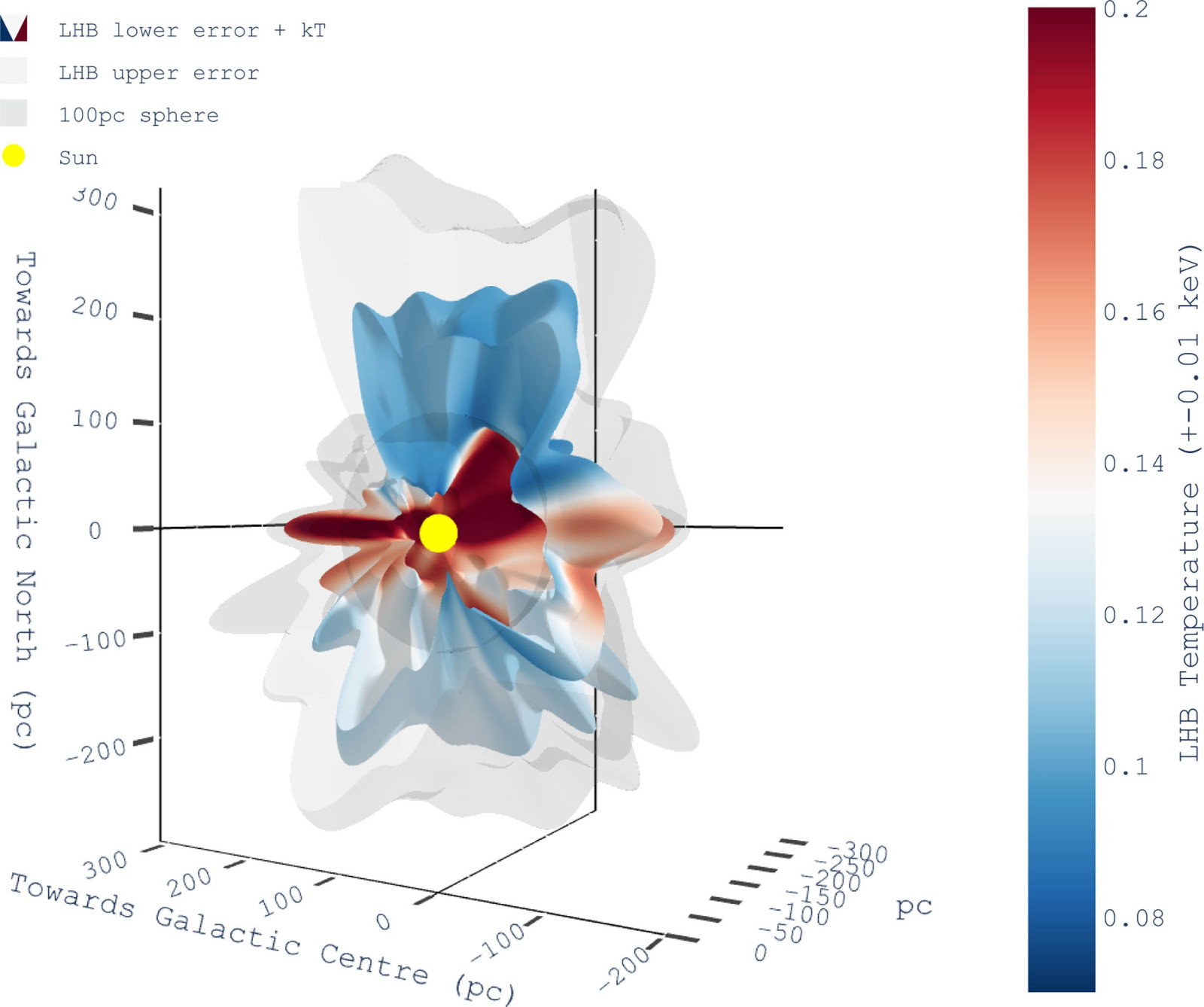
In earlier studies, it was theorized that supernova-driven cavities could form an interconnected network of superbubbles, though direct proof was limited. The advent of high-resolution X-ray mapping tools like eROSITA has now provided compelling evidence supporting this scenario.
A significant discovery from the investigation is a distinct north-south temperature gradient across the Local Hot Bubble. The southern Galactic hemisphere exhibits a higher average plasma temperature (122 eV) compared to 101 eV in the northern hemisphere. This temperature disparity, identified through spectral analysis, points to a non-uniform LHB influenced by asymmetric heating processes or directional outflows.
By correlating temperature variations with dust and gas distributions, the study refines earlier models based solely on broadband count ratios. As noted in work published by Cambridge University Press, accurately mapping such interstellar structures requires disentangling overlapping emissions, a task facilitated by eROSITA’s superior spectral resolution and sky coverage.
Interstellar corridors enhance our understanding of galactic architecture
The identified tunnel-like cavities resemble previously hypothesized interstellar plasma channels—extended conduits of hot gas connecting diverse galactic locations. Current findings suggest these passages are part of an extensive structure embedded within the hot plasma environment. Their shape and spectral traits indicate formation through ancient stellar winds or shock fronts driven by past supernovae.
Situated near the center of the Local Hot Bubble, the Solar System offers a unique vantage point for exploring how such interstellar tunnels might influence cosmic ray propagation, dictate gas movements, and affect dust behavior on a galactic scale.
The team also suggests that areas exhibiting exceptionally low thermal pressure may correspond to openings within the LHB, allowing plasma and materials to flow between interconnected cavities. This supports the notion of a linked plasma network rather than isolated voids.
- Categories:
- Space





0 comments
Sign in to Comment