
Researchers at the University of Bristol have unveiled a sobering forecast for the distant future of our planet. Their article published in Nature Geoscience outlines a scenario where all terrestrial life could vanish within roughly 250 million years due to an intense, triple-phase extinction event. Utilizing advanced supercomputer models, the team highlights a future shaped by dramatic geological and climate interactions.
The Ultimate Extinction Scenario: Earth's Triple Threat
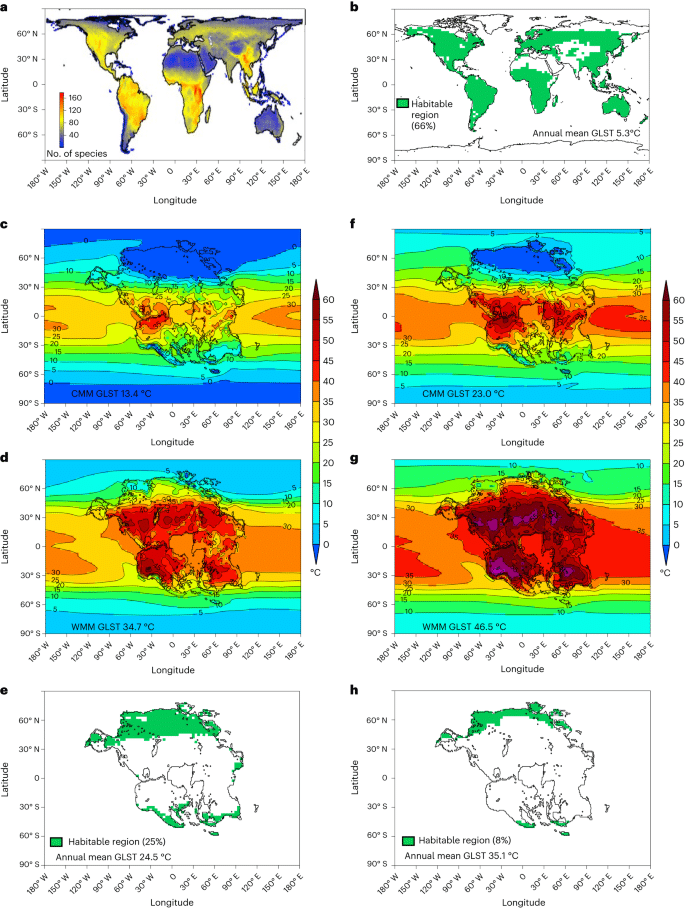
The scientists describe Earth’s long-term destiny as a series of three catastrophic events unfolding over hundreds of millions of years. The initial stage involves the assembly of a new supercontinent, driven by the slow movement of tectonic plates. This landmass, named Pangaea Ultima, will form as continents fuse together. This convergence will ramp up volcanic eruptions, releasing vast amounts of greenhouse gases and pushing global temperatures to alarming highs.
Temperatures are expected to soar to around 40-50°C, conditions that would render the planet inhospitable to mammals. The volcanic heating outpaces any climate change humans have caused, signaling only the beginning of a lethal environmental transformation.

Elevated temperatures will lead to soaring CO2 concentrations, ultimately threatening the atmosphere’s stability. As the study states,
“Coupled with tectonic–geographic variations in atmospheric CO2 and enhanced continentality effect for supercontinents, Earth could reach a tipping point rendering it uninhabitable to mammalian life.” For mammals, including humans, these extreme conditions would make survival impossible.
This highlights the delicate balance between Earth's geological activity and its habitability.
A Drastic Plunge: From Scorching Heat to Deadly Cold
Following the intense warming phase fueled by volcanic activity, the planet is expected to undergo a rapid temperature decline. This cooling, akin to previous supercontinent cycles, will trigger a secondary extinction event characterized by ischemic necrosis, where extreme cold causes blood vessels to constrict, freezing warm-blooded animals. Mammals that survive the heatwave will likely succumb to the subsequent freeze, sealing their fate.
This dramatic atmospheric instability underscores the unpredictability of Earth's far-future climate. In light of ongoing challenges posed by human-driven climate change, this research emphasizes the profound long-term impacts of Earth's evolving geology. It prompts urgent reflection on humanity’s role in safeguarding life for generations to come.
Present-Day Implications: Tackling Climate Change Now
Although the paper published in Nature Geoscience focuses on a timeline spanning hundreds of millions of years, Dr. Eunice Lo, co-author and research fellow at the University of Bristol, stresses the pressing need to confront today’s climate emergency. She cautions that while the prediction of a life-hostile planet lies far ahead, extreme heat and environmental damage are already impacting human health.
Dr. Lo explains, “While we are predicting an uninhabitable planet in 250 million years, today we are already experiencing extreme heat that is detrimental to human health. This is why it is crucial to reach net-zero emissions as soon as possible.”
Human-driven greenhouse gas emissions continue to cause significant disruptions, from rising global temperatures to more frequent extreme weather events. These phenomena are immediate and demand urgent global responses. By committing to net-zero emissions, humanity can slow climate change's progression and reduce the risk of catastrophic environmental futures. The survival of life on Earth hinges not just on natural geological forces but critically on the choices we make today.
- Categories:
- News











0 comments
Sign in to Comment