
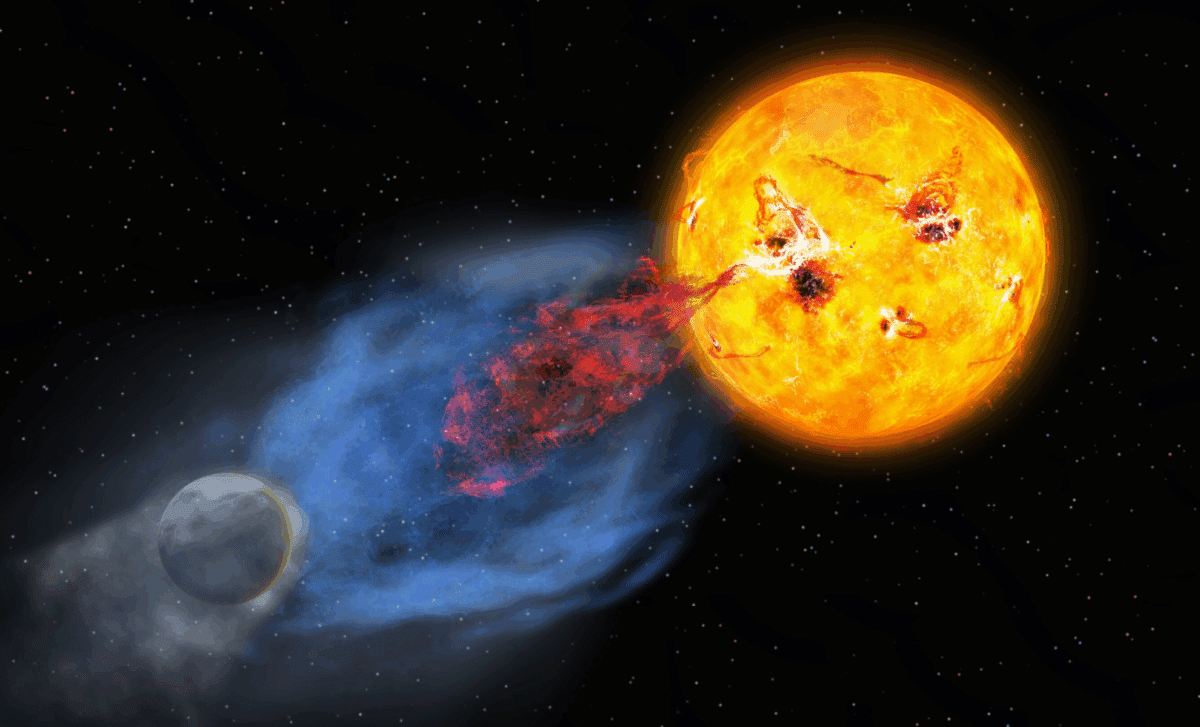
Investigating youthful stars such as EK Draconis has unveiled new understanding of our Sun’s tumultuous early activity. By analyzing coronal mass ejections (CMEs) emitted by these stars, researchers are piecing together how powerful solar events billions of years ago could have impacted Earth’s environment and possibly facilitated the emergence of life. Leveraging global scientific partnerships and advanced instruments, this work is shedding light on some of the solar system’s oldest enigmas.
Decoding the Sun’s Intense Early Behavior
For many years, scientists have been intrigued by the influence of the Sun’s primitive, volatile phase on Earth’s development. During its youth, the Sun likely produced frequent intense solar flares and coronal mass ejections (CMEs) that might have dramatically shaped conditions across the solar system, especially on our home planet.
“What inspired us most was the long-standing mystery of how the young sun’s violent activity influenced the nascent Earth,” says Kosuke Namekata, a key researcher from Kyoto University.
Add Cosmo Herald as a Preferred Source

To gain deeper insight into this ancient era of solar activity, the international team employed a diverse array of observation methods, combining space telescopes and ground-based facilities. This extensive approach enabled the detailed examination of CMEs from EK Draconis, a star similar to the young Sun, providing valuable comparisons to our own star’s early behavior.
By studying the energy levels and temperature variations in these CME events, scientists have started unveiling the intense and energetic conditions that probably prevailed during the solar system’s formative years.
CMEs and Their Impact on Planetary Atmospheres
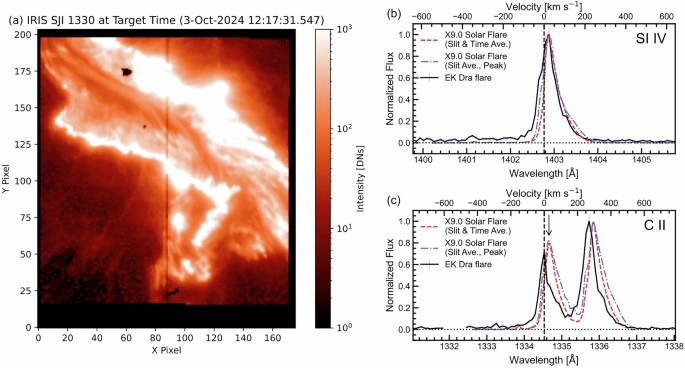
The vigorous eruptions from the early Sun may have been crucial in altering the atmospheres of planets like Earth, Mars, and Venus. These CMEs are not just spectacular space weather phenomena; their ability to modify atmospheric chemistry makes them essential for understanding habitability. Studying the CMEs of EK Draconis, researchers found evidence for multi-temperature plasma components, including both hot and cooler materials.
“By combining space- and ground-based facilities across Japan, Korea, and the United States, we were able to reconstruct what may have happened billions of years ago in our own solar system,” explains Namekata.
Fast-moving hot plasma, traveling between 300 and 550 kilometers per second, contrasted with cooler plasma speeds closer to 70 kilometers per second. These variations imply that such CMEs could have generated intense shock waves substantial enough to influence or even strip away early planetary atmospheres. The energetic particles they carried likely contributed to creating organic molecules and greenhouse gases, setting the stage for life to emerge.
Piecing Together the History of Solar Activity
The research team’s findings represent a major breakthrough. Utilizing ultraviolet data from the Hubble Space Telescope alongside optical observations from observatories in Japan and Korea, they captured the dynamic, multi-temperature nature of a CME from a young solar analog in real time. This multi-wavelength approach revealed the intricate structure of these powerful stellar eruptions.
This study delivers the first definitive proof that stars at the beginning of their life, like our early Sun, can release plasma bursts similar to contemporary solar CMEs. Understanding these energetic processes gives scientists a window into the hostile environments that shaped the young Earth and other planets, aiding predictions about where life could arise both here and on distant worlds orbiting other stars.
Published in Nature Astronomy, this work represents a crucial leap forward in unraveling stellar evolution and its effects on planetary habitability.
- Categories:
- Science











0 comments
Sign in to Comment