
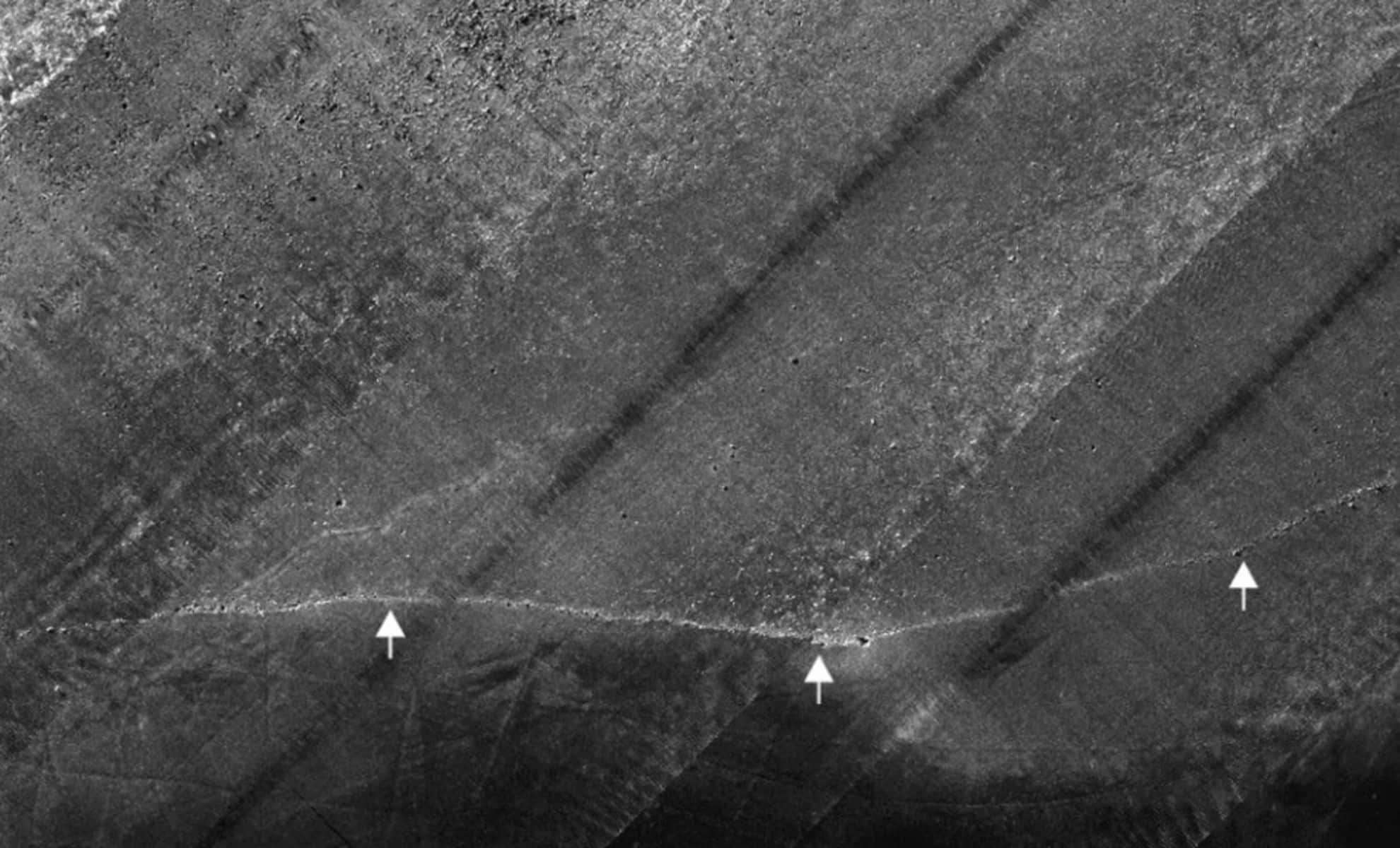
An intriguing submerged stone wall discovered in the Baltic Sea has sparked global interest among archaeologists and historians alike. Situated roughly one kilometer in length, this submerged structure lies 21 meters below the water near the town of Rerik in the Bay of Mecklenburg. Known as the Blinkerwall, this find promises to shed fresh light on human activity from over 10,000 years ago, offering valuable evidence about the lifestyles of ancient hunter-gatherer communities.
An Extraordinary Find Beneath the Baltic Sea
The Blinkerwall is composed of approximately 1,700 stones, laid out to form a nearly 971-meter-long structure measuring up to two meters wide and generally under one meter tall. Its submerged state is a remarkable aspect of this discovery. The Baltic Sea, like many coastal regions, experienced dramatic shifts after the last Ice Age, as rising sea levels led to flooding of previously dry land, including parts of the Bay of Mecklenburg. It’s believed the wall was constructed by early humans before these areas were submerged, granting us a rare glimpse into prehistoric settlements now hidden underwater.
This discovery calls into question long-held assumptions about the mobility of hunter-gatherer societies. These groups have traditionally been seen as largely transient, migrating frequently to gather resources. Yet, the presence of this extensive structure suggests that some may have adopted a more permanent lifestyle. The exact function of the wall remains a subject of investigation; possibilities include defensive purposes, hunting aids, or community markers.


Exploring the Purpose of the Blinkerwall: Hunting Aid or Settlement Boundary?
One prominent theory posits that the Blinkerwall served as a tool for reindeer hunting, an essential food source for prehistoric groups. Its placement in the Bay of Mecklenburg and considerable size and shape might have helped channel animals into confined areas, thus improving hunting success rates. In this sense, the structure could represent a sophisticated prehistoric hunting mechanism, functioning as a form of trap or funnel. Ongoing research aims to explore this use further.
Alternatively, some experts suggest that the wall may have been part of a larger habitation site. Should this be confirmed, it would transform our understanding of early European societies. Was the Blinkerwall a residence-related construction, or did it fulfill a ceremonial or symbolic role, similar to other ancient landmarks? Researchers intend to delve into these possibilities in upcoming studies.
Reassessing Prehistoric Communities in Northern Europe
The Blinkerwall's significance goes beyond just an isolated curiosity; it touches on broader debates about the nature of early human societies across northern Europe. Scholars have long questioned whether prehistoric people were inherently nomadic or if some established enduring settlements. The scale and permanence implied by this wall challenge the view that early hunter-gatherers fully lacked stationary communities.
This evidence broadens our appreciation of early humans' interaction with their environment. If the wall was employed for hunting or managing resources, it suggests a degree of organization and foresight unexpected in so-called simple societies. These findings could prompt a reevaluation of the traditional evolutionary model that separates primitive from complex societal behaviors.
Beyond human activities, the Blinkerwall also provides valuable context for studying environmental changes in prehistoric Europe. The submersion of the structure highlights the impact of climate change and rising sea levels on human settlements. As researchers analyze the site, they will investigate how fluctuating coastlines influenced the lives and adaptations of early communities. Did increased waters compel shifts in lifestyle or spur the construction of more substantial, permanent features?













0 comments
Sign in to Comment