
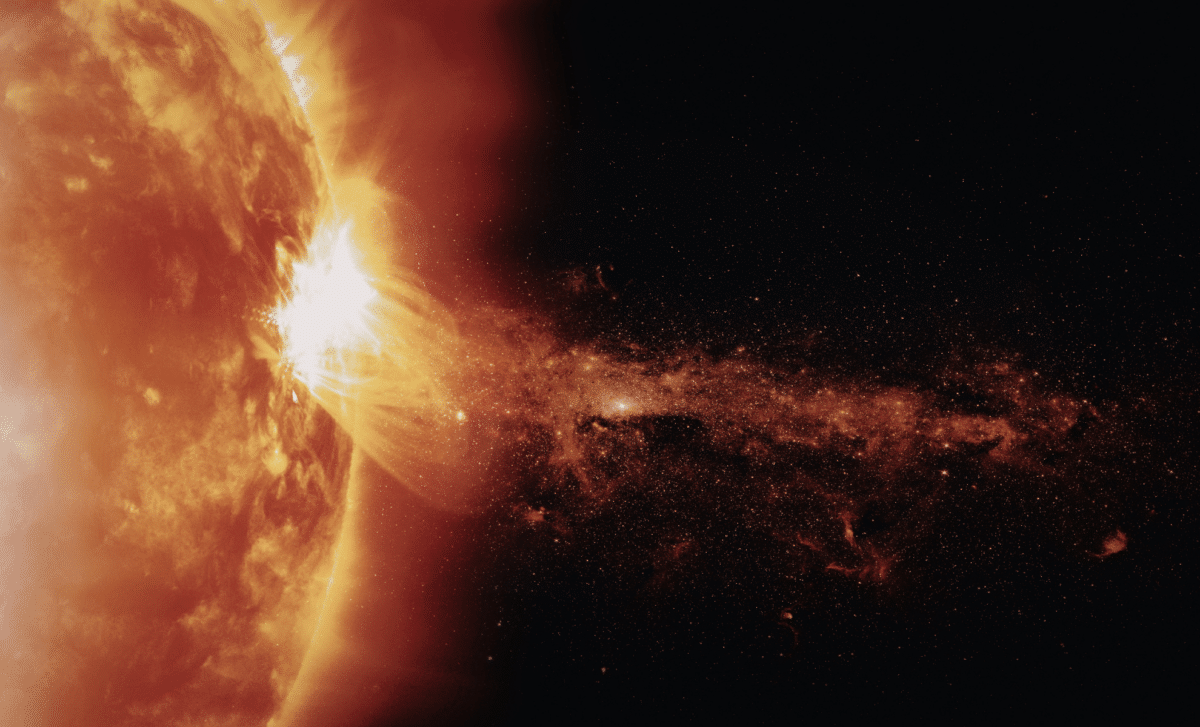
A recent study in Scientific Reports has pinpointed the location of the Sun’s elusive magnetic dynamo, providing fresh insight into the processes fueling intense solar storms. For the first time, researchers have verified that this magnetic powerhouse is situated roughly 124,000 miles beneath the Sun’s surface—equivalent to about 16 Earth diameters deep. This landmark finding enhances our grasp of solar phenomena and could transform how we anticipate space weather events that affect Earth’s technological systems.
Unveiling the Sun’s Magnetic Dynamo
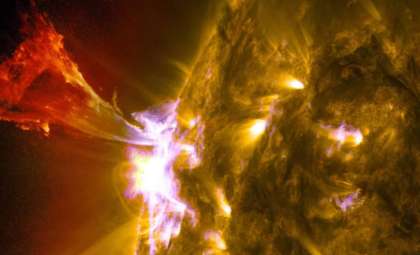
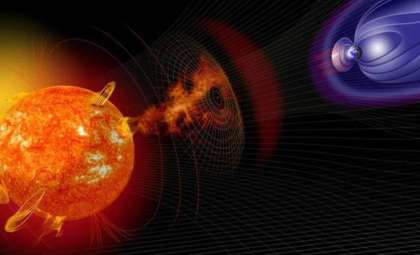
The Sun’s magnetic dynamo, the force behind sunspots, solar flares, and massive coronal ejections, has been a subject of speculation for many years. These magnetic storms can wreak havoc on Earth’s satellites, power supplies, and communications networks. Scientists Krishnendu Mandal and Alexander Kosovichev from the New Jersey Institute of Technology have now conclusively demonstrated that this dynamo is rooted 200,000 kilometers (124,000 miles) below the Sun’s visible surface, within the critical transition zone called the tachocline.
With space weather forecasting gaining importance, this revelation grants key understanding of solar activity dynamics. While previous theories suggested the tachocline was crucial in generating magnetic fields, definitive observational proof was lacking until this research. Utilizing data from NASA’s Solar and Heliospheric Observatory (SOHO) and the Global Oscillation Network Group (GONG), the team has introduced a new perspective in solar physics.

Mandal elaborates,
“For years we suspected the tachocline was important for the solar dynamo, but now we have clear observational evidence. Until now, we simply hadn’t heard enough from inside the star to be certain where the Sun’s intense magnetic fields are organized.”
Exploring the Depths of Solar Mechanics
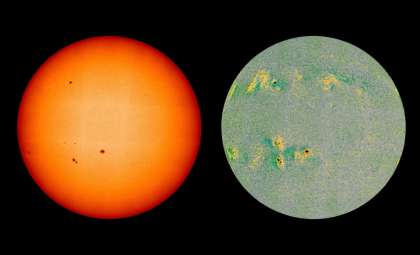
Understanding the tachocline’s importance involves knowing the Sun’s layered structure: a core, a radiative zone, and an overlying convective zone. The tachocline acts as the interface between the turbulent convective layer and the more stable radiative layer. The plasma motions and differential rotation within this layer spawn magnetic fields that surface as sunspots, which serve as visible signatures of solar activity.
Analyzing nearly three decades of solar cycle data, Mandal and Kosovichev’s group identified a "butterfly pattern" in plasma movement that corresponds with sunspot appearances, tracing directly back to the tachocline. Mandal comments,
“Now, with nearly three 11-year solar cycles’ of data, we’re finally seeing clear patterns take shape that give us a window inside the star.”
The investigation also sheds light on magnetic bands deep inside the Sun’s interior, which slowly travel to the surface over several years, ultimately causing solar storms. This gradual buildup clarifies the timeline of solar cycle progression, offering a more detailed understanding of how these cycles develop.
Advancing Space Weather Forecasting
Although precise forecasting of solar cycles remains beyond reach, the study’s insights into the Sun’s magnetic dynamo are expected to enhance models predicting space weather impacts.
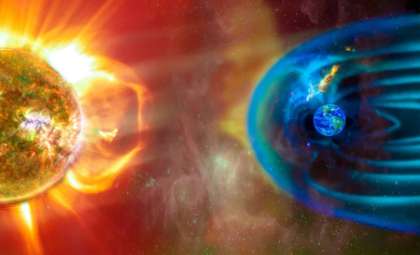
“Rotating bands originating from magnetic structural changes near the Sun’s tachocline can take several years to propagate to the surface,” Mandal explains. “Tracking these internal changes gives us a clear picture of how the solar cycle unfolds.” This understanding is vital for predicting the timing and intensity of solar storms, which can disrupt satellites, GPS systems, and power grids on Earth.
“While our findings do not yet enable precise predictions of future solar cycles, they highlight the importance of including the tachocline in space weather prediction models,” Mandal adds. “Many current simulations account for processes only on near-surface layers, but our results show the entire convection zone, especially the tachocline, must be considered.”
This discovery represents a significant shift that will guide future solar forecasting, emphasizing the need to consider deeper solar regions previously neglected.
Extending Insights to Other Stars
Beyond Earth’s solar environment, understanding the Sun’s magnetic engine could illuminate magnetic activity in stars across the cosmos. Serving as our stellar benchmark, the Sun’s behavior and the role of the tachocline may inform studies of other stars’ cycles and magnetic phenomena. This knowledge could yield clues about distant planetary environments and their potential habitability.
Published on January 12 in Scientific Reports, this research marks a major leap forward in solar science and the forecasting of space weather. The discovery opens promising avenues for a deeper understanding of our star and its broader cosmic impact.
- Categories:
- News








0 comments
Sign in to Comment