
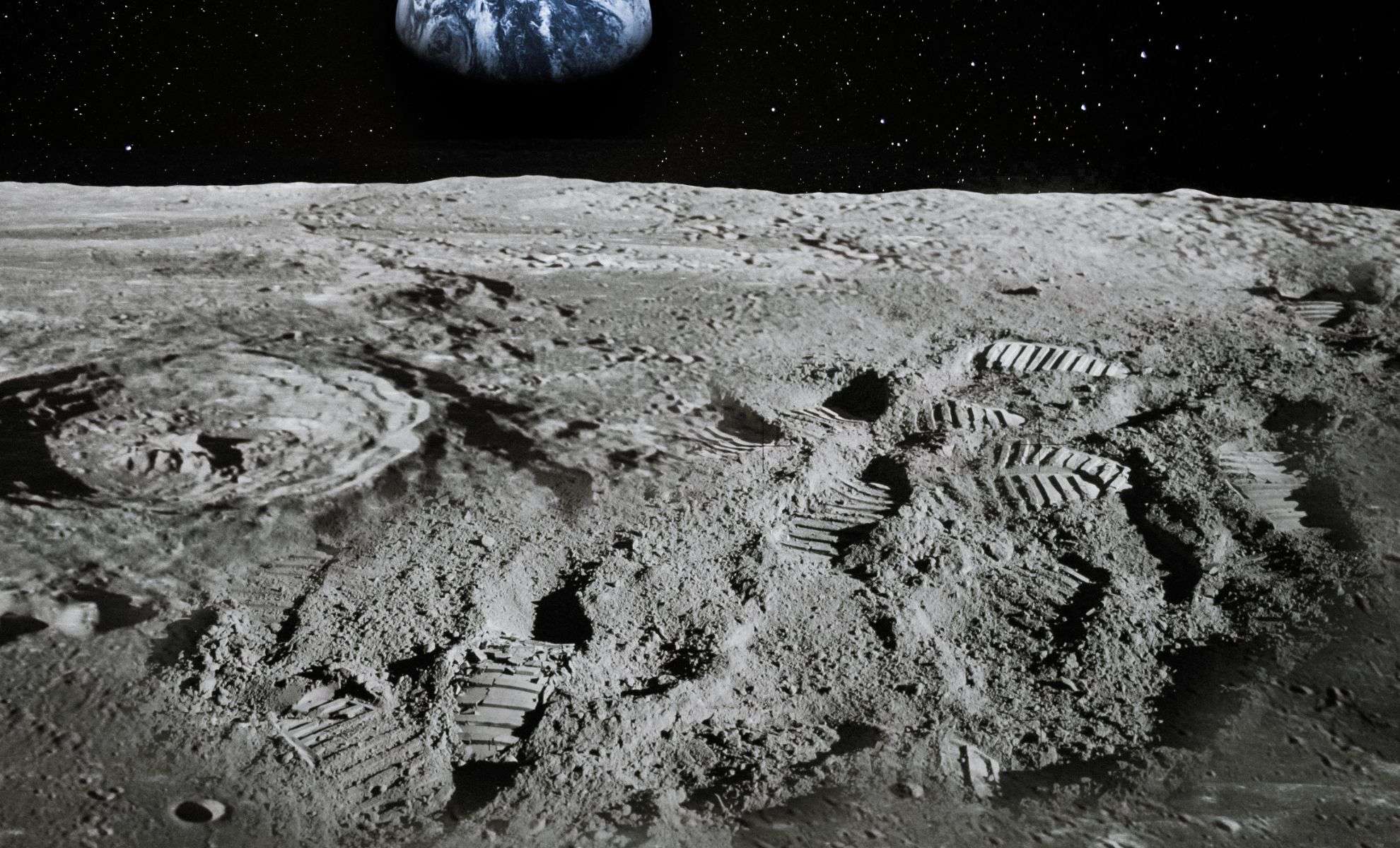
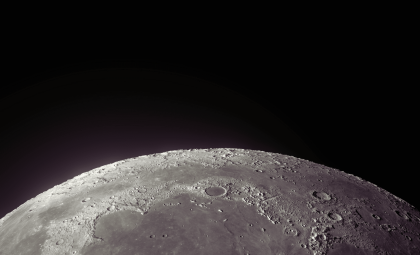
Scientists have long been intrigued by the magnetic properties observed in lunar surface rocks, despite the absence of a global magnetic field around the Moon today. A recent study published in Science Advances by researchers from MIT offers a fresh perspective. Their findings propose that an enormous asteroid collision billions of years ago temporarily enhanced the Moon’s faint magnetic field, leaving a lasting magnetic imprint in the moon’s geology.
Decoding the Moon’s Magnetic Clues
Moon samples retrieved by astronauts during the Apollo lunar missions displayed unexpectedly strong magnetic signatures. While previous theories suggested the Moon might have generated its own magnetic field through a molten core-driven dynamo, the size and state of the Moon’s core are insufficient to explain the intensity of magnetism found in certain areas.
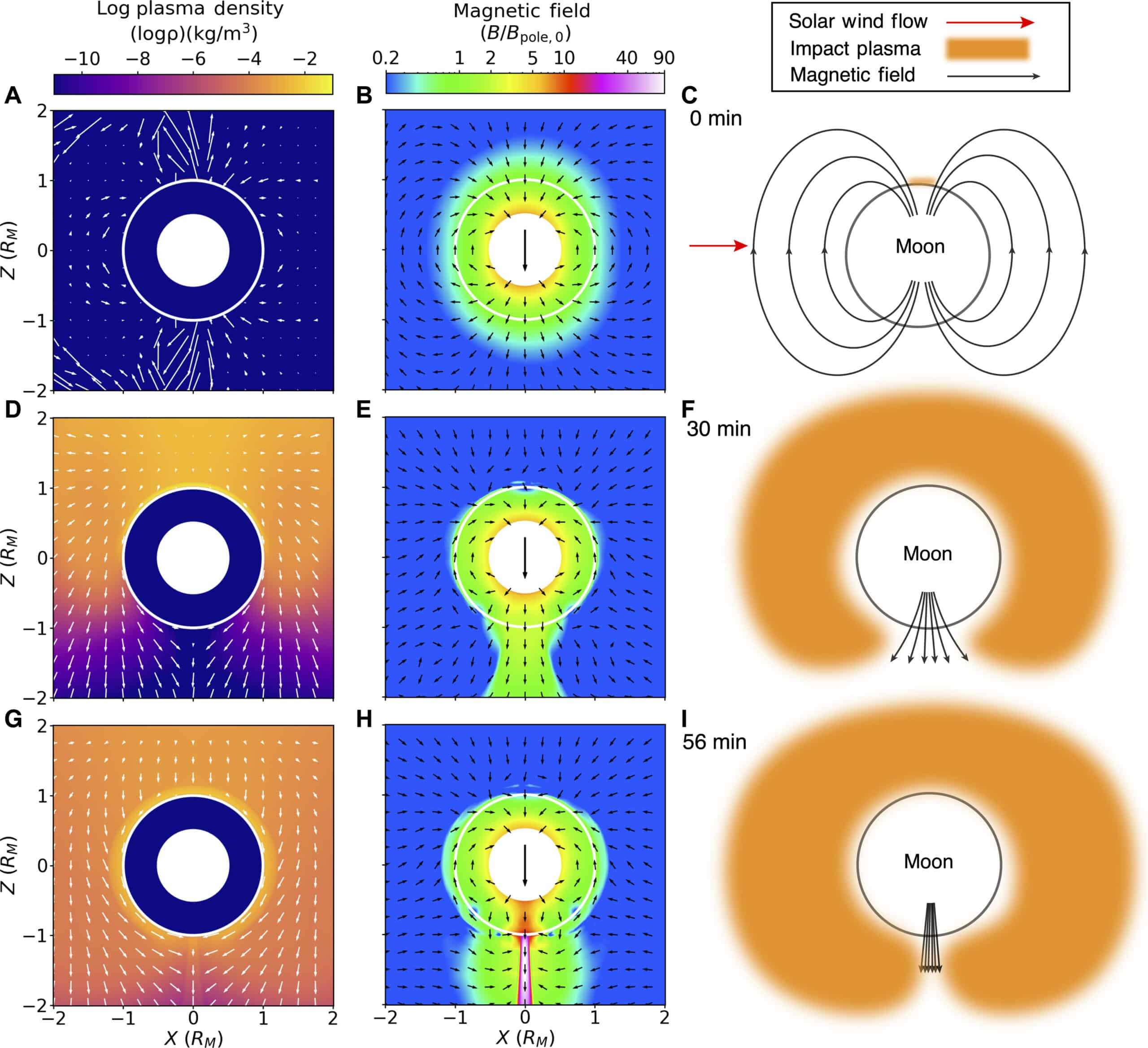
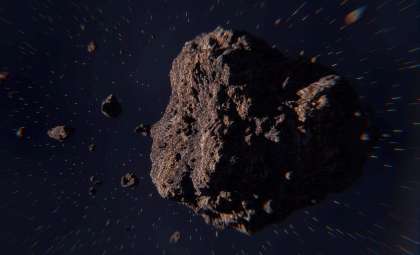
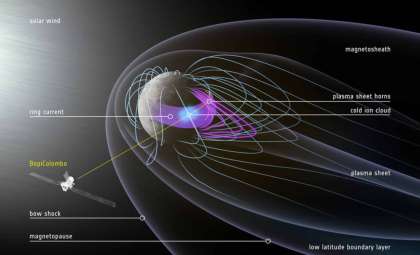
The MIT researchers offer an alternative explanation. They argue that the Moon once possessed a feeble magnetic field that was momentarily intensified by an asteroid impact. This impact, they theorize, created a surrounding cloud of plasma capable of boosting the lunar magnetic field, particularly on the Moon’s far side.

How an Asteroid Strike Enhanced Lunar Magnetism
Using advanced computational models, the MIT team simulated a colossal asteroid impact comparable to the event that formed the Imbrium basin on the Moon’s near side. Their results indicate that such an impact would have generated a plasma cloud enveloping the moon, accumulating predominantly on the side opposite the collision. This plasma cloud then interacted with the Moon’s weak magnetic field, amplifying it for a short time.
Although the magnetic surge lasted only around 40 minutes, this brief interval was sufficient for nearby lunar rocks to capture and retain evidence of the intensified magnetism before the effect subsided.
Strong Magnetism on the Moon’s Opposite Side
The far side of the Moon, especially near its south pole, hosts some of the most intensely magnetized rocks. This area’s remoteness has made it challenging to study directly, but it aligns with regions showing powerful magnetic anomalies. The MIT team suggests that the same asteroid impact responsible for the Imbrium basin likely produced the plasma cloud that enhanced magnetism on the Moon’s far side.
This theory gains strength because the impact site and the far side’s magnetic hotspots lie nearly directly across from each other on the lunar surface.
Lead author Isaac Narrett notes, “Most of the strong magnetic fields detected by orbital spacecraft, particularly on the Moon’s far side, can be explained by this plasma amplification process.”
Impact Shockwaves Contributing to Rock Magnetization
The study also explores how shockwaves triggered by the asteroid collision could have added to the magnetization. Such a massive impact would have generated seismic waves traveling throughout the Moon, disturbing electron alignment in lunar minerals on the far side.
Picture scattering a deck of compass cards into the air—it’s during the brief window as the cards settle that the magnetic field’s surge could align them uniformly, imprinting the rocks with the temporary magnetic strength.
A Verifiable Theory Awaiting Lunar Samples
Excitingly, this hypothesis is testable. If scientists can examine rock samples from the lunar south pole, they might confirm whether these materials bear evidence of shock-induced magnetization coupled with the intensified magnetic field predicted by the models. The NASA Artemis missions, with plans to explore these regions, may soon provide such samples.
Rona Oran, co-author, reflects, “The origin of the Moon’s magnetism has been debated—whether it results from impacts or a dynamo mechanism. Our research suggests it’s a combination of both, and importantly, a hypothesis that can be tested in the near future.”
- Categories:
- News


0 comments
Sign in to Comment