
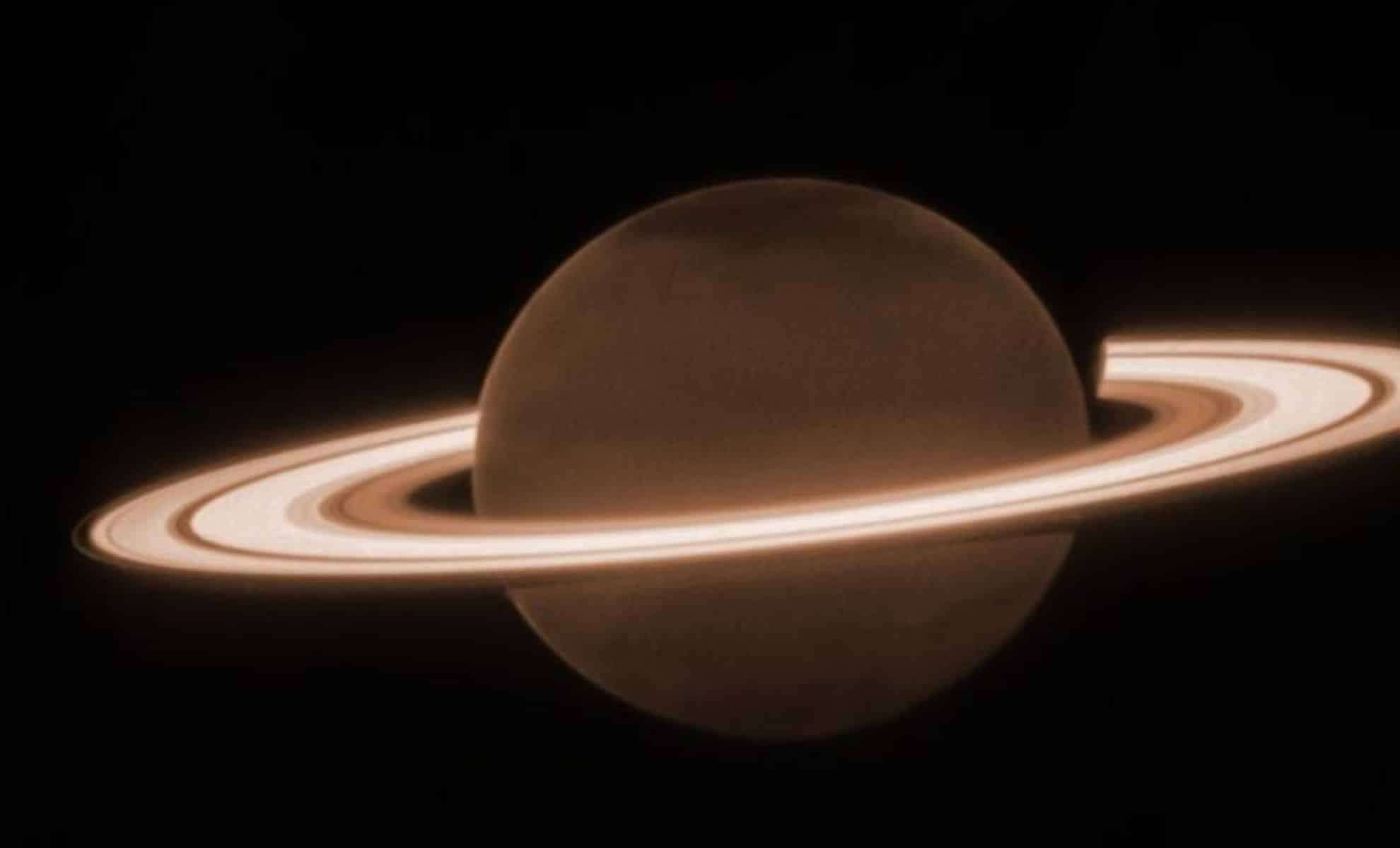
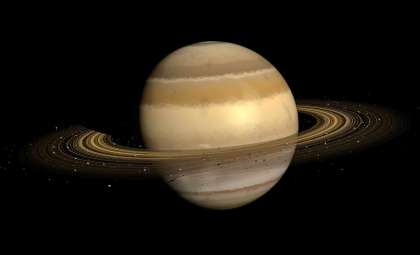
On March 23, 2025, an extraordinary celestial event will cause Saturn’s famous rings to almost fade from view. As Earth aligns with the thin plane of Saturn’s rings, these majestic structures will shrink into a nearly invisible line, temporarily giving Saturn a stark, ringless appearance.
Although this edge-on view of Saturn’s rings happens every 13 to 15 years, recent NASA findings underscore a more permanent fate: the rings are gradually disappearing and may vanish entirely within the next 100 to 300 million years. A NASA study reveals that icy ring particles are steadily raining down into Saturn’s atmosphere, causing the rings to erode faster than previously anticipated.
What’s Causing Saturn’s Rings to Fade?
Saturn’s rings primarily consist of 99.9% water ice, with fragments ranging from tiny specks to massive boulders comparable in size to houses. Despite their striking visual presence, the ring system is remarkably thin—typically less than a mile thick.

These iconic rings have weathered millions of years of exposure to:
- Meteoroid impacts that chip away at the ice particles.
- Solar radiation that gradually modifies the rings’ chemical makeup.
- Saturn’s own gravitational pull that draws ring particles closer to the planet.
This ongoing dramatic process, known as “ring rain,” was first confirmed by NASA’s Cassini mission. The spacecraft found that ring debris descends into Saturn’s atmosphere at a pace comparable to filling an Olympic swimming pool every half hour. If this continues unchecked, Saturn’s rings could completely vanish within 100 million years, leaving only the planet’s immense gaseous exterior visible.
March 23: Witness Saturn’s Rings Almost Disappear
On March 23, skywatchers will witness a rare event called a ring-plane crossing, when:
- Earth moves through the flattened plane of Saturn’s rings, rendering them virtually undetectable.
- From our viewpoint, Saturn’s rings align edge-on, reducing their appearance to a fine sliver.
Max Gilbraith, the University of Wyoming Planetarium coordinator, describes the rings as “compressed into the equatorial region of Saturn” and notes, “If Earth had similar rings, the view would look like a narrow line across the sky.”
Though Galileo Galilei was the first to observe Saturn’s rings disappearing back in 1612, this modern occurrence is trickier to observe. The planet will be positioned very close to the Sun’s glare, posing challenges and risks for casual observers without proper tools.
For those who can’t catch this moment, Saturn’s rings will align edge-on again in October 2038.
- Categories:
- News





0 comments
Sign in to Comment