
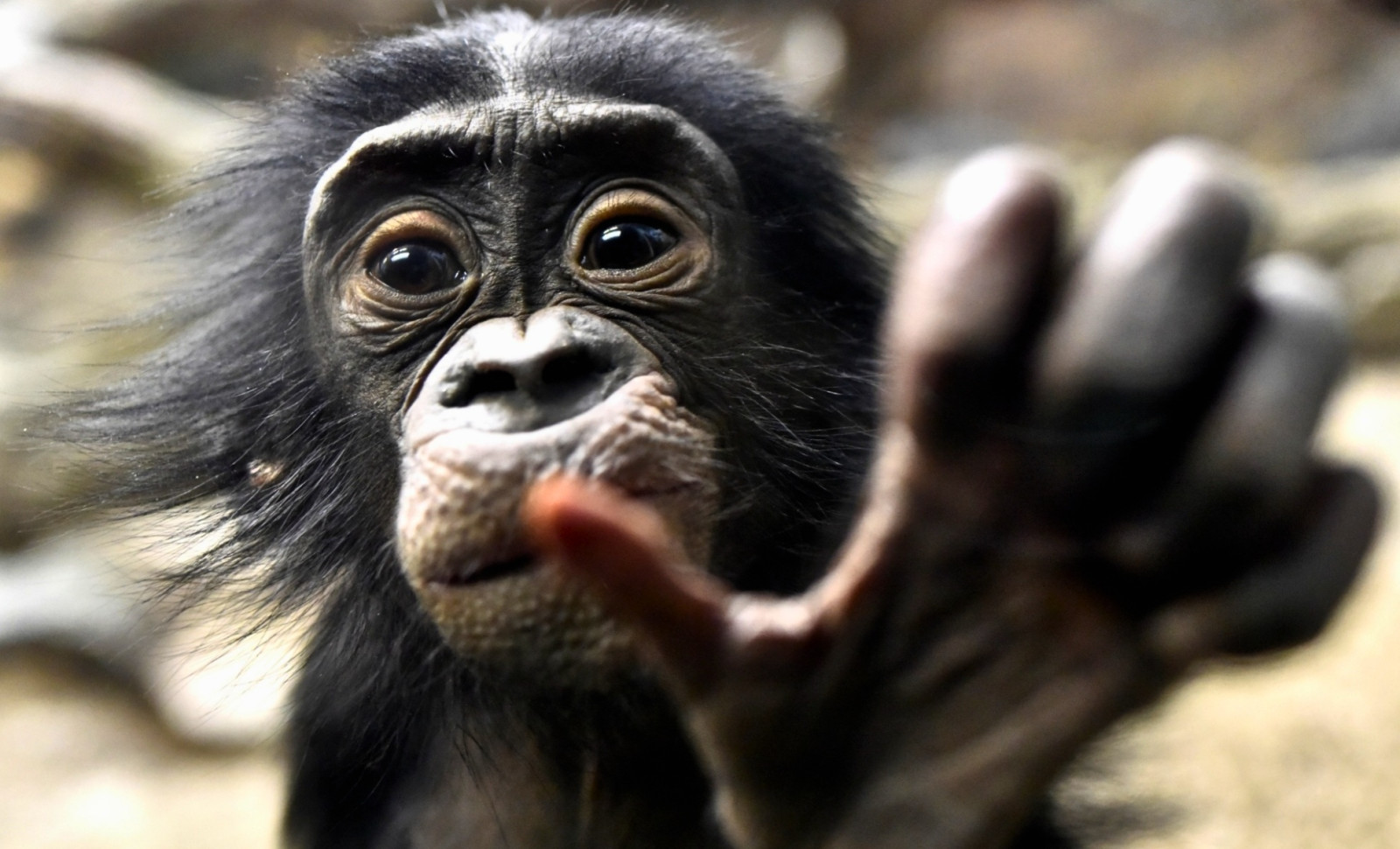
Grab a book, twist a knob, or wave hello — if you’re like most people, your right hand took the lead without much thought. Around 90% of the population today, and for millennia past, have shown this striking preference. No other primates display such a strong and consistent dominance for one hand.
While chimpanzees, gorillas, and other monkeys may favor one hand individually, their populations don’t skew heavily toward a single side. Human handedness is distinctively and overwhelmingly right-biased, a pattern that has remained a mystery for years.
A groundbreaking April 2026 paper in PLOS Biology offers a compelling explanation. Scientists from the University of Oxford and the University of Reading pinpointed two pivotal evolutionary shifts as the main drivers: our ancestors’ adoption of bipedal locomotion and the considerable growth of the brain.

A Dataset Covering 2,025 Primates Reveals One Unique Exception
Researchers, led by Dr. Thomas A. Püschel and Rachel M. Hurwitz from Oxford’s School of Anthropology and Museum Ethnography, analyzed a comprehensive dataset of 2,025 individuals across 41 anthropoid species. They employed Bayesian phylogenetic modeling, a sophisticated method that incorporates evolutionary relationships, to evaluate multiple hypotheses simultaneously including diet, body size, living environment, tool use, social behavior, brain size, and movement style.
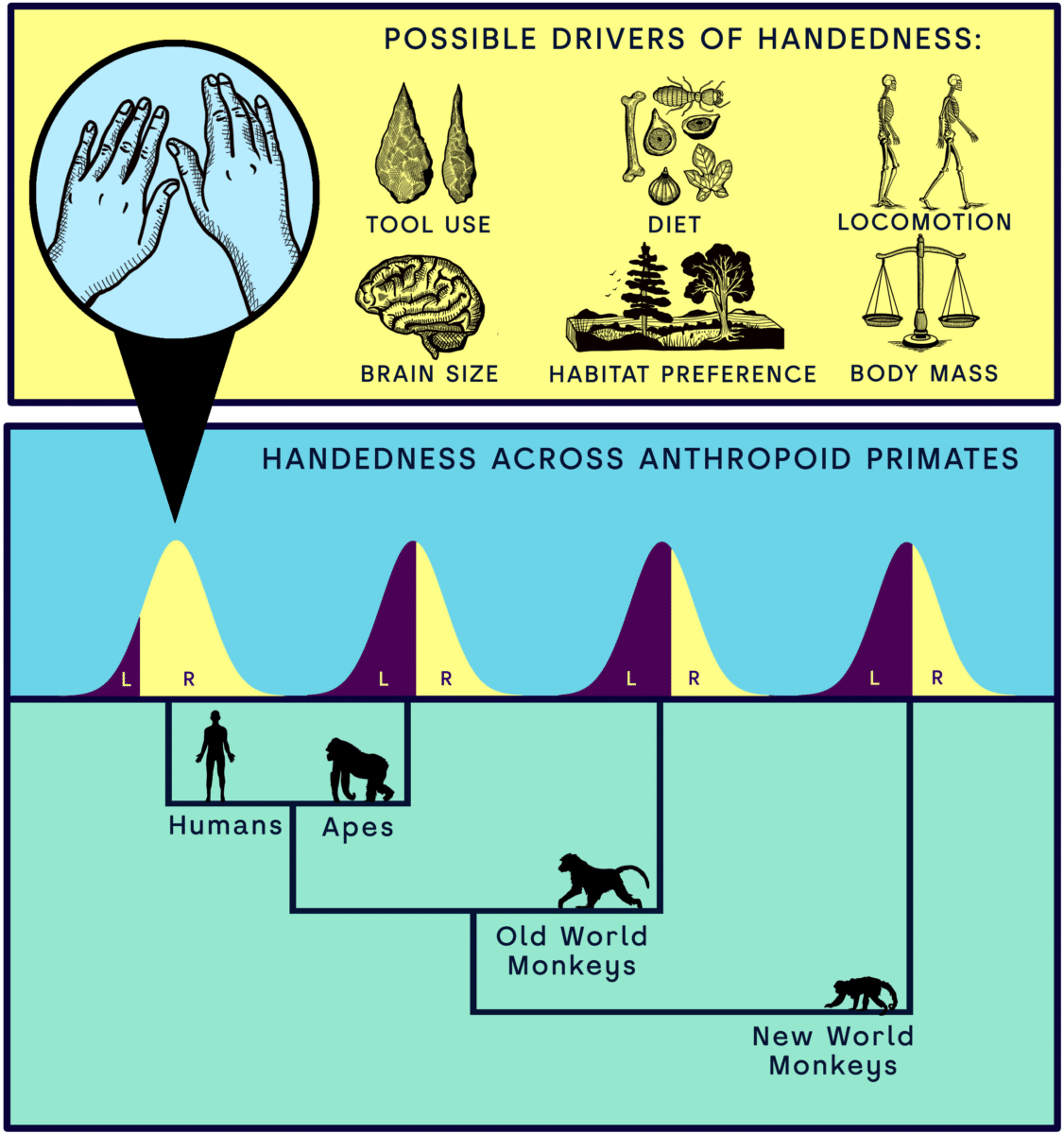
Without factoring in specific anatomical traits, humans immediately emerged as a significant outlier exhibiting not only the most pronounced right-handedness but also the strongest individual hand preference. When researchers introduced two key variables — endocranial volume to estimate brain size and the intermembral index (a ratio that compares arm and leg lengths indicative of bipedality) — humans no longer stood out as exceptions. The predicted right-hand bias closely matched actual observations.
A Gradual Rise of Right-Handed Dominance Throughout Human Evolution
The study also generated timelines estimating handedness traits in extinct human relatives, shedding light on how right-hand dominance evolved.
Individual handedness strength—how consistently a single hand is preferred—appears to have been well-developed early in hominin evolution. Species such as Ardipithecus ramidus and Australopithecus afarensis, existing millions of years ago, likely exhibited strong hand preferences similar to those in great apes.
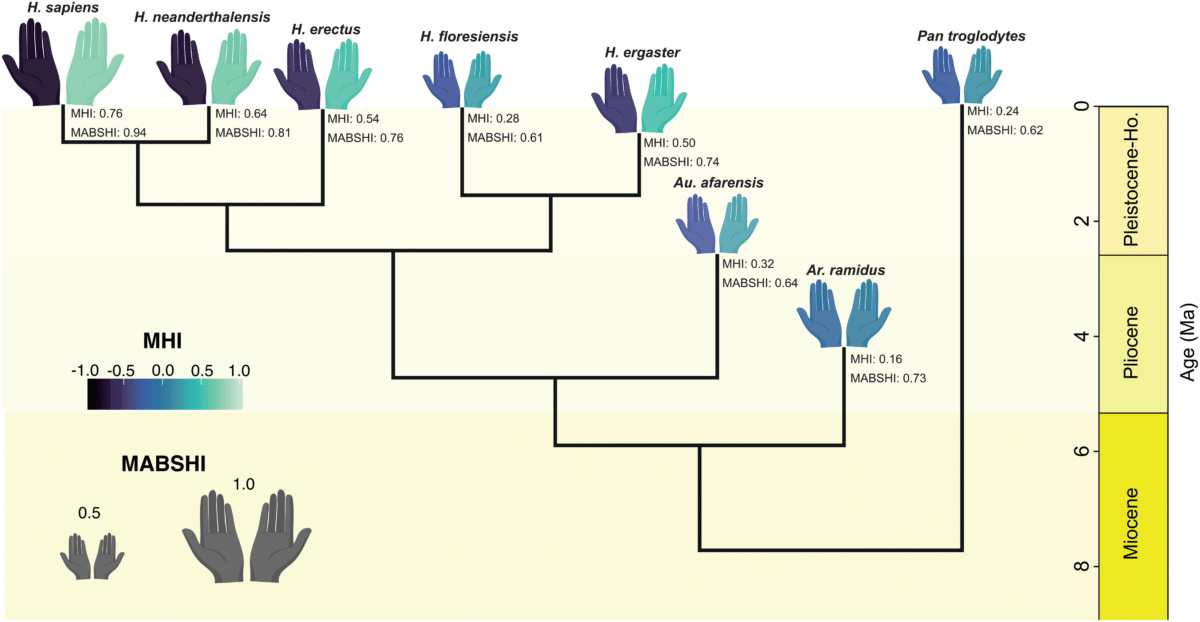
Population-level preference toward the right hand developed more gradually, intensifying with the emergence of the genus Homo. Predicted right-hand bias scores rise from 0.16 in Ardipithecus ramidus to 0.76 in modern humans, with intermediate values marking evolutionary stages such as Homo erectus and Homo neanderthalensis. These increases parallel significant brain enlargement periods within the Homo lineage.
The researchers suggest these two factors influenced handedness sequentially: first, upright walking freed the hands for specialized use, encouraging asymmetry; then, brain enlargement and the development of hemispheric specialization reinforced population-wide right-handedness.
The Unique Case of the ‘Hobbit’ Hominin
An intriguing exception to the pattern was Homo floresiensis, a small-bodied hominin from the Indonesian island of Flores, nicknamed the “hobbit.” Its predicted right-hand bias of 0.28 resembled that of earlier hominins like Australopithecus rather than fellow Homo members.
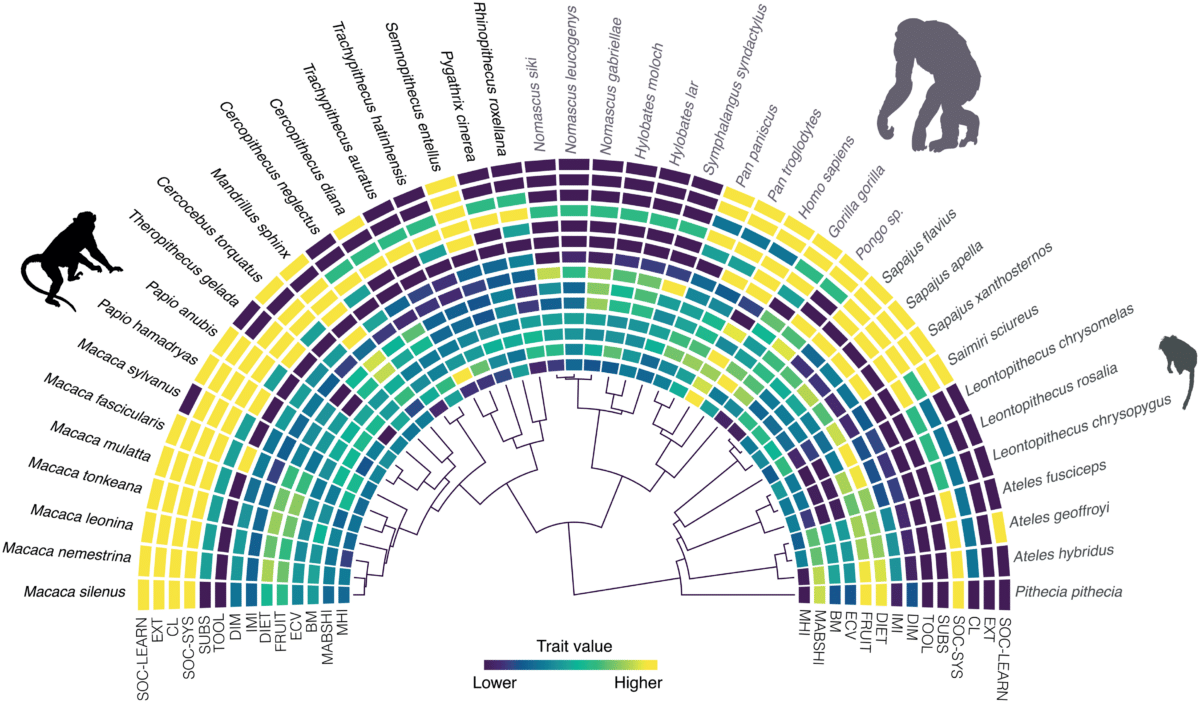
This finding aligns perfectly with the model. Homo floresiensis had a smaller brain and retained climbing adaptations such as long feet and curved toes, suggesting a mixed locomotion strategy between arboreal movement and bipedalism. Since both key drivers for strong right-handedness—brain size and full bipedalism—were diminished, a weaker right-hand preference was predicted and observed.
Comprehensive Approach Resolves Past Confusions
Earlier studies often explored individual explanations for handedness separately. Dr. Püschel highlights this as the first study to evaluate a variety of major hypotheses within a unified framework, applying consistent data and modeling techniques across all.
The results showed no single hypothesis conclusively explained handedness patterns in non-human primates. Most theories gained significance only when humans were included, indicating prior conclusions were overly centered on human data instead of comparative primate contexts.
- Categories:
- Science










0 comments
Sign in to Comment