

Early Homo sapiens ventured into the Arabian Peninsula more than 100,000 years ago, well before the migration responsible for today's global populations. However, this early presence was short-lived, as archaeological evidence indicates they left no genetic descendants.
The widely accepted theory holds that all non-African humans derive from a migration event that took place between 70,000 and 50,000 years ago, a movement that ultimately prevailed where prior attempts did not.
Recent discoveries in southern Oman uncover one such earlier migration that failed. By identifying human activity dating back over 100,000 years, researchers add to the growing understanding that early human journeys beyond Africa were more common yet more precarious than previously recognized.

Ancient Stone Tools Trace Early Human Migration
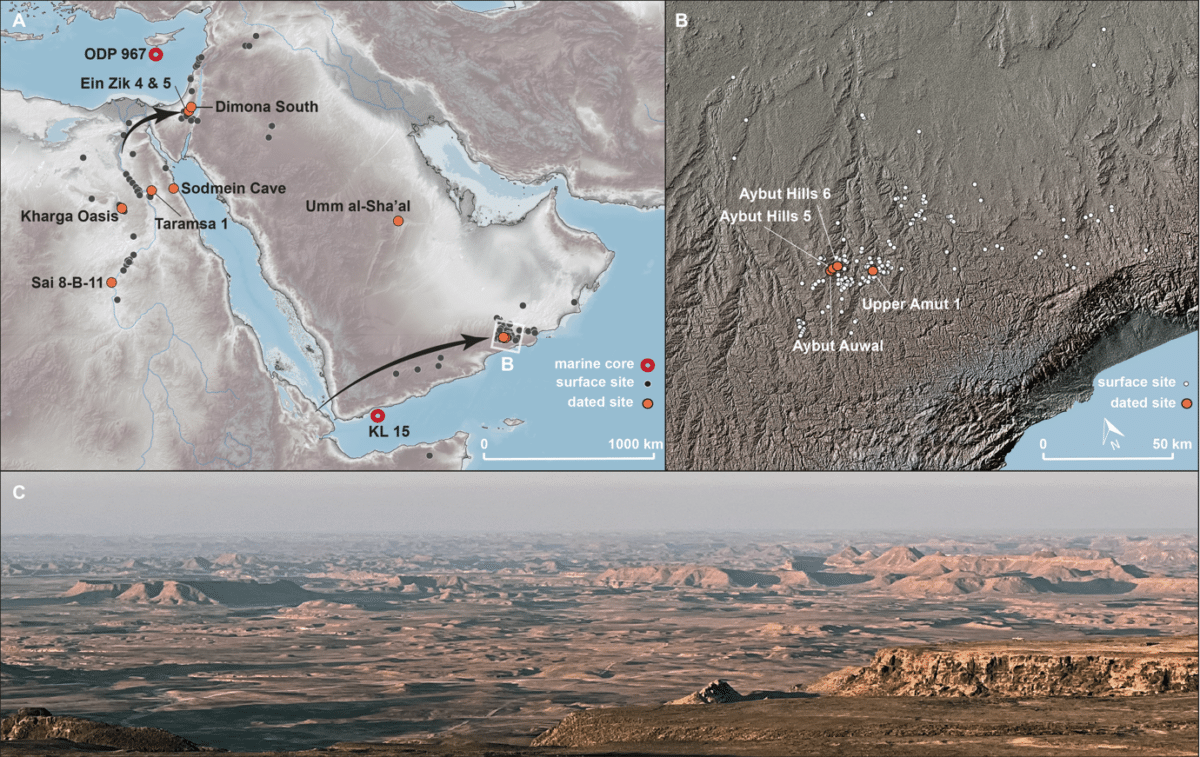
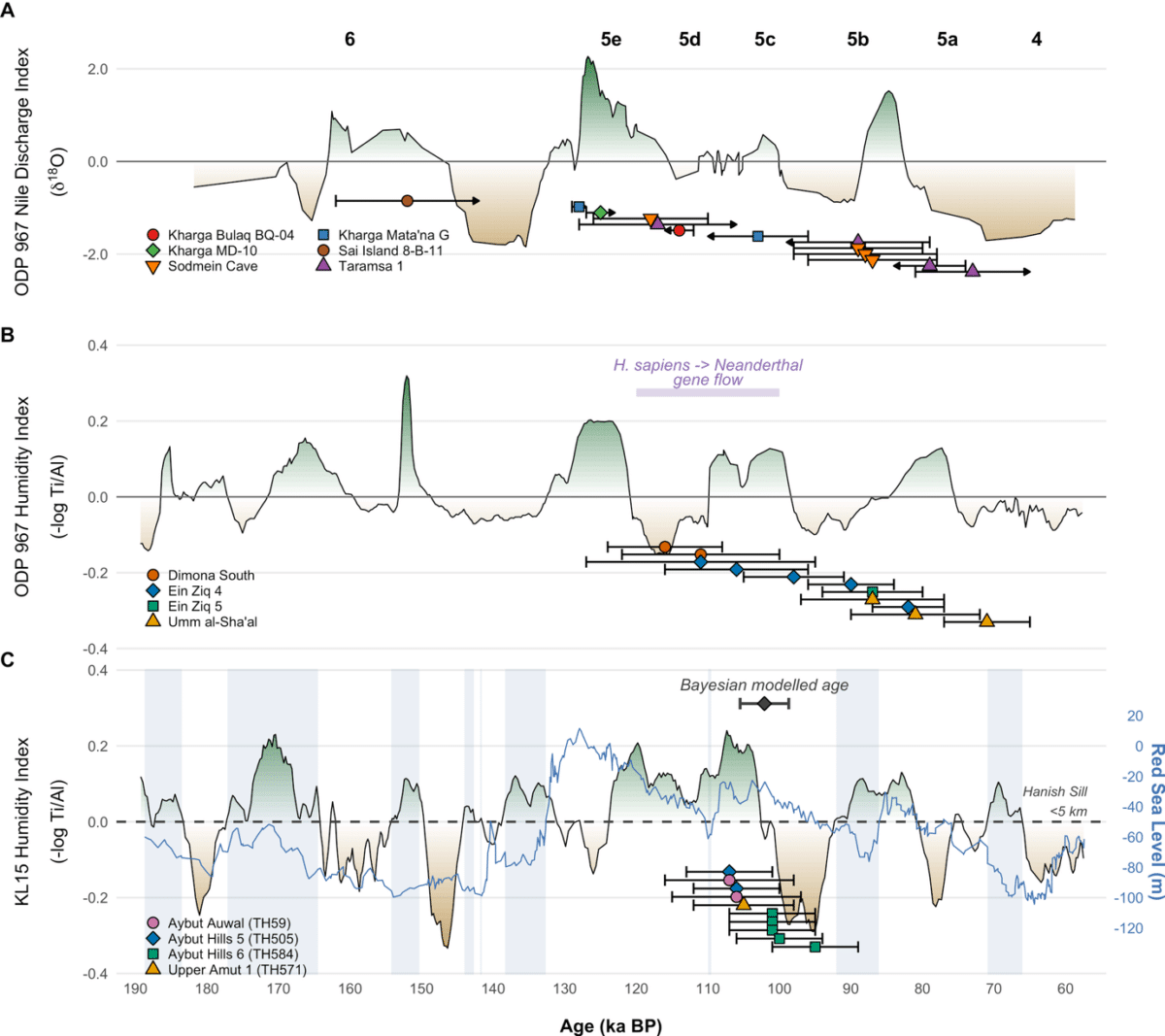
Excavations at four locations in Dhofar revealed tools linked to Nubian Levallois technology, a technique first observed in northeast Africa approximately 150,000 years ago. These implements have been dated between 109,000 and 95,000 years ago, confirming an ancient human presence in Arabia.
The resemblance in toolmaking supports the idea that these groups originated from Africa and brought their technologies along during their movement.
According to the research available on Research Square, this migration probably happened across the Bab al-Mandab Strait, which around 115,000 years ago was narrowed to about 5 kilometers due to lower sea levels, potentially opening a rare passage for migration.
A Once-Lush Landscape That Faded Away
The Arabian Peninsula today is largely desert, but during this early period, it experienced significantly wetter conditions. The study's authors report geological signs such as expansive lakes forming around 100,000 years ago and cave features like stalactites and stalagmites evidencing active water flow.
This hospitable environment ended suddenly. Around 93,000 years ago, artifacts from the Nubian Levallois culture vanish and are replaced by tools from the Mudayyan industry, which bear no relation to the earlier technology. The researchers propose that the original human groups disappeared entirely from the region.
Could Climate Shifts Have Caused Human Population Collapse?
Environmental records provide likely reasons for these changes. The area experienced a swift transition to arid conditions, transforming once fertile lands into harsh deserts.
“Groundwater-fed springs once sustained by aquifer recharge were reduced to desiccated basins,” the researchers stated, “These results demonstrate that early human expansions beyond Africa were climate-dependent and demographically fragile, and that the global establishment of our species was preceded by repeated failures.”
The study also highlights the discovery of similar stone tools in the eastern Mediterranean from roughly the same era, indicating multiple simultaneous migration attempts from Africa. While one group ventured into Arabia and disappeared, another headed north and may have crossed paths with Neanderthals.
Neither migration left a genetic imprint on today’s human populations. The researchers conclude that successful permanent human settlement outside Africa only began after 80,000 years ago, following earlier, unsuccessful dispersals.
- Categories:
- Science











0 comments
Sign in to Comment