

Fresh insights from NASA’s InSight mission reveal Mars experiences far more meteorite collisions than previously estimated.
This breakthrough sheds light on the Red Planet’s geological past and holds crucial implications for future space missions.
Regular Meteorite Strikes on the Martian Surface
The Mars InSight lander, operational from 2018 through 2022, utilized an advanced seismometer sensitive enough to detect subtle tremors caused by meteorite impacts. These seismic readings have demonstrated that Mars is hit by space debris nearly every day, a frequency approximately five times greater than earlier estimates based on orbital photographs.

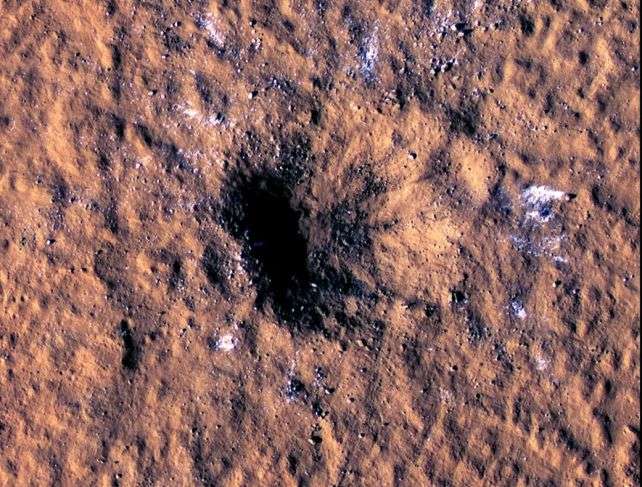
ETH Zurich planetary scientist Géraldine Zenhäusern, co-lead author of the research, commented, “The frequency we observed was about five times higher than previous counts derived solely from orbit-based imaging.” This highlights the significant role seismology plays in tracking impact events on planetary bodies.
InSight's Impact on Our Understanding of Martian Geology
Data collected by InSight indicates that Mars endures between 280 and 360 notable impacts yearly, each producing craters wider than eight meters. These results challenge prior approximations which were limited to spotting impacts on smooth, dusty terrains covering less than half of Mars’ surface.
InSight’s highly sensitive seismometer, by contrast, detected impacts over diverse surface types, offering a fuller picture of impact frequency. According to Natalia Wójcicka from Imperial College London, “Seismic observations help us determine how frequently meteorites strike Mars and how these collisions alter its surface, allowing us to construct a timeline of the planet’s geological development.”
“It functions as a ‘cosmic clock’ for dating Martian landscapes and potentially, in the future, for surfaces on other Solar System planets.”
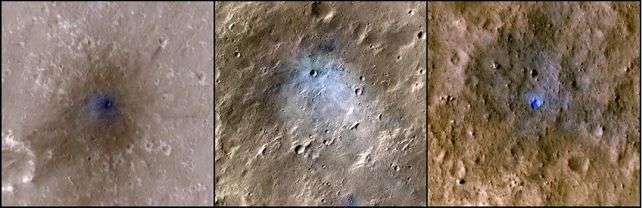
Insights into Mars’ Geological Timeline
The abundance of meteorite impacts profoundly influences our grasp of Mars’ geological sequence. By assessing crater formation rates, scientists can refine age estimates for different Martian terrains. Heavily cratered areas tend to be older, while regions with fewer craters are relatively younger.
This so-called “cosmic clock” technique permits more precise dating of Martian surfaces. InSight’s seismic data not only expands our understanding of Mars but also introduces an innovative method for estimating surface ages on other planets.
The Thin Atmosphere’s Role in Impact Frequency
Mars’ atmosphere is over 100 times thinner than Earth’s, providing minimal shielding from incoming meteorites. Consequently, meteoroids frequently reach the surface, accounting for the planet’s elevated impact rate. Mars’ proximity to the asteroid belt further increases its exposure to space debris.
Earlier impact estimates depended mainly on satellite imagery, which struggled to detect new craters in certain areas. Incorporating seismic data gathered by InSight has helped scientists achieve a more accurate portrayal of Mars’ bombardment history.
Relevance to Upcoming Mars Missions
These findings carry important consequences for future manned missions to Mars. Understanding the patterns and frequency of meteor impacts is essential for mission design and astronaut safety.
Domenico Giardini from ETH Zurich emphasized, “This study marks the first time seismological data has been used to evaluate meteorite impact frequency on Mars, fulfilling a primary goal of the InSight mission.” The heightened impact activity highlights Mars’ surface as a dynamically evolving environment, critical information for robotics and crewed explorations alike.
Seismology’s Growing Role in Planetary Exploration
The effectiveness of InSight’s seismometer in registering meteorite strikes paves the way for future missions to place smaller, cost-effective seismic instruments on Mars landers. These devices could broaden our understanding of both surface impacts and interior planetary structure.
By gathering extended seismic datasets, scientists will deepen knowledge of Mars and other planets. Wójcicka noted, “Seismology reveals details about planets’ interiors by observing how seismic waves move through or bounce off layers like the crust, mantle, and core - enabling us to identify their composition and depths.”
The combination of seismic observations with conventional planetary research techniques represents a significant leap toward comprehensively assessing surface impacts and geological evolution. The discoveries from InSight’s work form a strong foundation for continuing investigations, revealing Mars’ active surface and informing the challenges human explorers may encounter.
Gaining a refined understanding of Mars’ bombardment history is vital both for scientific progress and for effectively planning missions to this intriguing world.
- Categories:
- Astronomy ,
- News ,
- Space ,
- Nasa






0 comments
Sign in to Comment