

Astronomers have recently uncovered an exoplanet named Gliese 12b that resides within the habitable zone of its host star, Gliese 12, pointing to possible conditions suitable for life.
This finding sparks renewed excitement about discovering life beyond our own solar system. The planet's features suggest that it could sustain environments favorable to life, marking an important advancement in the search for extraterrestrial habitability.
Distinctive Features of Exoplanet Gliese 12b
Gliese 12b closely resembles Venus in terms of size and makeup but is believed to have a cooler and more stable climate. Often referred to as an “Exo-Venus,” this planet orbits within its star's habitable region, where liquid water might exist. Unlike Venus’ extreme surface heat, resulting from its dense atmosphere, Gliese 12b’s milder temperatures indicate it may sustain conditions hospitable to life.

Positioned in the habitable zone, Gliese 12b receives an optimal amount of stellar radiation that could maintain liquid water, assuming it has an appropriate atmosphere.
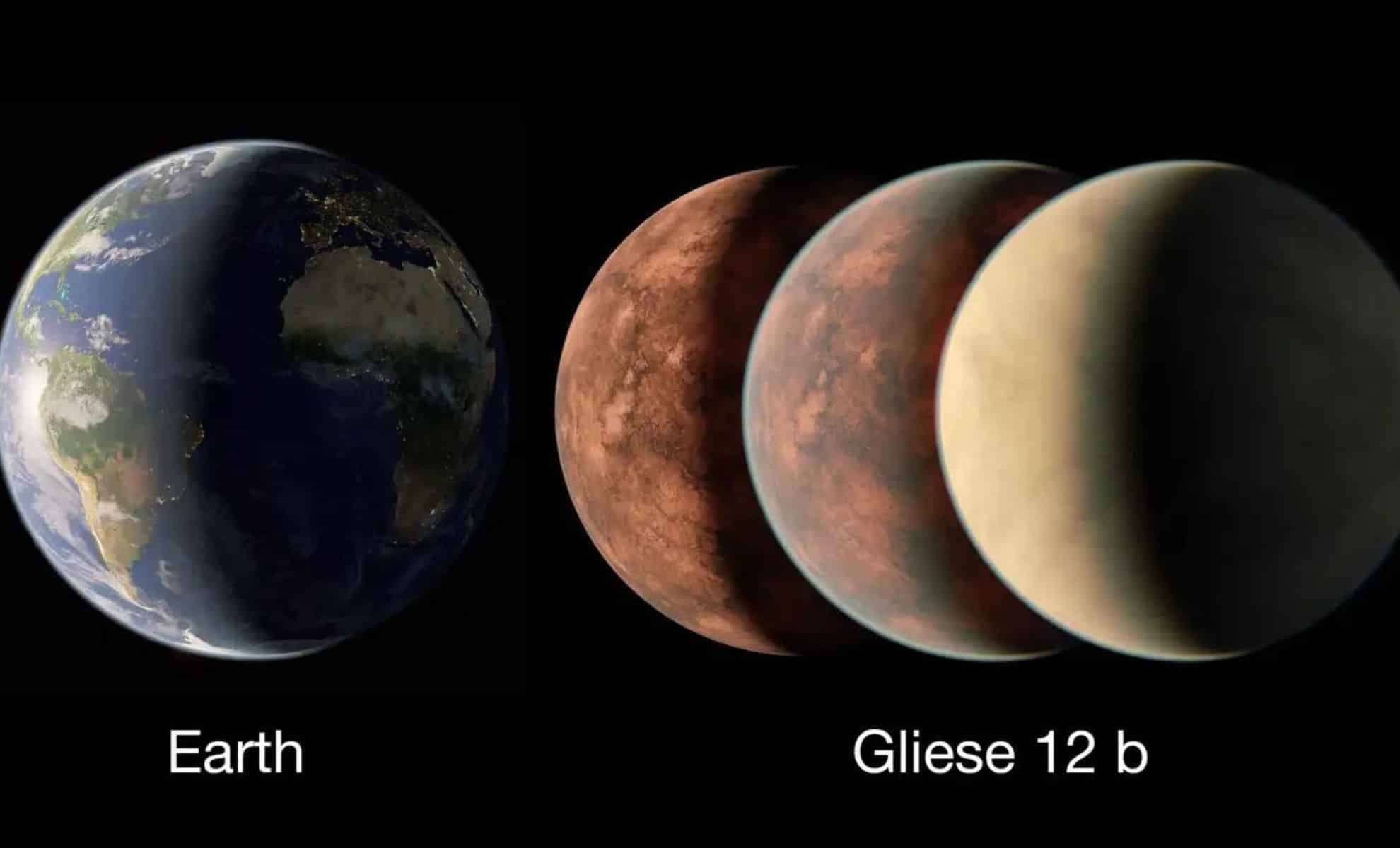
The planet’s habitability depends heavily on its surface environment and atmospheric makeup. A dense atmosphere like Venus’s could lead to extreme greenhouse effects, rendering it inhospitable. Conversely, a thinner or Earth-like atmosphere might allow temperate conditions that support life.
Importance of This Finding
Gliese 12b’s discovery matters for multiple reasons:
- Habitable Zone Location: Being situated within the star's life-supporting zone raises the potential for a conducive environment.
- Temperate Climate: Its moderate temperatures could enable the presence of liquid water, essential for living organisms.
- Scientific Opportunities: Gliese 12b offers an excellent opportunity for future investigations to broaden our understanding of planet formation and alien life.
Detecting a planet in such an ideal orbital position is uncommon and thrilling. It offers a valuable chance to examine a world that might mirror Earth’s conditions. This discovery also expands the roster of intriguing exoplanets for upcoming space missions and telescopic studies.
Discovery Techniques
Scientists found Gliese 12b using the transit method, monitoring periodic dips in its star’s brightness caused by the planet crossing in front. This technique reveals the planet's size and orbit. Supplementary radial velocity studies, measuring the star’s subtle movements due to the planet’s gravitational force, help estimate the planet’s mass.
Combining these methods provides detailed data about the planet’s size, mass, and orbital period. Advanced observatories, including the James Webb Space Telescope (JWST), are slated to explore Gliese 12b further, examining its atmospheric and surface properties.
Upcoming Research Directions
Upcoming observations will focus on revealing the composition and climate of Gliese 12b’s atmosphere, along with assessing signs of biological activity. Instruments like JWST will be vital for such detailed analyses.
Future missions may also endeavor to capture direct images of the planet, aiding investigations into its surface features and atmosphere. Spectroscopy will be key in identifying gases like oxygen, methane, and carbon dioxide, which could indicate possible life forms.
Assessing Life Potential
The likelihood of life on Gliese 12b depends on its atmospheric makeup, temperature stability, and availability of liquid water. If the planet maintains a balanced climate with essential chemical compounds, it could harbor microbial or more advanced life forms.
This finding also contributes to the ongoing discussion about how widespread life may be throughout the cosmos. Discovering life-friendly conditions on a planet similar to Earth suggests that life might be more common than previously believed.
Comparative Insights
Examining Gliese 12b alongside Venus and Earth provides valuable knowledge about planetary atmospheres and climates. Despite Venus sharing Earth’s size and composition, its environment is dramatically different. Comparing these worlds helps scientists pinpoint the factors that influence whether a planet is welcoming or hostile to life.
This comparative research sharpens models of planetary development and evolution, enhancing our ability to identify exoplanets with the highest potential for life and guiding future exploratory efforts.
- Categories:
- Astronomy ,
- News ,
- Space














0 comments
Sign in to Comment