
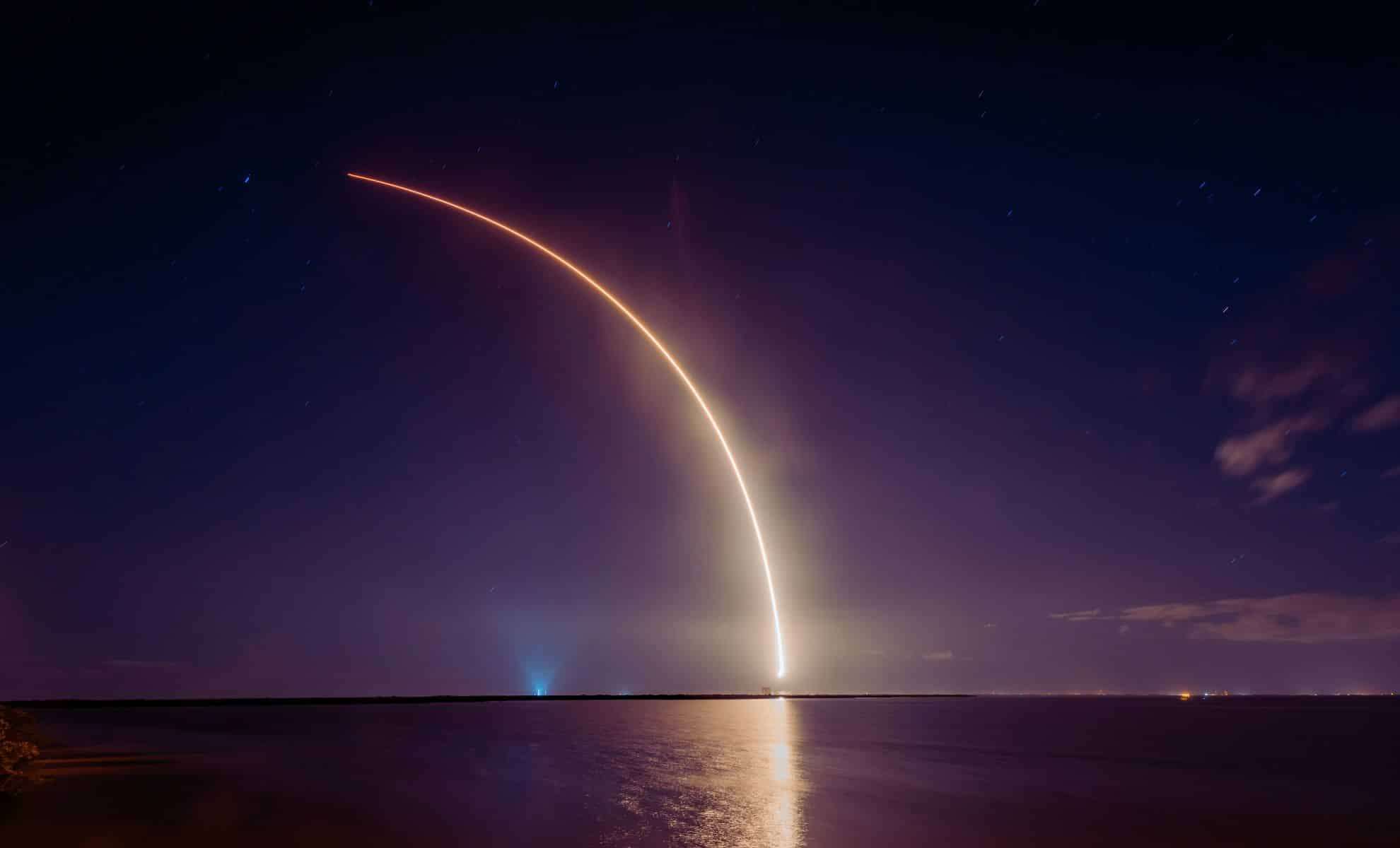
The rapid deployment of SpaceX’s Starlink satellite network, designed to deliver high-speed internet to underserved regions worldwide, is raising alarms among astronomers due to its impact on space observation data. Recent findings from Curtin University reveal that as much as 30% of certain radio telescope datasets may be contaminated by Starlink’s signals, based on an analysis of 76 million images. This research reinforces concerns that satellite megaconstellations such as Starlink could profoundly disrupt essential radio astronomy investigations.
Despite being acclaimed for connecting remote areas, SpaceX’s Starlink has increasingly been linked to negative consequences for astronomy. The Curtin University report highlights emissions crossing into frequencies typically reserved for radio astronomy, especially around the 150.8 MHz band. This encroachment threatens the integrity of data that scientists depend on to explore celestial phenomena.
Unexpected Emissions Hampering Radio Astronomy Efforts
Research led by Dylan Grigg, a doctoral candidate at Curtin University, identified that Starlink satellites are broadcasting signals within protected radio astronomy frequency bands where no transmissions should occur. The study documented 703 satellites generating emissions at 150.8 MHz, a range designated for the exclusive use of radio astronomers. Grigg noted, “some satellites were detected emitting in bands where no signals are supposed to be present at all, such as the 703 satellites we identified at 150.8 MHz, which is meant to be protected for radio astronomy.”

These unforeseen signals originate from flaws in the onboard electronics of the satellites, creating unintended interference for astronomers. According to Grigg, these accidental emissions are not deliberate broadcasts, making them difficult to anticipate or filter out from scientific observations. This interference poses a major obstacle to researchers attempting to obtain precise radio data from distant cosmic sources.
Limitations of Existing Regulatory Measures
The International Telecommunication Union (ITU) has put forth guidelines to restrict satellite emissions that could affect astronomical measurements. However, these regulations mainly address intentional transmissions, overlooking unintentional interference such as that produced by Starlink satellites. Steven Tingay, a professor at Curtin and executive director of the Curtin Institute of Radio Astronomy, explained that current policies “focus on intentional transmissions and do not cover this type of unintended emission.”
Even with the concerns voiced by the astronomy community, Starlink remains compliant with present rules. Tingay emphasized, “it is important to note that Starlink is not violating current regulations, so is doing nothing wrong.” He also mentioned constructive engagement with SpaceX, suggesting that collaboration may steer future improvements in regulatory standards to safeguard radio astronomy.
The findings from Curtin University underscore the urgent need to evolve existing frameworks to keep pace with the rapid proliferation of satellite constellations like Starlink. Without updates, the scale of interference from unintended transmissions is expected to worsen alongside future satellite deployments.
Implications of an Expanding Starlink Fleet
With over 7,000 Starlink satellites presently in orbit, their sheer volume raises challenges beyond astronomy, including space traffic coordination. As more satellites launch, the potential for signal interference and orbital collisions increases. While designed to enhance global internet access, these assets could also disrupt scientific observations and complicate space situational awareness efforts.
The escalating presence of Starlink satellites signals that interference problems could intensify unless proactive interventions are implemented. Although this investigation concentrated on Starlink, similar issues may emerge with other constellations using comparable technologies. Policymakers may need to enforce more stringent emission controls to preserve the purity of scientific radio frequency bands.
Advocating for Revised International Policies
The Curtin University research has sparked calls for global cooperation to modernize emission guidelines for satellites. Steven Tingay expressed hope that these results would bolster efforts to refine standards governing the interface between satellite technology and radio astronomy. While SpaceX has shown willingness to engage on the subject, it’s clear that existing rules do not fully address accidental emissions generated by large satellite networks like Starlink.
According to Tingay, “we hope this study adds support for international efforts to update policies that regulate the impact of this technology on radio astronomy research that are currently underway.” The future viability of radio astronomy depends on protecting frequency bands critical to scientific discovery. This study highlights the necessity for worldwide collaboration to ensure advancing satellite innovations do not hinder astronomical exploration.
- Categories:
- News









0 comments
Sign in to Comment