
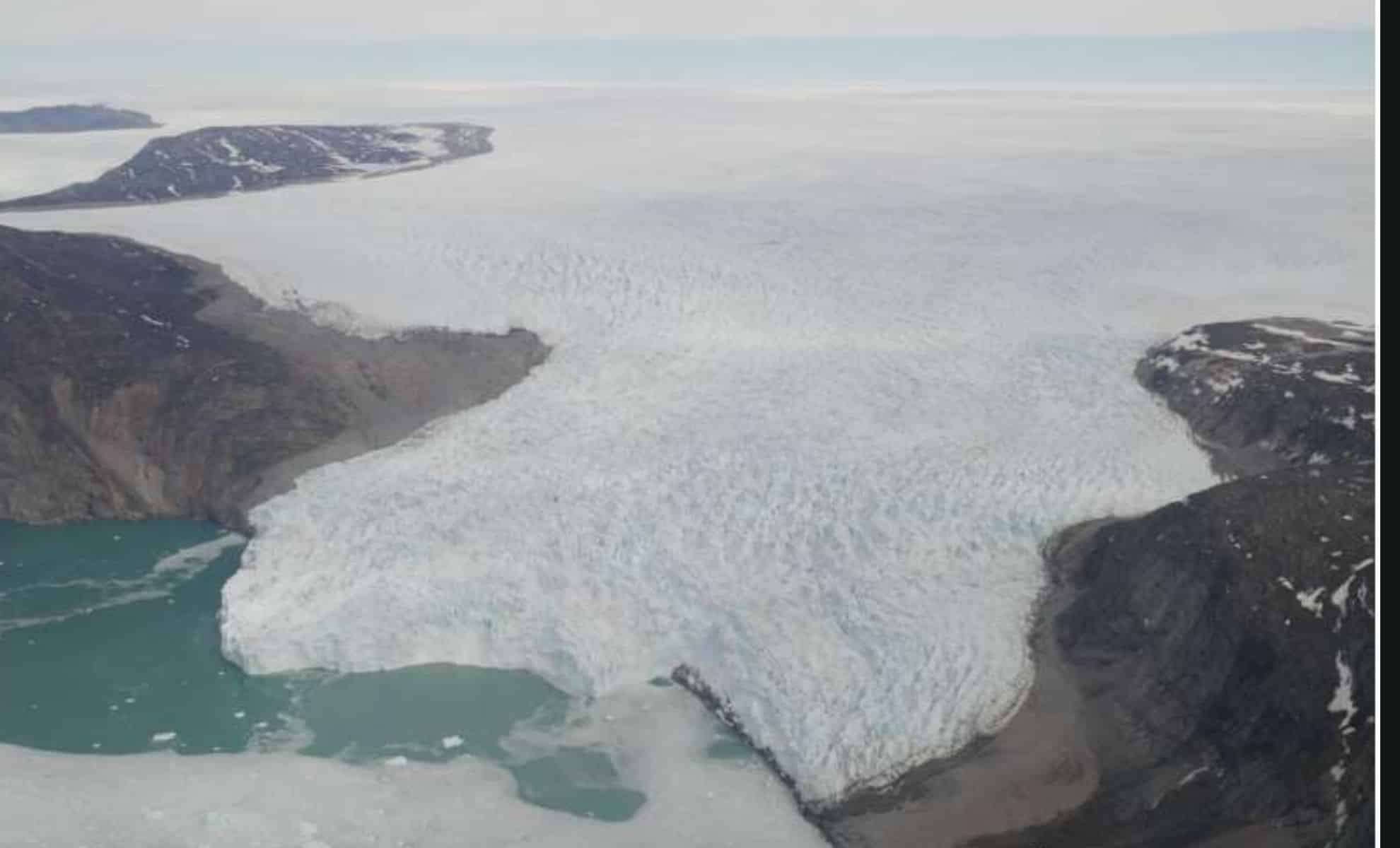
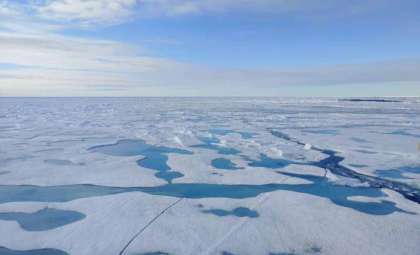
New research is sparking concern among experts regarding the stability of the Greenland Ice Sheet, as data shows that crevasses—deep cracks forming in the ice—are widening and deepening much faster than previously believed. This pivotal discovery sheds light on how the ice sheet is reacting to climate change, especially due to rising ocean temperatures and increasing meltwater infiltration, which are drastically altering its behavior. The accelerated growth of these fissures at the rapidly moving glaciers along the ice sheet’s margins could trigger a chain reaction, hastening ice mass loss and contributing to rising sea levels.
Scientists have tracked crevasse formation on the Greenland Ice Sheet for decades, but the latest observations, gathered over just five years, deliver an unprecedented level of detail on the speed and extent of this fracturing process. Enhanced datasets allow researchers to map how cracks are spreading and evaluate their potential to increase future ice loss. The evidence now strongly links this rapid development to warming global temperatures, suggesting significant consequences for sea level rise in the coming decades. These insights reveal an urgent vulnerability within Greenland’s ice, raising alarms about the severe impacts if these trends persist.
The Role of Ocean Warming in Crevasse Development and Glacier Speed
The warming of ocean waters plays a crucial role in pushing Greenland’s glaciers to accelerate their flow. This boost in speed creates conditions for larger and deeper crevasses to form. The process involves a complex feedback where meltwater penetrates deep into existing cracks, weakening the ice and enabling fractures to extend further. These deeper fissures then allow even more meltwater to enter, which increases glacier velocity and promotes a faster discharge of ice into surrounding oceans.

Dr. Tom Chudley of Durham University emphasized the relationship between changing climate and crevasse expansion:
“In a warming world, we would expect to see more crevasses forming. This is because glaciers are accelerating in response to warmer ocean temperatures, and because meltwater filling crevasses can force fractures deeper into the ice.”
The process where meltwater deepens crevasses causes glaciers to move more rapidly and the entire ice system to grow more fragile. Dr. Chudley noted that recent satellite observations provide vital clarity on the scale of these developments:
“However, until now, we haven’t had the data to show where and how fast this is happening across the entirety of the Greenland Ice Sheet. For the first time, we are able to see significant increases in the size and depth of crevasses at fast-flowing glaciers at the edges of the Greenland Ice Sheet, on timescales of five years and less.”
This breakthrough underlines the extensive and rapid transformations occurring across Greenland and highlights the importance of tracking these crevasse patterns to forecast their global impact.
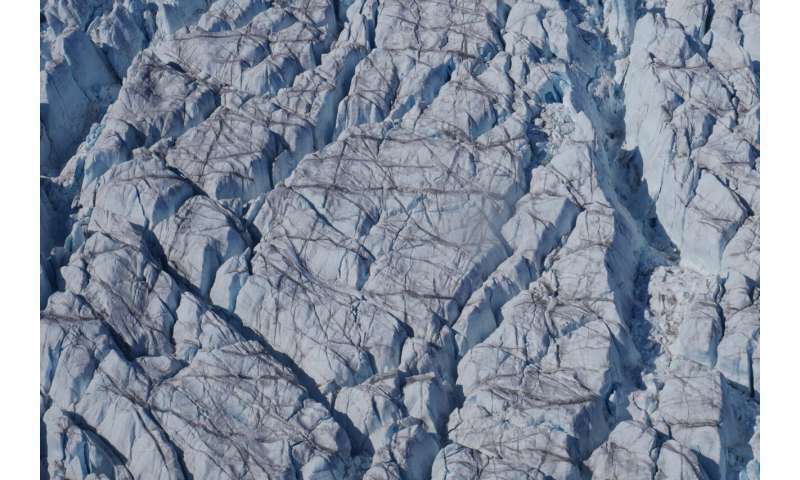
Chain Reaction: How Expanding Crevasses Drive Faster Ice Loss
As cracks grow wider and glaciers speed up their movement, a self-reinforcing cycle emerges. Larger crevasses enable greater amounts of meltwater to penetrate and weaken the ice, promoting even deeper fissures. This process accelerates glacier flow, causing more frequent calving events where icebergs break off into the ocean, steadily raising sea levels. Scientists warn that this creates a vicious feedback loop, where crevasse formation leads to increased ice loss, which in turn promotes more cracking.
Professor Ian Howat of The Ohio State University explained this mechanism:
“As crevasses grow, they feed the mechanisms that make the ice sheet’s glaciers move faster, driving water and heat to the interior of the ice sheet and accelerating the calving of icebergs into the ocean.”
These continuous calving events contribute freshwater to the oceans and elevate sea levels, posing significant risks to coastal regions worldwide. Professor Howat added that this ongoing acceleration creates a reinforcing cycle:
“These processes can in turn speed up ice flow and lead to the formation of more and deeper crevasses—a domino effect that could drive the loss of ice from Greenland at a faster pace.”
The increasing speeds of glacier motion and iceberg calving could profoundly affect global sea levels, making future projections more uncertain. Without intervention or mitigation, ice loss from Greenland may surpass earlier forecasts.
Global Significance: The Threat to Coastal Communities from Ice Sheet Decline
It has long been understood that Greenland’s vast ice sheet is a key contributor to global sea-level changes, but the rapidly escalating melt rates are raising new concerns. Projections indicate that Greenland could add as much as to global sea levels by the end of this century, jeopardizing coastal cities, infrastructure, and displacing millions of residents worldwide.
The continual formation and expansion of crevasses will likely accelerate ice loss, with enormous global repercussions. Grasping the mechanisms behind crevasse growth is essential for improving forecasts of ice sheet behavior and preparing communities for future challenges.
With the pace of ice loss quickening, scientists are urgently working to refine predictive models for Greenland’s glaciers, which will provide crucial insights to guide policymakers and help vulnerable populations brace for unavoidable impacts.
- Categories:
- News



0 comments
Sign in to Comment