
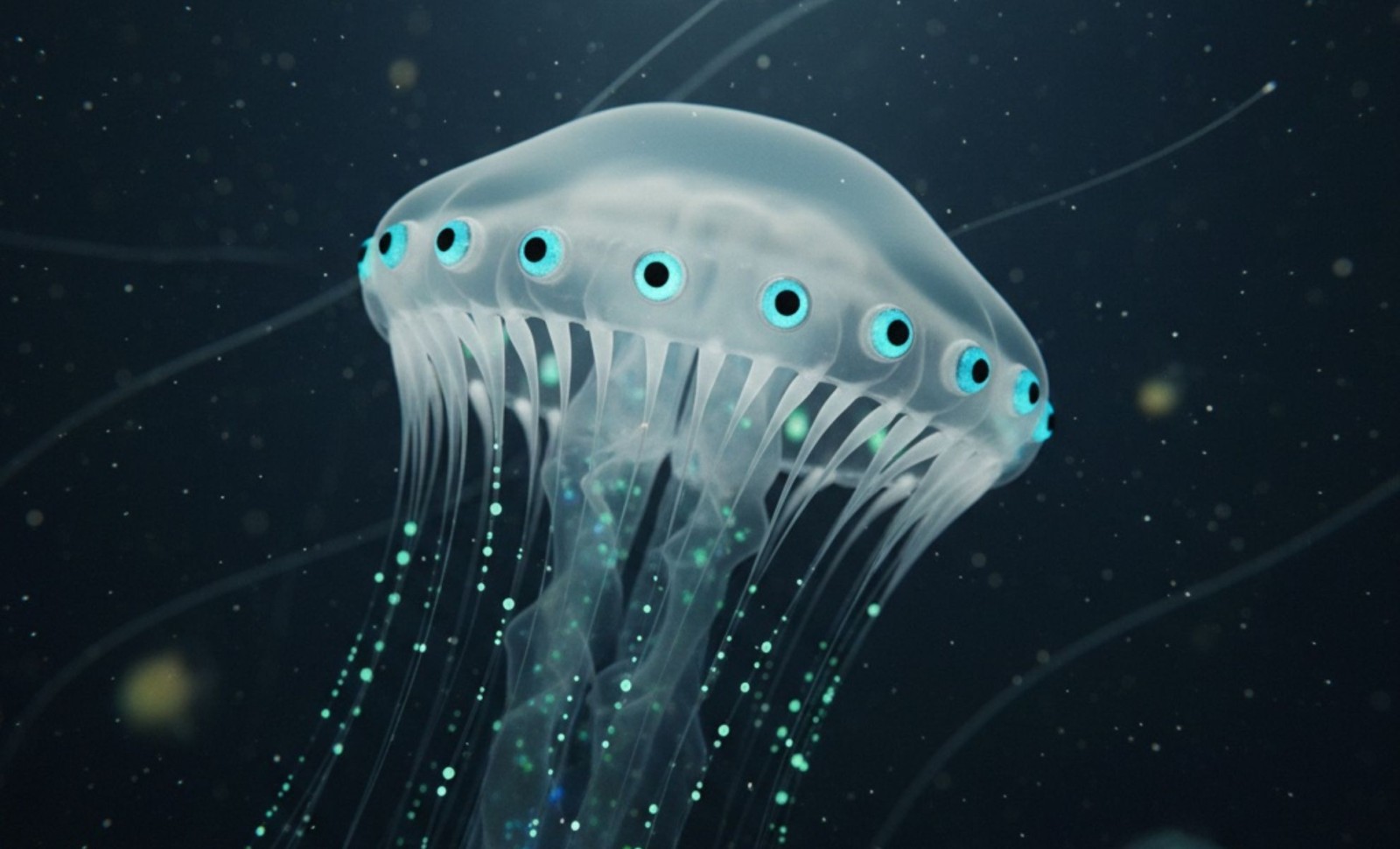
Researchers have identified a previously unknown jellyfish species distinguished by an extraordinary feature: it possesses 24 eyes. Located in a shrimp pond within the Mai Po Nature Reserve, this species, named Tripedalia maipoensis, was found by a team led by Professor Qiu Jianwen from Hong Kong Baptist University (HKBU). Remarkably small, measuring roughly half an inch long, this jellyfish is part of the box jellyfish group, known for their cube-like body shapes and intricate behaviors. The findings were published in Zoological Studies.
Unraveling the 24-Eyed Jellyfish
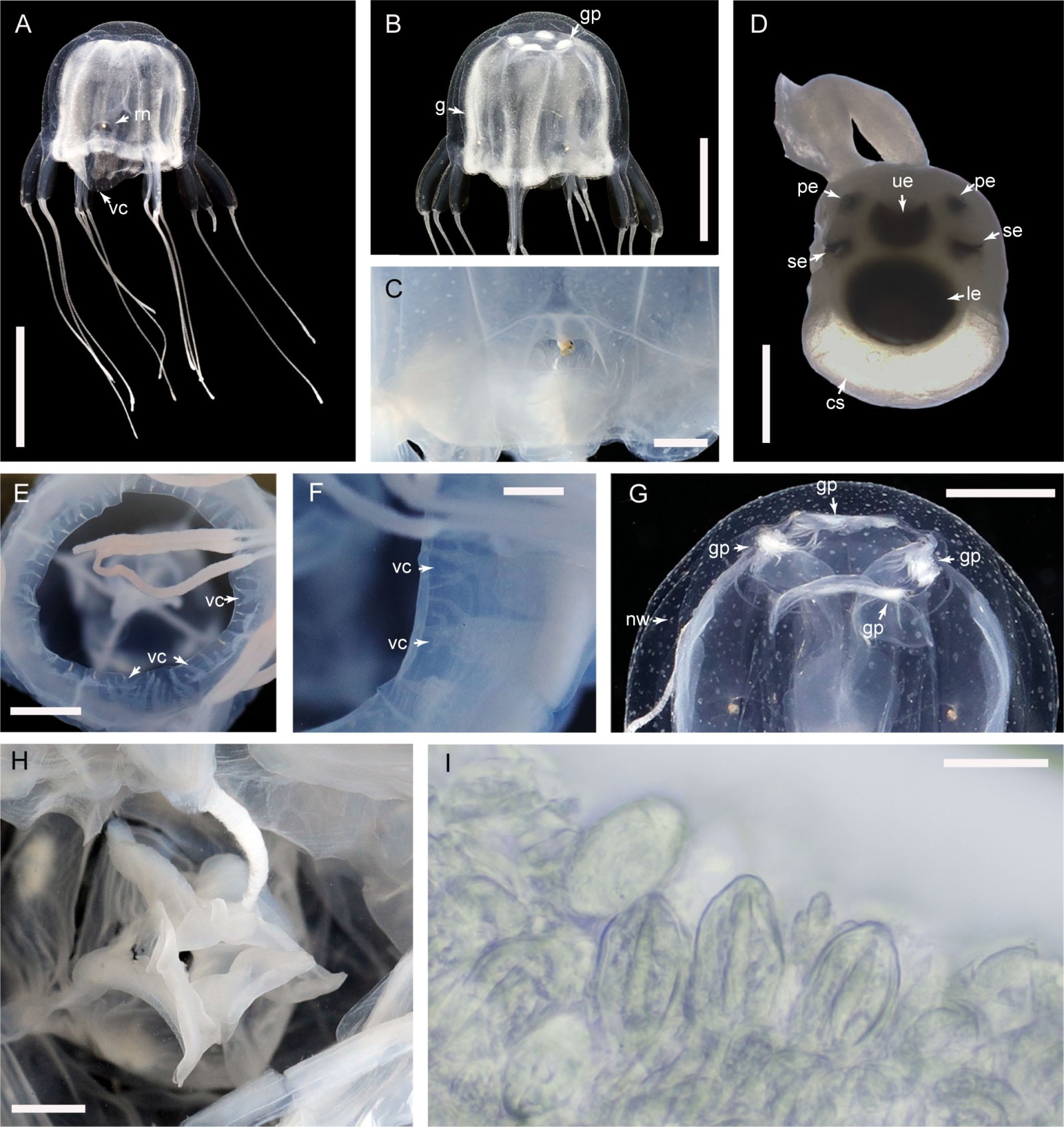
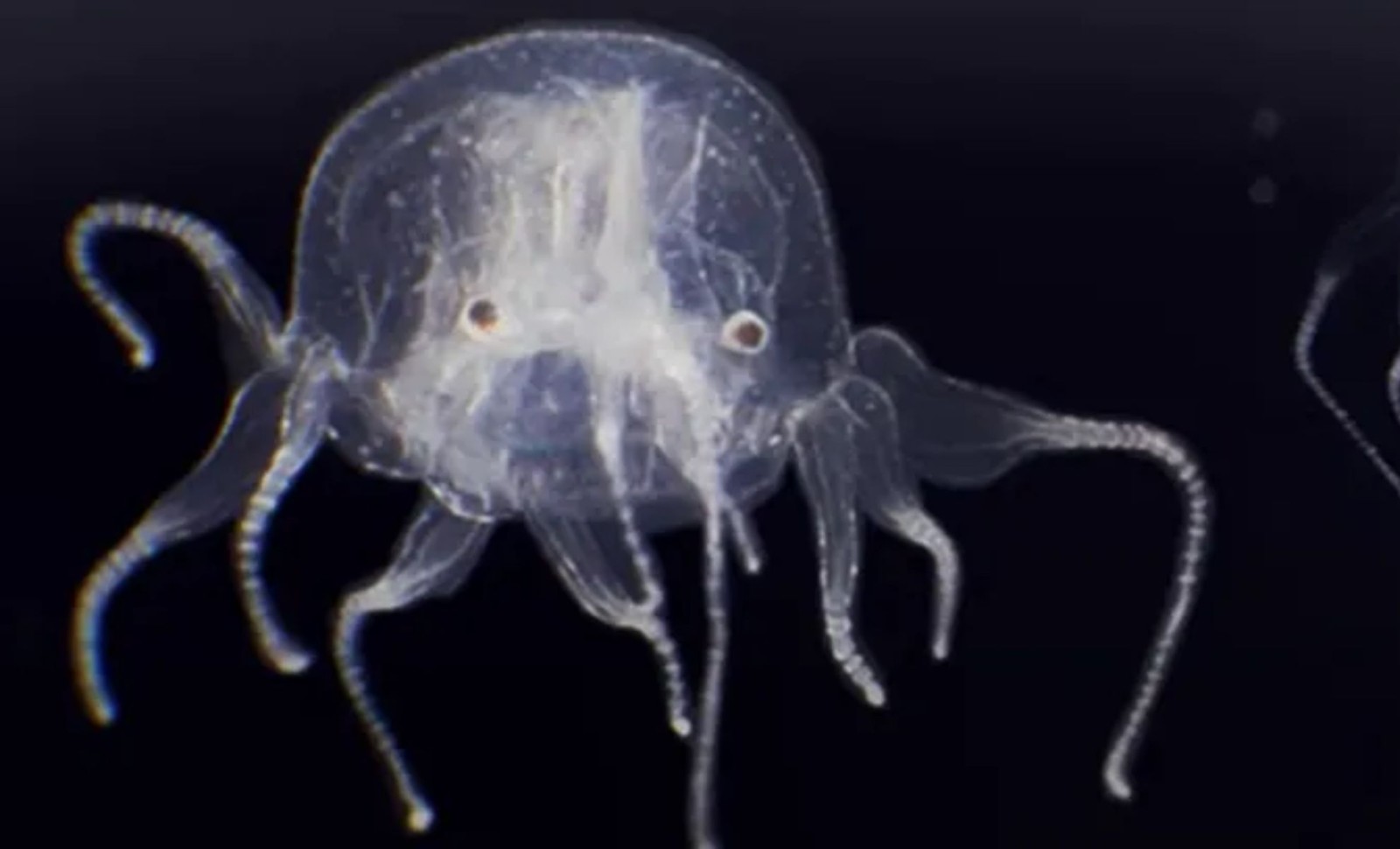
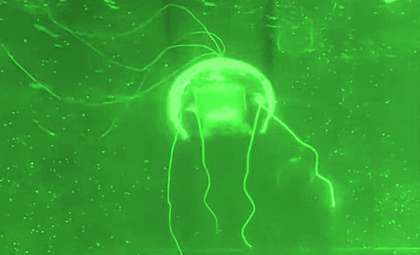
Tripedalia maipoensis shares similarities with its Caribbean counterpart, Tripedalia cystophora, yet it boasts unique physical characteristics. Its bell is translucent and about six-tenths of an inch across, with a near-cubic form. Each bell corner sports three flattened appendages called pedalia, which aid in its movement through water. These pedalia support elongated tentacles that can extend up to four inches in length.
What truly distinguishes Tripedalia maipoensis is its complex eye arrangement. Belonging to the Tripedaliidae family, this jellyfish has 24 eyes grouped into four six-eye rhopalia clusters. The published research reveals that each cluster contains two larger image-forming eyes while the remaining four eyes are simpler photoreceptors, sensitive to light and dark. Scientists believe these eyes assist in navigation and prey detection.

“This box jellyfish connects the base of its tentacles and its bell with a flat base that looks like a boat paddle, making it distinct from other common jellyfish,” explained Qiu Jianwen, , a professor in the Department of Biology at Hong Kong Baptist University and lead researcher, in a video. “Another feature of the box jellyfish is that it has six eyes located on each side of its body.”
Complex Behavior in Brainless Jellyfish
Even without a centralized brain, jellyfish in the genus Tripedalia display complex behaviors that hint at cognitive processes. For example, prior experiments with Tripedalia cystophora have demonstrated their ability to modify swimming paths when encountering barriers—an example of associative learning.
This learning enables the jellyfish to connect past events to future actions. Although similar studies have yet to be carried out on Tripedalia maipoensis, researchers predict it likely shares these abilities due to its close genetic relationship.
Such learning in an organism lacking a formal brain is not limited to jellyfish. Other simple creatures, including some octopus species, have shown comparable learning behaviors.
An Unexpected Discovery Amidst Urban Nature
Unveiling Tripedalia maipoensis within the Mai Po Nature Reserve highlights the hidden diversity thriving even in areas close to urban centers. Although Mai Po is a heavily examined natural site adjacent to a busy city, this finding underscores that human-influenced habitats can still shelter unknown species.
“We are thrilled with this discovery. Finding a new species in Mai Po, where extensive research has been conducted, highlights the potential for more marine life discovery in the Hong Kong and even the Chinese coastal waters,” Professor Qiu said.
The research group emphasizes that the shrimp pond ecosystem, shaped by natural and human factors, harbors promising grounds for finding more undiscovered species in relatively undisturbed wetlands.
- Categories:
- News





0 comments
Sign in to Comment