
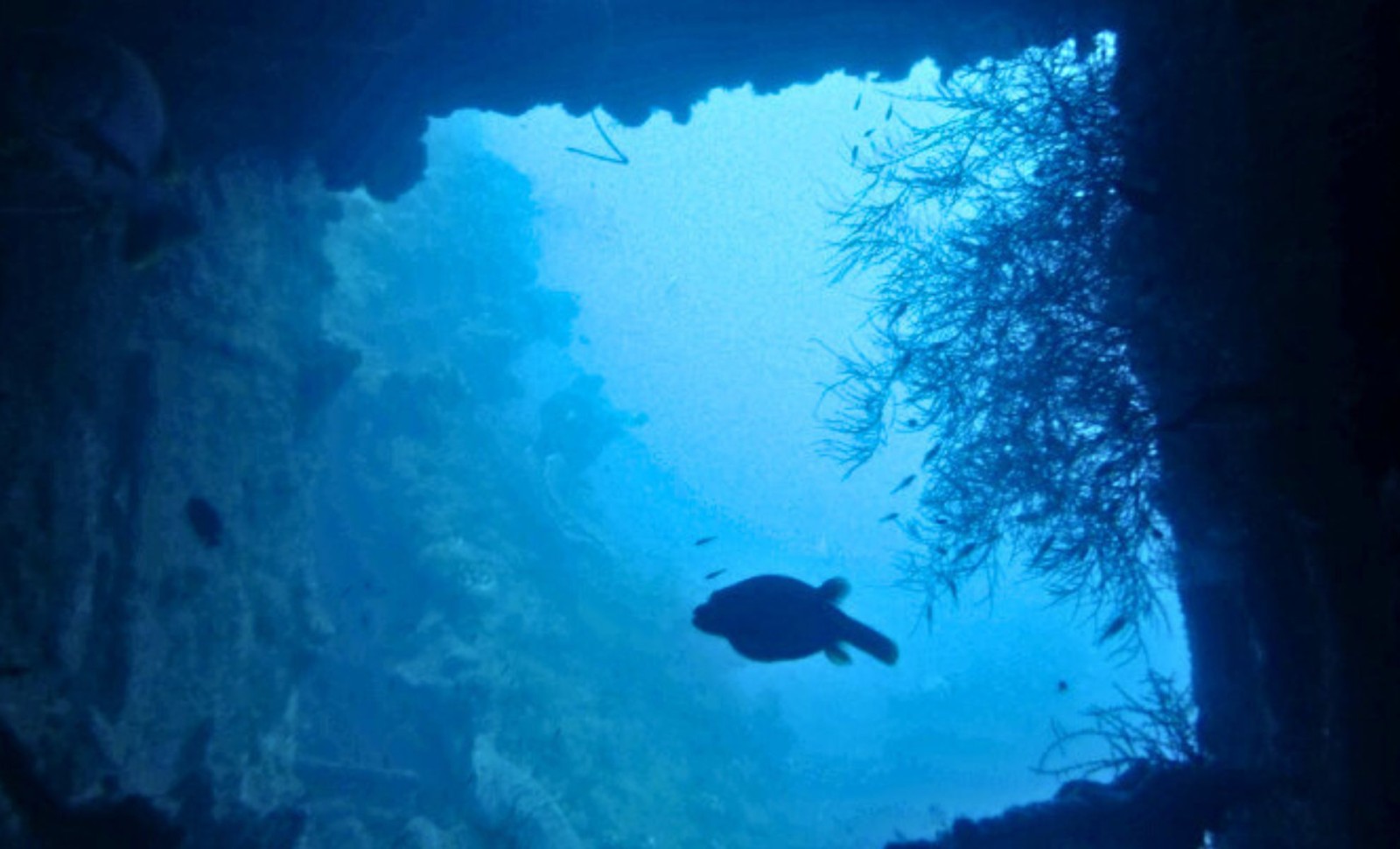
A see-through, jellyfish-inspired robot crafted by Chinese scientists is attracting significant attention in both defense and robotics fields. This autonomous underwater device, dubbed the "Ghost," moves silently and is almost invisible in water, eluding detection by sonar systems. Compact and lightweight, measuring only 12 centimeters across and weighing 56 grams, it represents a breakthrough in underwater robotics.
The "Ghost" was created by a team at Northwestern Polytechnical University (NWPU) in Xi’an, a prominent Chinese research center known for advances in defense technologies. As reported by Science and Technology Daily, the robot imitates the shape and movement of jellyfish, featuring a soft, umbrella-like structure with artificial tentacles driven by electrohydraulic muscle actuators.
While researchers highlight its applications for monitoring marine ecosystems and inspecting underwater infrastructure, the robot’s unique design has generated interest for covert military operations. Its stealth, autonomous control, and biologically inspired propulsion point to uses beyond traditional scientific research.

Invisible Yet Effective
The Ghost’s defining characteristic is its complete transparency. Constructed from an innovative hydrogel electrode material, its flexible exterior enables jellyfish-like bending and pulsing motions without revealing its internal mechanics. This technology was developed independently by NWPU’s School of Mechanical and Electrical Engineering, led by Professor Tao Kai, who specializes in biomimetic underwater robotics.
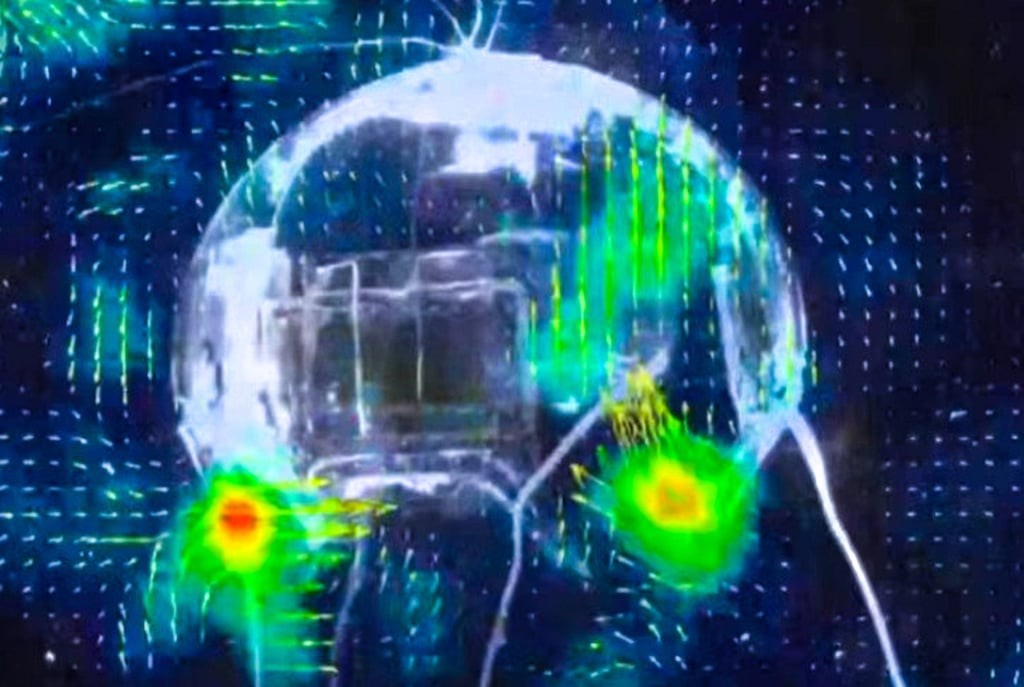
NWPU’s official announcement details that the robot uses low-power electrohydraulic actuators, needing only 28.5 milliwatts to operate. This enables extended deployment with minimal energy consumption. Unlike standard underwater drones that deploy rigid frameworks and propellers, the Ghost moves through pulsed water vortices that mimic the natural propulsion of jellyfish.
This swimming style offers two key benefits: it generates virtually no sound and leaves no wake. In underwater environments where sonar and acoustic scanning dominate, this silent, wake-free movement allows the robot to perform discreet reconnaissance and intelligence activities.
Embedded Intelligence in a Flexible Design
The Ghost pairs advanced hardware with smart onboard systems. It features a compact camera and an AI processing chip, enabling it to recognize and track objects underwater autonomously. Laboratory trials reported by Science and Technology Daily demonstrated its stable hovering in turbulent water and its ability to follow targets without external guidance.
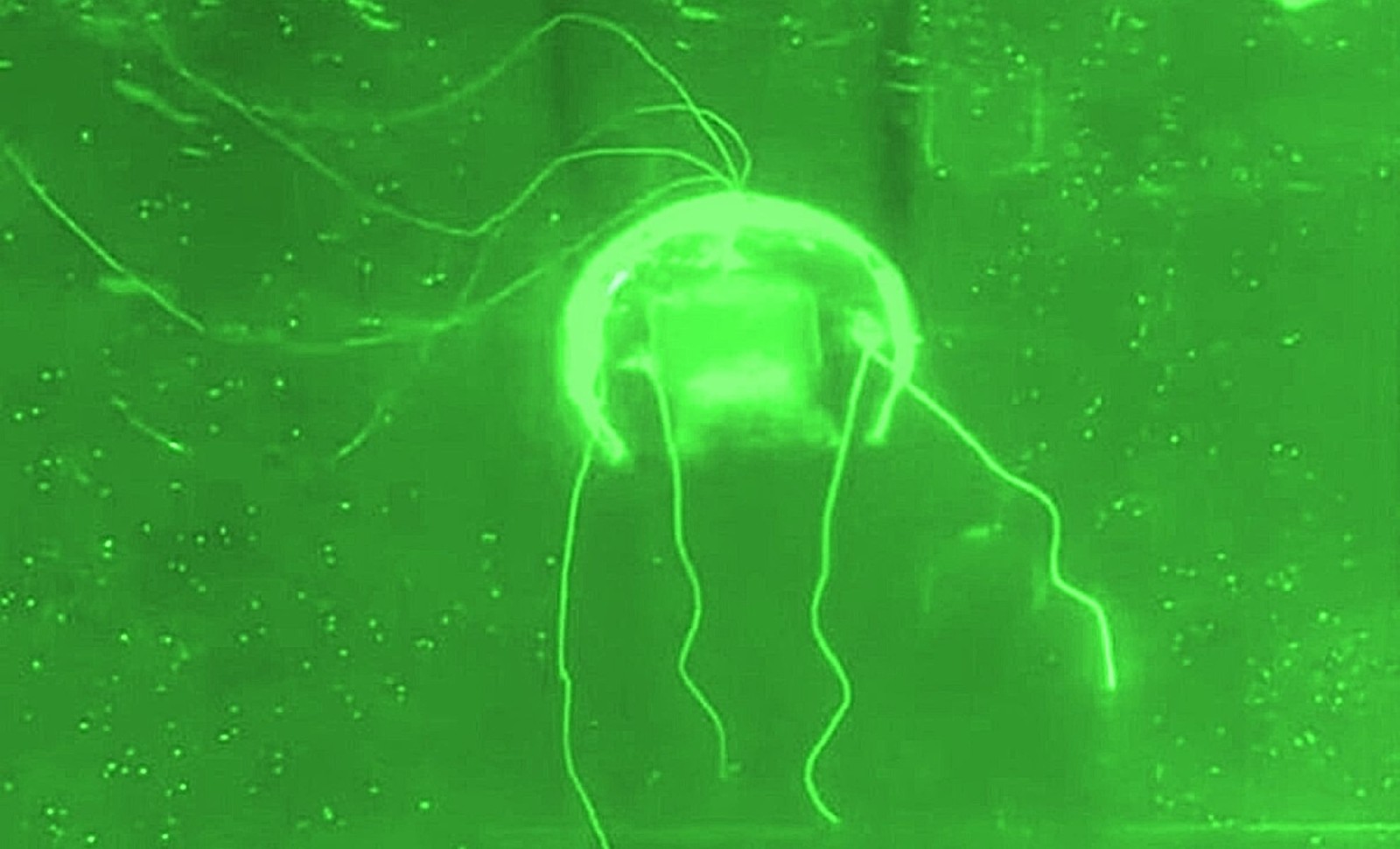
The South China Morning Post also verified its real-time tracking capabilities and near-invisible appearance when submerged. Professor Tao Kai stressed the robot’s strategic advantages: “Its low power usage, silent operation, and lifelike appearance make it especially suitable for secretive deep-sea observation missions.”
This level of integrated autonomy is rare in small, soft-bodied robots. Including vision processing and artificial intelligence means this is more than a concept — it’s a functioning intelligent underwater vehicle capable of independent operation without human control, placing it within the emerging class of intelligent unmanned underwater vehicles (IUUVs).
Global Context of Soft Robotics
The Ghost exemplifies a growing global interest in soft, bioinspired robotic designs. In the US, the Wyss Institute at Harvard and the City University of New York developed the Jellyfish Gripper, a soft robotic tool intended to handle living jellyfish gently for scientific studies. These grippers use ultra-soft actuators crafted to interact safely with marine animals.
Additionally, a project highlighted in Science Robotics introduced the Jellyfish-Bot, which employs dielectric elastomer actuators for jellyfish-inspired swimming. Although similar in mimicking jellyfish propulsion, its goals focus on environmental research and safe interaction with marine ecosystems rather than stealth surveillance.
What sets the Ghost apart from these Western developments is its fusion of transparency, noiseless movement, and onboard AI target detection. While the Harvard and Science Robotics projects prioritize research-friendly interaction, the Ghost aims at real-time surveillance in environments where stealth and concealment are paramount.
Strategic Applications of Soft Robotics
Though no direct military designation has been announced, NWPU’s ties to China’s defense industry imply the Ghost is designed as a dual-use device. The university is a major player in the country’s aviation and naval sectors, overseen by the Ministry of Industry and Information Technology, often operating in areas blending civilian and defense innovation.
The Ghost’s soft, transparent build allows it to navigate delicate coral reefs or complex underwater infrastructure without causing harm. Its AI-driven autonomy removes the need for tethered connections or remote control. Combined with its silence and compact size, it presents a prime platform for naval reconnaissance missions in contested or sensitive maritime zones.
References:
Official NWPU AI Jellyfish Robot Announcement
Wyss Institute Soft Robotic Jellyfish Gripper
Science Robotics: Jellyfish-Bot Article
SCMP on China's Ghost Drone
- Categories:
- News





0 comments
Sign in to Comment