
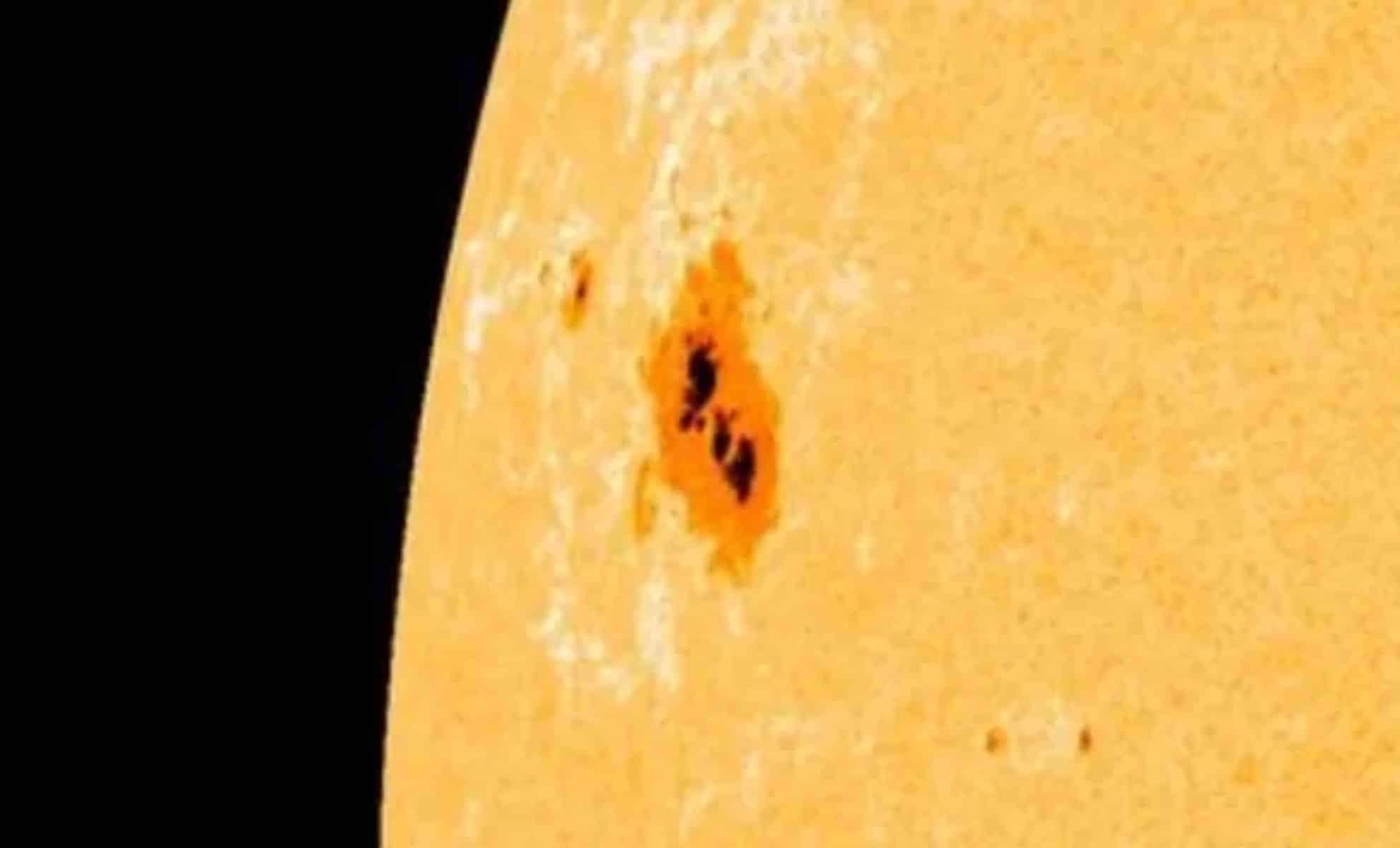
A formidable sunspot, known as AR4100, has now completed its third full journey across the face of the Sun visible from Earth. This remarkable persistence places it among an exclusive group of long-lived solar phenomena and suggests it might challenge a solar record that has remained unbroken since 1919. Reports from Live Science and Spaceweather.com confirm that this persistent solar feature has lasted for over 50 days with little sign of weakening.
“I’m curious to see how long the sunspot will be with us,” said Harald Paleske, an amateur astronomer in Germany who has tracked the active region since early April. “This is its third run across the sun.”
Solar Sunspot Survivor
The sunspot initially emerged on April 5, 2025, under the label AR4055. After disappearing around the Sun’s west edge, it reappeared on April 28 as AR4079. Following another solar rotation out of view, it has now returned once more, carrying the identifier AR4100. This renaming system is commonly employed by solar scientists to monitor sunspots as they rotate in and out of sight.

What elevates AR4100 beyond an ordinary sunspot is both its vast size—stretching approximately 87,000 miles (140,000 kilometers), nearly eleven times Earth’s diameter—and its astonishing durability. Most sunspots dissolve within a few days, with only a handful enduring two rotations around the Sun. This sunspot has weathered intense solar forces, including radiation and magnetic changes, without breaking down. As described by Spaceweather.com on May 28, it’s as if “Sunspot 4100 wants to join the AARP,” highlighting its unusual longevity.
An Uncommon Phenomenon Amid Solar Cycle 25
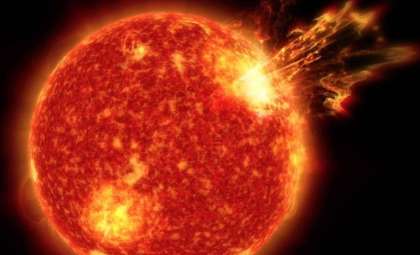
The extended lifespan of AR4100 is especially remarkable during Solar Cycle 25, which has proven to be more vigorous than initially forecast. Peaking in early 2024, this phase has generated heightened magnetic activity, a high number of sunspots, and frequent coronal mass ejections (CMEs). Notably, in August 2024, the Sun reached its highest monthly sunspot average in 23 years, with a daily high of 337 sunspots—a level not seen since the early 2000s.
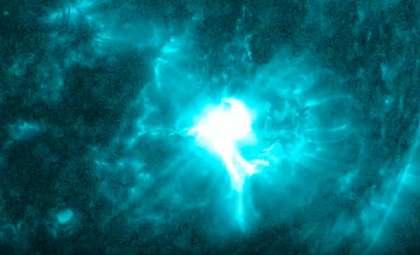
Normally, such solar turbulence triggers rapid birth and decline of sunspots. Large spots typically emerge suddenly and either erupt dramatically or fade as their magnetic fields lose integrity. The sustained stability of AR4100, which has yet to produce major X-class solar flares, defies the typical behavior observed in this active cycle.
Tracing the History of Long-Lived Sunspots
Stories of sunspots with exceptional lifespans have circulated for years. For example, a claim about one lasting 18 months during 1840-41 was later disproved. A crucial 1951 investigation led by astronomer Edwin Pettit at Mount Wilson Observatory revealed that what appeared to be a single spot was, in fact, a succession of different spots within the same region.
The longest authenticated sunspot instance occurred in 1919, enduring for 134 days, just over four months. To set a new record, AR4100 must persist through at least two more solar rotations. Given its current steadiness and past crossings, scientists consider this an achievable, though not guaranteed, milestone.
Having remained visible for about 54 days so far, if it holds together into July, AR4100 will claim a significant place in both solar research and space weather history.
Why Some Sunspots Outlast Others
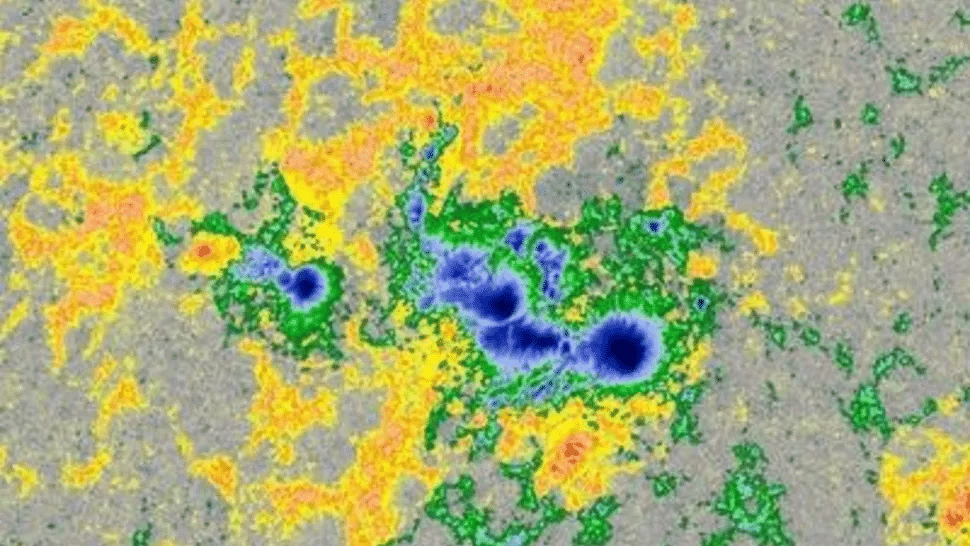
The key to a sunspot’s duration lies in its magnetic structure. These dark solar features form when intense magnetic fields rise from the Sun’s interior and interrupt the surface flow of heat and plasma, creating cooler, darker patches. Despite appearing very dark, sunspots are only about 1,500 K cooler than surrounding areas, and they are best seen in ultraviolet and visible light.
A sunspot’s magnetic complexity influences its lifespan and Earth impact. Rapidly changing, intricate magnetic fields tend to twist and break, generating flares and CMEs. Conversely, a simple and stable magnetic setup, such as that found in AR4100, can support longer-lasting, calmer sunspots. Ironically, the very tranquility of AR4100 may be what enables its unusually prolonged existence.
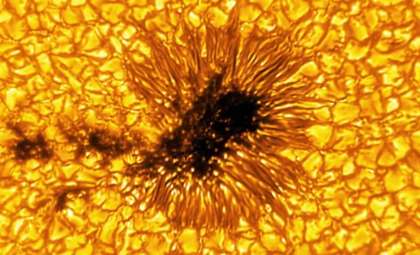
Advanced instruments like the Daniel K. Inouye Solar Telescope in Hawaii offer unprecedented detail of sunspot magnetic arrangements, advancing our understanding of regions like AR4100. Additionally, NASA’s use of Mars rovers to observe solar areas out of Earth's view helps complete the picture of how sunspots evolve on the Sun’s hidden side.
- Categories:
- News






0 comments
Sign in to Comment