
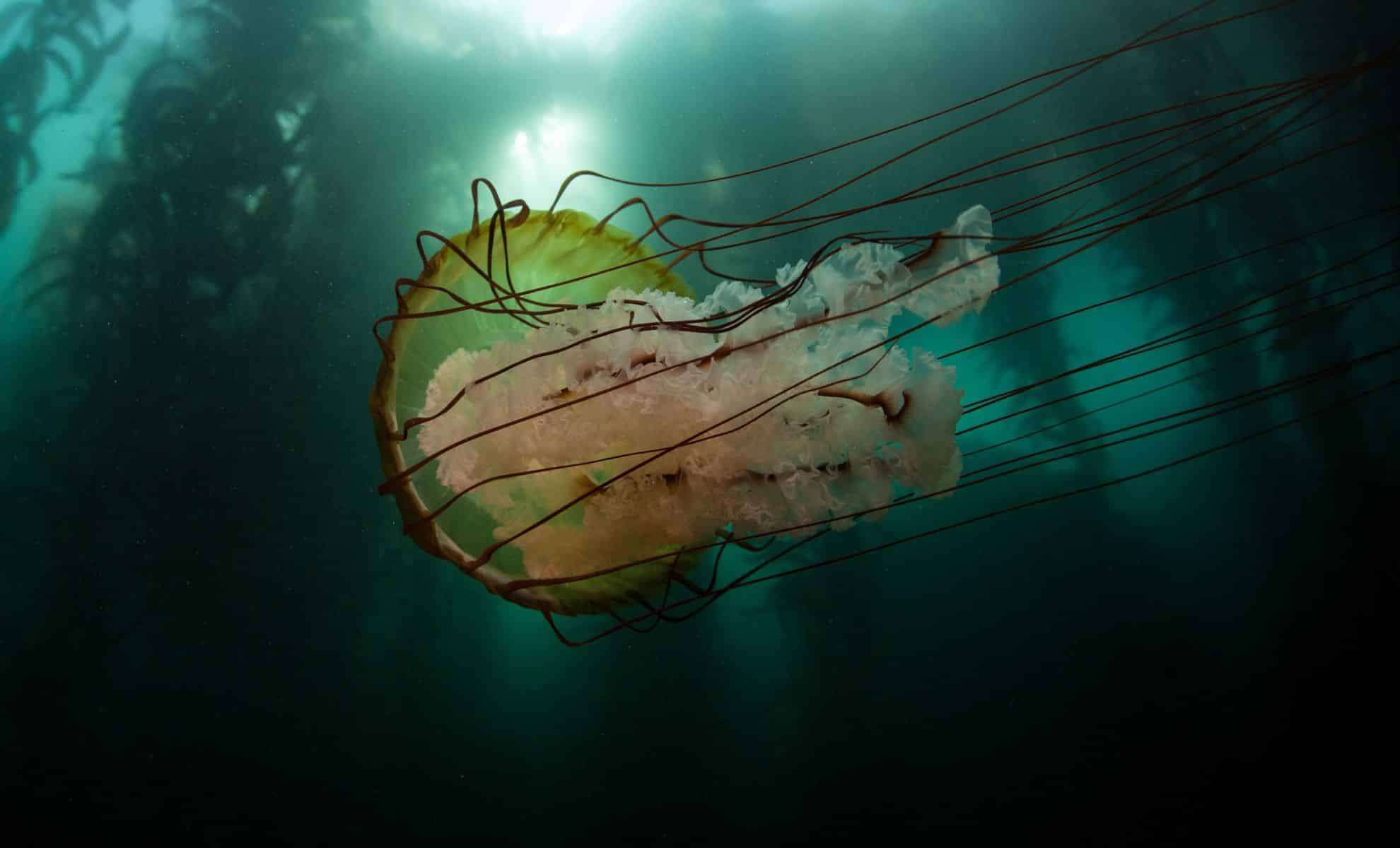
The lion’s mane jellyfish (Cyanea capillata) stands out as the largest jellyfish species in the oceans. Its bell can expand to nearly 8 feet (2 meters) across, while its tentacles may extend an incredible 60 feet (18 meters), highlighting its status as a remarkable marine inhabitant.
Recent research featured in Marine Biology discusses the increasing encounters of these jellyfish near populated coastal areas, a trend linked to shifting climate conditions.
The Giant Jellyfish of the Sea
Known for its gelatinous form, the lion’s mane jellyfish impresses not only with its size but also its structure. The bell spans up to 8 feet (2 meters), positioning it as the largest known jellyfish species. Its tentacles can reach lengths of 60 feet (18 meters), and in some instances, even 120 feet (36 meters). To visualize, its tentacles can be as long as a ten-story building, making it one of the ocean’s most extraordinary creatures. Despite its enormity, it moves gracefully with its delicate, flowing tentacles trailing behind.

Hunting Mechanism of the Lion’s Mane Jellyfish
HowStuffWorks explains that this jellyfish captures prey—such as small fish, tiny crustaceans, and even other jellyfish like moon jellies—using its stinging tentacles. These appendages are lined with nematocysts, specialized cells that release toxins to immobilize prey. Following capture, the jellyfish transports the prey to its mouth using its frilled oral arms.
The sting, while painful to humans, is essential for the jellyfish’s hunting success. Additionally, certain smaller fish species, including juvenile whiting and walleye pollock, find refuge among the tentacles, which protect them from predators.
Encounters Between Humans and the Lion’s Mane Jellyfish
Although the lion’s mane jellyfish appears intimidating due to its size and venomous tentacles, it does not actively target people. However, swimmers and divers occasionally come into contact with this species, resulting in painful stings. These injuries can cause burning sensations, swelling, and sharp pain. When symptoms such as nausea, excessive sweating, or abdominal cramps occur, prompt medical care is often necessary. It is important to remember that even detached tentacles remain capable of stinging.
Biology of a Curious Creature: No Brain, No Heart
One of the most intriguing qualities of the lion’s mane jellyfish is its lack of both a brain and a heart, yet it continues to survive and prosper. Instead of a brain, this jellyfish features a sophisticated nerve net that helps it sense the environment, coordinate movements, and find food.
Additionally, the jellyfish’s body is composed of roughly 95% water and lacks blood entirely. Despite missing many organs traditionally linked to survival, this species has adapted remarkably well to life in the ocean.
- Categories:
- News












0 comments
Sign in to Comment