
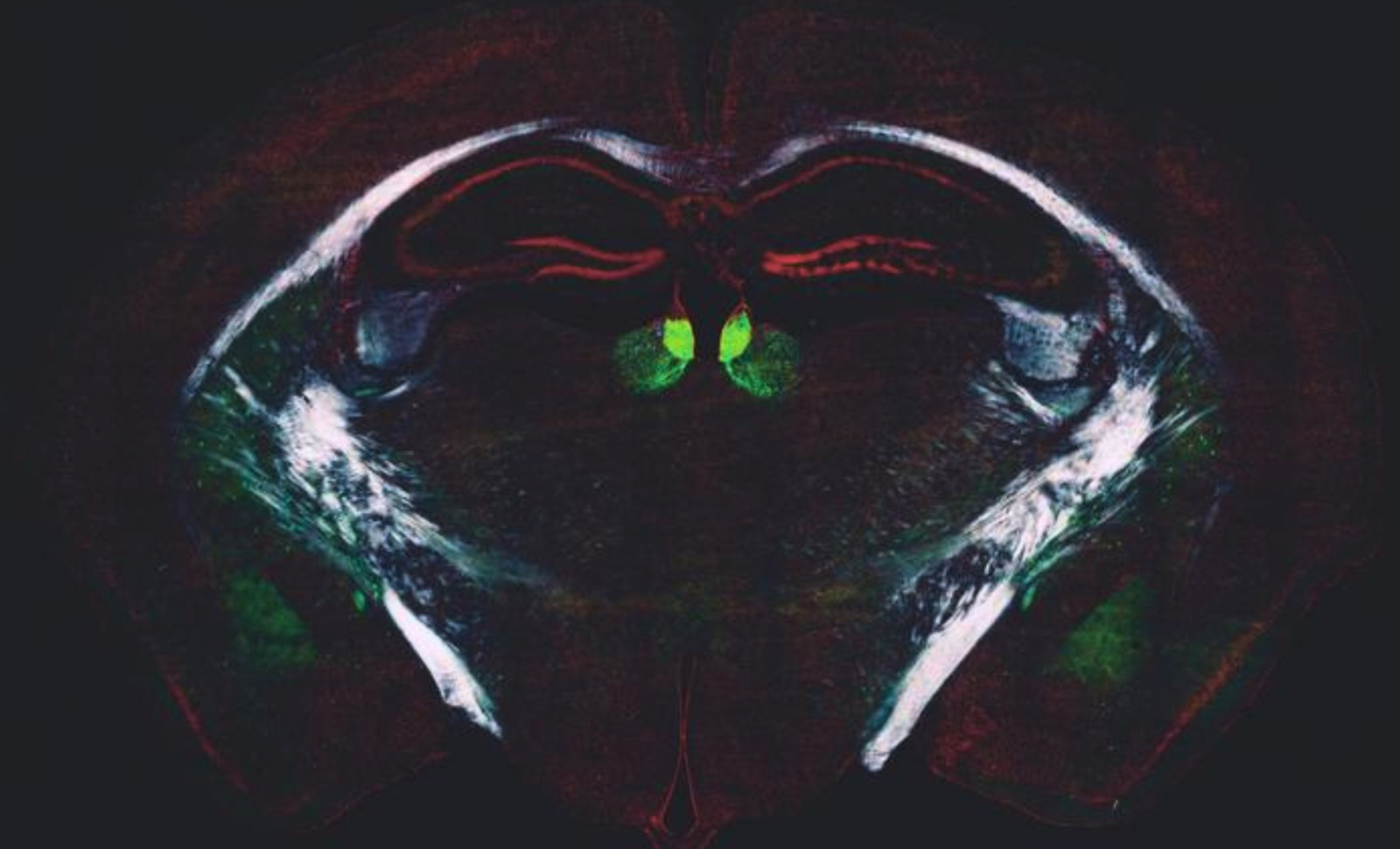
Scientists have uncovered that a receptor, previously recognized for its role in prenatal brain formation, plays a crucial part in adult learning by controlling how firmly behaviors are established and when they can be altered. A team from the City University of New York revealed that Smoothened, once thought to be active only during embryonic stages, significantly influences learning, motivation, and adaptability in the mature brain.
This breakthrough, published early in iScience, offers fresh insight into the molecular framework of reinforcement learning, focusing on the brain’s constant challenge of deciding when to maintain learned information or replace it with new data.
Regulating the Critical Learning Interval
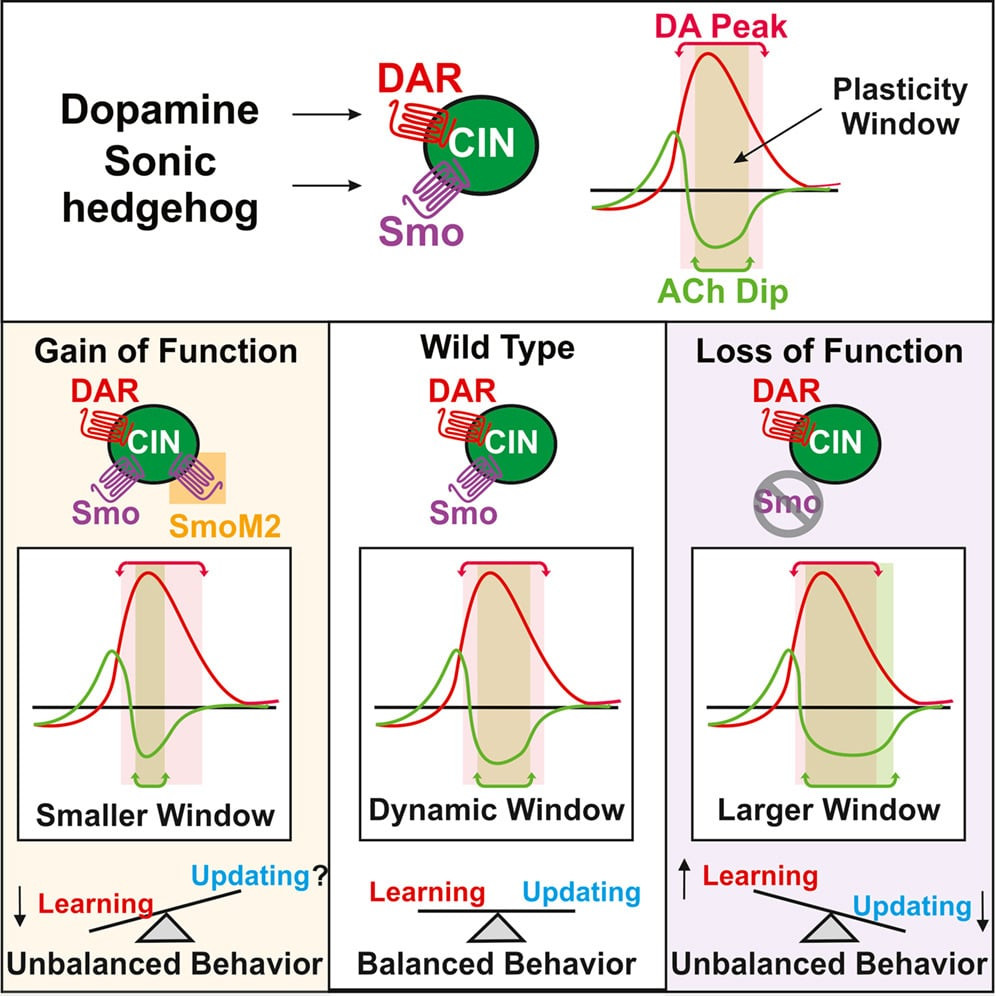
Located deep within the brain, the striatum links actions to consequences, assessing the effort involved in each. Learning here relies on the sequential action of two key neurotransmitters. Dopamine strengthens behaviors, while acetylcholine determines when neurons are ready to accept new information.

Acetylcholine is released by a specialized group of cells named cholinergic interneurons, which, though only making up 1-2% of striatum cells, extend widely throughout and greatly influence information processing. These neurons pause their activity at pivotal moments during learning, creating a brief time frame in which dopamine can modify neural connections and reinforce beneficial behaviors.

Smoothened essentially determines the duration and extent of this pause. When active, the quiet periods are brief and tightly controlled. When Smoothened is removed, these pauses lengthen, giving dopamine a prolonged window to influence synaptic changes. Importantly, dopamine release itself remains constant; only the receptive period in the neural circuits is modified.
"By modulating the length of acetylcholine’s pause, Smoothened sets how strongly dopamine can reinforce recent actions in the adult brain," explained Andreas H. Kottmann, an associate professor of Neuroscience and Cognitive Neuroscience at CUNY Graduate Center.
Accelerated Learning at the Cost of Flexibility
The researchers investigated how behavior changed in animals lacking Smoothened in cholinergic interneurons. These animals demonstrated quicker acquisition of motor tasks and exerted more effort to obtain rewards, seemingly indicating enhanced cognitive ability.
However, when task demands shifted—like increased effort or delayed rewards—these animals were slower to adapt, as reported by the study authors. They persisted in ineffective strategies longer than animals with intact Smoothened signaling, revealing a tradeoff where enhanced initial learning reduces behavioral flexibility.
This dynamic closely resembles patterns in compulsive disorders and addiction, where reinforced behaviors become deeply ingrained and resistant to change.
"Smoothened functions like a dial that prevents reinforcement signals from becoming overly strong or persistent," Kottmann noted. "Balanced learning is vital; disrupting this can have serious implications for brain health."
Repurposing Developmental Pathways for Adult Learning
Smoothened is part of the Hedgehog signaling system, originally known for directing brain development in embryos. Its ongoing role in adult learning shows the brain preserves and adapts developmental mechanisms for lifelong function.
The activating molecule Sonic Hedgehog is continually produced in the striatum by dopamine neurons—those same neurons that indirectly control Smoothened’s effects. The pathway that guided neurons’ birth now governs their communication timing during learning.

"Our findings highlight how nature efficiently reuses signaling pathways," Kottmann remarked. "Signals vital for embryogenesis also fine-tune changes in the adult brain essential for ongoing learning."
Smoothened’s unique position linking dopamine and acetylcholine signaling makes it a potential focus for disorders where this interplay falters.
Implications for Parkinson’s and Addiction
The researchers identify Parkinson’s disease and addiction as primary conditions of interest.
Parkinson’s is chiefly marked by dopamine neuron degeneration, but disruptions in acetylcholine signaling and reduced behavioral flexibility appear early, sometimes before extensive cell loss. Kottmann’s earlier work demonstrated Smoothened’s ability to reduce L-DOPA-induced dyskinesias, involuntary movements caused by dopamine therapy. This study expands on that, suggesting Smoothened helps maintain striatal learning circuit health even before Parkinson’s fully manifests.
Regarding addiction, excessive dopamine surges caused by drugs induce long-lasting behavioral changes. Since Smoothened restricts dopamine’s behavioral imprinting, restoring its function in cholinergic interneurons could offer therapeutic strategies against the persistent reinforcement that makes addiction hard to overcome. These findings are preclinical and require human trials to confirm their potential.
- Categories:
- Science













0 comments
Sign in to Comment