
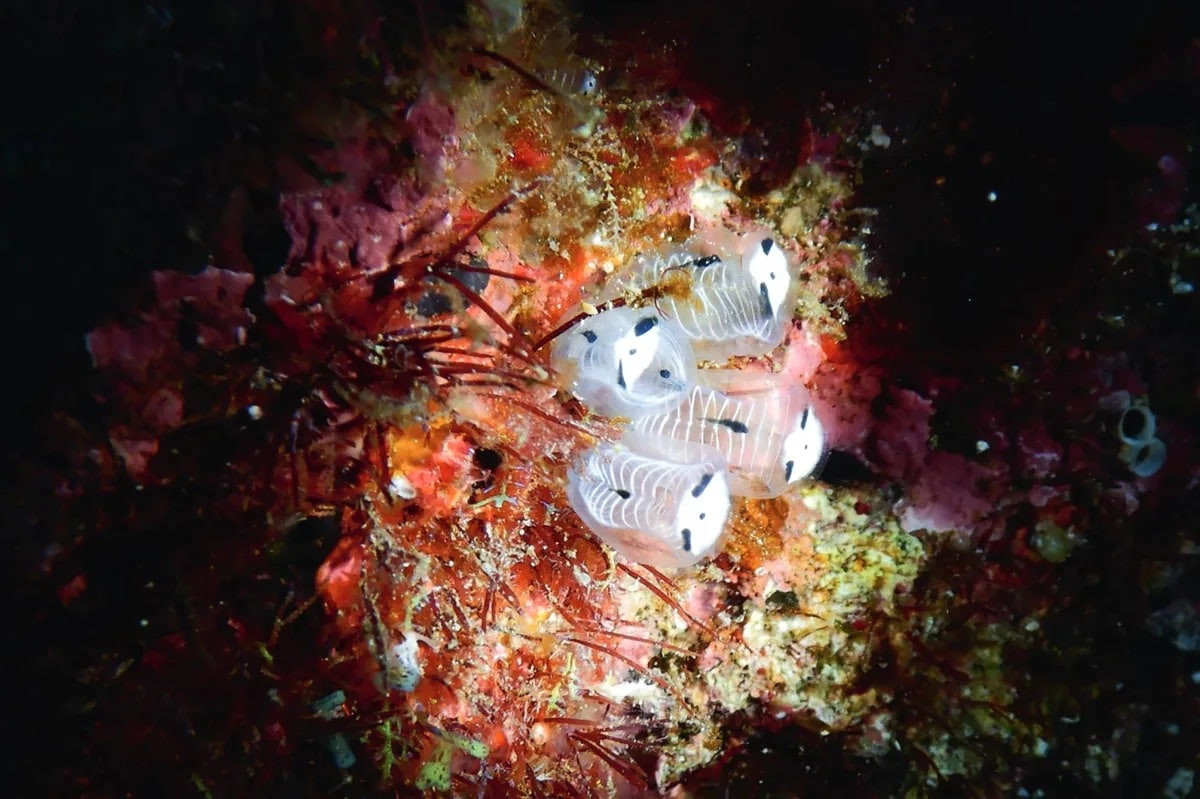
Photos shared by scuba enthusiasts have revealed a diminutive marine creature off Japan’s coast that has been classified as a previously unknown species. This invertebrate, popularly dubbed the “skeleton panda,” is notable for its panda-like facial pattern set against a delicate, translucent body framework.
Officially named Clavelina ossipandae, this species was formally described in 2024 after collection and examination of specimens near Kumejima Island. Although images of the organism had circulated online for several years, it wasn’t until recently that scientists verified it as a distinct species.
Online Images Lead to Scientific Recognition
The earliest photos of these tiny, semi-transparent animals appeared online around 2017, initially posted by a dive center in Japan. As reported by Live Science, researchers intrigued by these images suspected the species had not yet been documented and subsequently studied collected samples.

The species description was published in the 2024 edition of Species Diversity. Naohiro Hasegawa from Hokkaido University contributed to the morphological assessment of the animals gathered by aquatic explorers.
In Japan, this newfound creature earned the nickname “gaikotsu-panda-hoya,” which means “skeleton panda ascidian,” highlighting its distinctive pattern.
Origins of the Panda-Like Appearance
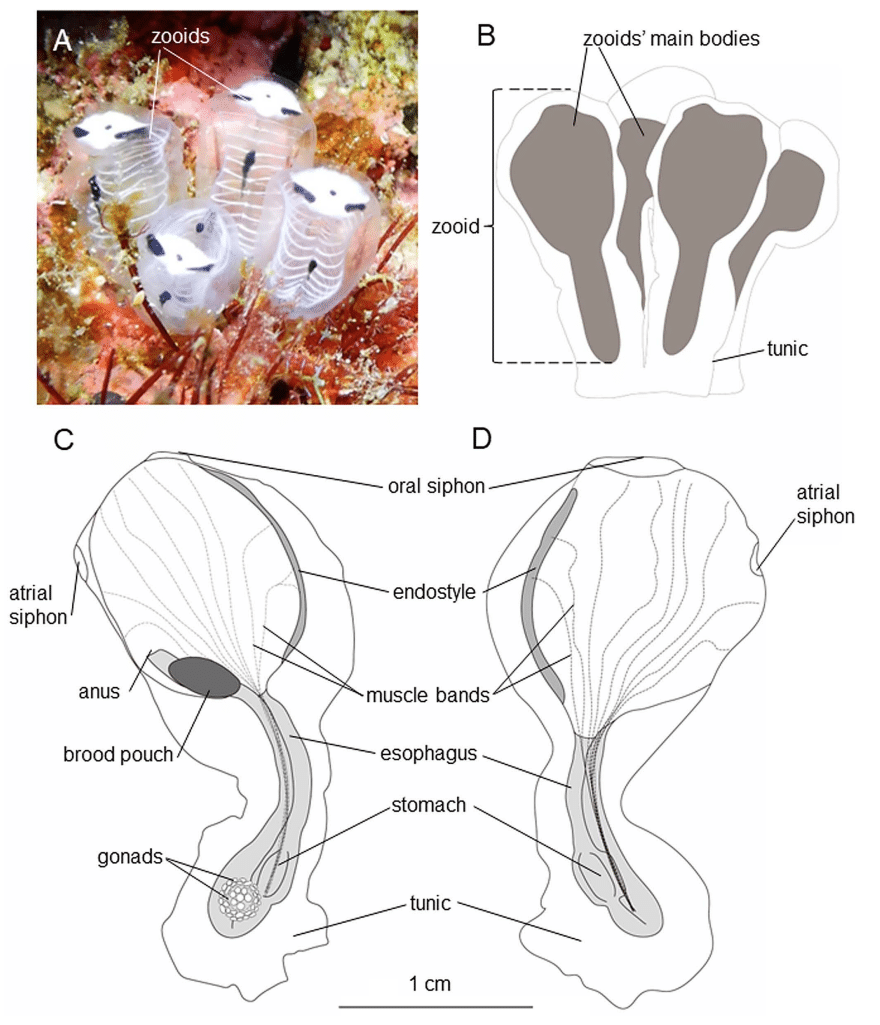
While the creature’s face closely mimics that of a panda, this is purely accidental. The apparent "skeletal" white bands seen on the animal are actually blood vessels running across the gill area. As Naohiro Hasegawa explains:
“The white parts that look like bones are the blood vessels that run horizontally through the sea squirts’ gills. The black parts on the head that look like a panda’s eyes and nose are just a pattern, and we don’t really know why the pattern is there.”
The dark pigment spots resembling eyes and a nose are simply natural coloration patterns. According to a Reuters video, scientists have yet to determine the function or cause of these markings.
The scientific name reflects this visual uniqueness: Clavelina translates to “little bottle” in Latin, describing the species’ shape, while ossipandae merges the Latin word os (bone) with “panda,” referencing its distinctive appearance.
Filter-Feeding Creature of Shallow Marine Habitats
Belonging to the Clavelina genus, Clavelina ossipandae is a filter feeder that anchors itself to solid surfaces underwater, drawing in water through specialized siphons to extract microscopic plankton and organic particles.
This species reaches under an inch in size, measuring less than 20 millimeters, and inhabits shallow waters up to 20 meters (66 feet) deep near Kumejima. Close relatives in the same genus, such as Clavelina moluccensis and Clavelina picta, also show patterned bodies but none have such a strong resemblance to a panda.
- Categories:
- Science







0 comments
Sign in to Comment