
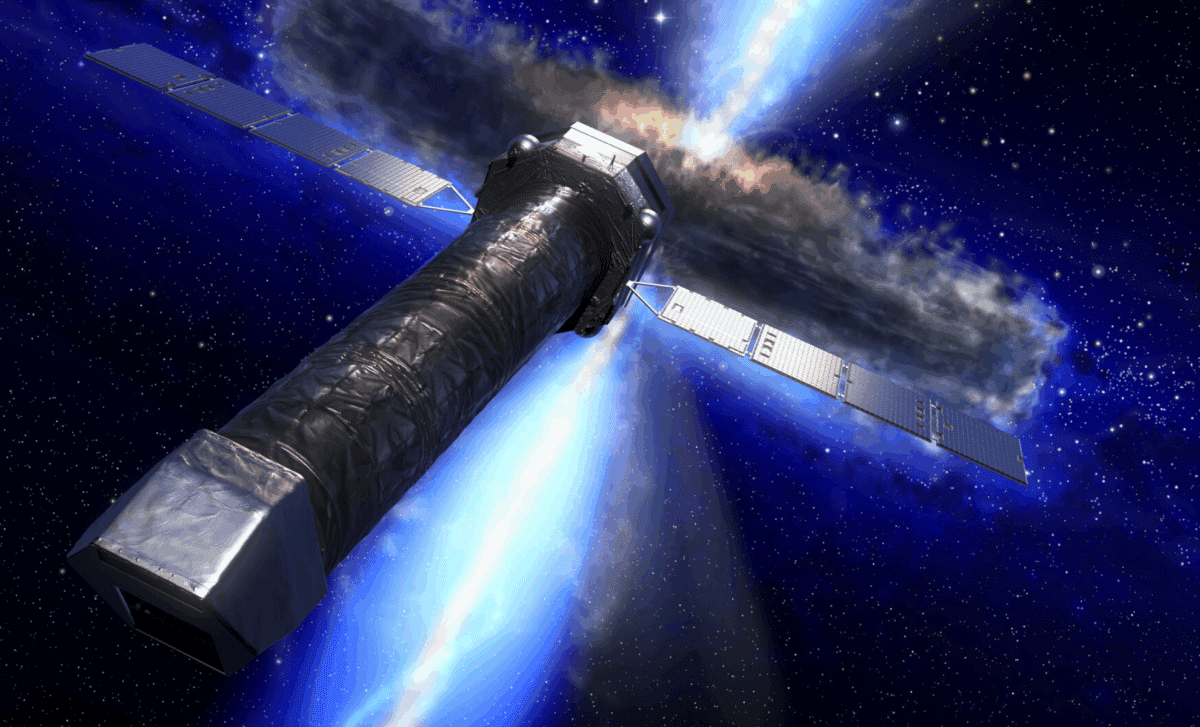
Aiming to unlock secrets from the universe’s primordial era, a cutting-edge space telescope promises to transform our knowledge of supermassive black holes. The upcoming NewAthena telescope, developed by Europe, is designed to explore these colossal objects that emerged during the universe’s infancy. Scheduled for launch in 2037, this initiative led by Portuguese scientists has generated exciting predictions regarding its observational potential, as detailed in a recent report in the Monthly Notices of the Royal Astronomical Society.
NewAthena: A Breakthrough in Cosmic Exploration
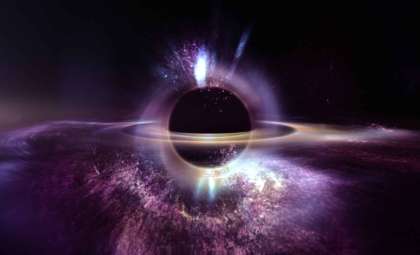
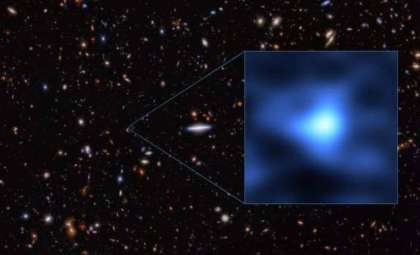
Created by the European Space Agency (ESA), the NewAthena mission is expected to propel astrophysics into a new era. Unlike current telescopes, NewAthena’s state-of-the-art X-ray instruments will allow researchers to investigate cosmic phenomena from a time when the universe was significantly younger. This capability is key to detecting supermassive black holes formed less than a billion years after the Big Bang, providing crucial insights into early cosmic evolution.
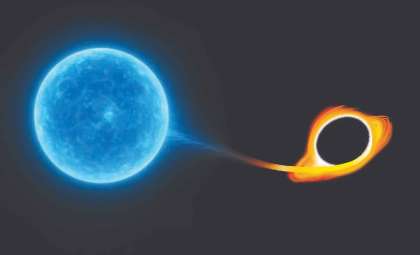
Nuno Covas, a scientist at the Institute of Astrophysics and Space Sciences (IA), University of Lisbon, highlighted, “NewAthena will enable the identification of approximately 250,000 active galactic nuclei — black holes actively swallowing matter.” These observations promise to deepen our understanding of how black holes and their host galaxies co-evolve. By capturing detailed X-ray images, astronomers can explore the physics behind these immense entities with unprecedented clarity.

Insights from a Recent Study on the Universe’s Formative Black Holes
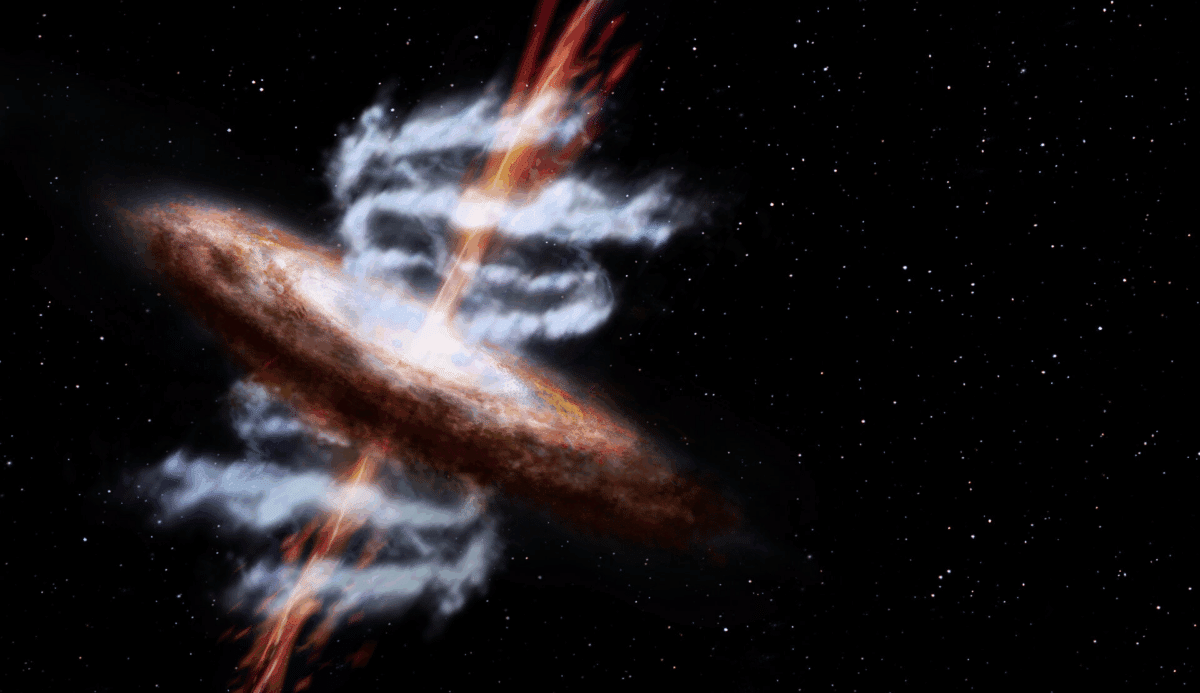
A recent investigation published in the Monthly Notices of the Royal Astronomical Society forecasts NewAthena’s ability to identify black holes from the universe’s dawn. Using advanced cosmological simulations, researchers from Portugal have predicted how the telescope will detect faint X-ray emissions from matter consumed by these ancient black holes. According to EuroNews, NewAthena could discover up to 250,000 active black holes, some dating just a few billion years after the Big Bang.
José Afonso, a collaborator at the University of Lisbon, emphasized the study’s significance: “We are approaching the epoch when galaxies and their central black holes begin to take shape.” The simulations suggest NewAthena will observe black holes during the Epoch of Reionisation, a pivotal chapter in cosmic history, allowing astronomers to probe the earliest galactic cores and gain clues about the universe’s origins.
Decoding the Formation Sequence of Black Holes and Galaxies
A central puzzle in astrophysics concerns which appeared first: supermassive black holes or galaxies. The emergence of these structures is deeply interconnected, yet determining their sequence remains challenging. Did black holes form initially, pulling matter to create galaxies, or did galaxies develop before their black holes took hold? With its unmatched sensitivity to distant black holes, NewAthena might finally clarify this fundamental question.
José Afonso explains, “Our goal is to identify black holes that sparked the birth of the earliest galaxies.” The data expected from NewAthena could offer the clearest evidence yet regarding whether supermassive black holes were the prime movers behind galactic formation or if their relationship is more nuanced. Presently, this dilemma is often described as a classic “chicken or egg” scenario.
How NewAthena Will Integrate with Future Space Missions
Rather than working alone, NewAthena will join forces with other pioneering observatories, such as LISA (Laser Interferometer Space Antenna) and the Square Kilometre Array (SKAO), both anticipated to launch in the coming decade. These missions together will provide extensive, high-energy observations of the cosmos. Israel Matute, co-author of the study, notes the synergy: “NewAthena’s wide-field X-ray perspective will perfectly complement the capabilities of forthcoming groundbreaking observatories.”
This collaborative approach will allow scientists to compile comprehensive datasets on black holes, galaxies, and other cosmic features, advancing a full picture of the universe’s birth and growth.
- Categories:
- News




0 comments
Sign in to Comment