

The Event Horizon Telescope (EHT), famous for capturing the inaugural image of a black hole, is undergoing major enhancements that will boost its observational power and open new avenues in black hole research.
The revamped system will incorporate more telescopes and state-of-the-art technology, enabling multi-frequency observations and achieving unprecedented imaging detail.
Advancements in the Enhanced Event Horizon Telescope
The modernized EHT will add ten new dishes and deploy innovative technology to broaden its observation scope. It will simultaneously observe at frequencies of 86, 230, and 345 GHz by employing frequency phase transfer methods.

This approach leverages lower frequency data to enhance higher frequency observations, allowing for extended integration periods and finer resolution imaging. This upgrade will particularly improve the EHT’s capability to detect the photon ring—the zone where light orbits a black hole—enabling astronomers to probe these extreme regions with unparalleled accuracy.
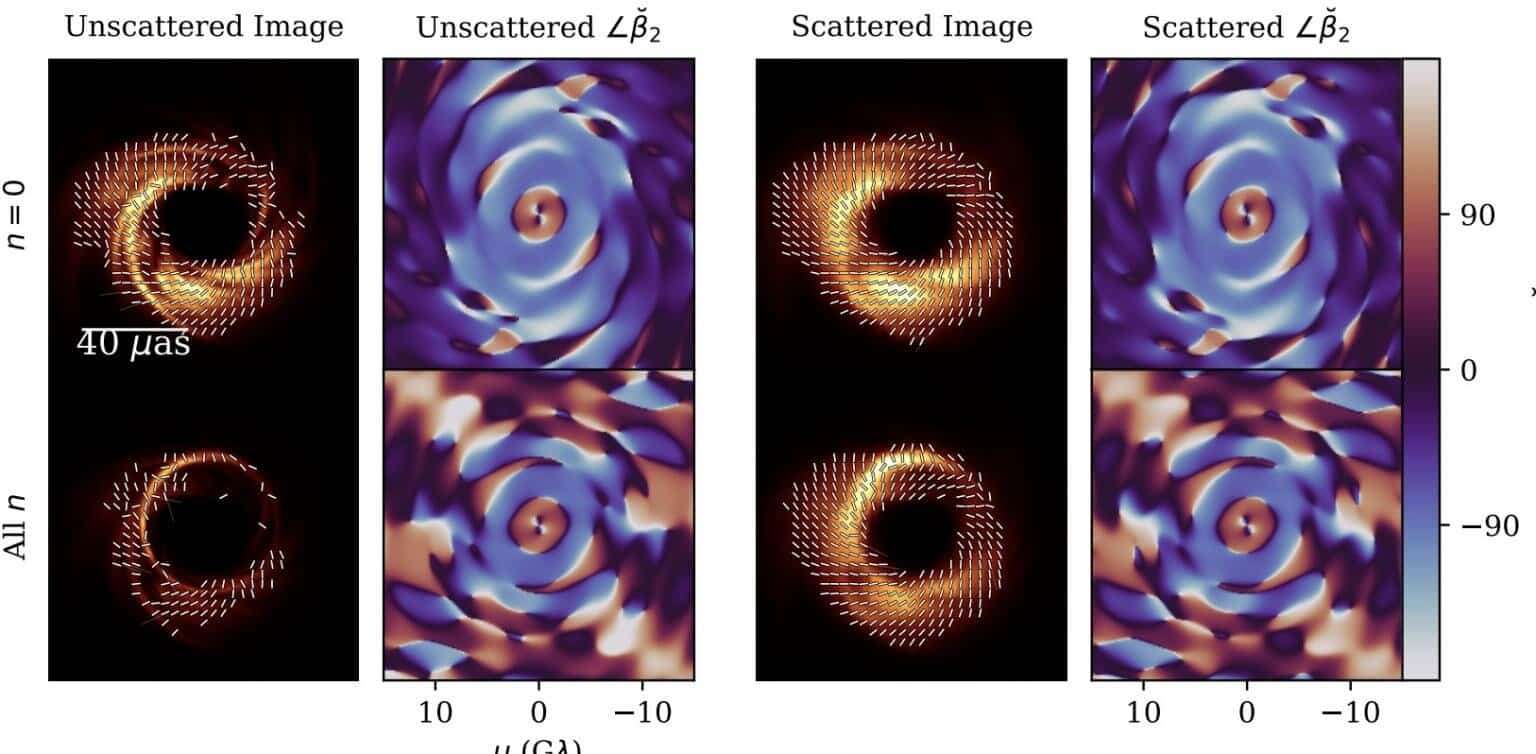
Exploring Magnetically Arrested Accretion Disks
The expanded EHT capabilities will deepen insights into magnetically arrested disks (MADs), present in many supermassive black holes including those in M87 and Sagittarius A*.
In these scenarios, magnetic forces are sufficiently strong to interfere with the inflow of accreting matter, resulting in the creation of high-energy jets. “The studies of the supermassive black hole at the center of M87 and Sagittarius A suggest a magnetically arrested accretion disk,” the team noted.
With the enhanced sensitivity and resolution, the EHT will resolve the intricate magnetic and plasma phenomena within these disks at an unprecedented scale, shedding light on jet formation mechanisms and sustainability. Understanding these dynamics is crucial for grasping how black holes interact with and influence their surroundings.

Broader Impact on Black Hole Studies
The enhanced sensitivity of the new EHT plays a more decisive role than improved data processing in unveiling the photon ring and subtle features around black holes. “The higher sensitivity of the new EHT will likely be more critical than better processing techniques in the detection of the photon ring,” noted researchers Kaitlyn M. Shavelle and Daniel C. M. Palumbo.
This progress will deliver higher-resolution imagery and enable rigorous testing of fundamental physics theories such as general relativity under extreme gravitational conditions. Observing black holes across different frequencies also provides access to various physical processes that may vary depending on the environment or black hole type.
These findings will expand our comprehension of the cosmos, shedding light on the role black holes play in galaxy evolution and the nature of jet propulsion.
Preparing for Groundbreaking Discoveries
As the EHT embarks on this upgrade journey, the international team continues refining technologies and methods to optimize scientific output. Incorporating additional telescopes globally will boost the EHT’s imaging resolution and sensitivity, allowing astronomers to capture even more intricate features of black holes and nearby regions.
This growth relies on worldwide collaboration, integrating observatories from different nations into the EHT network. The amassed data will be invaluable for astrophysicists, offering new possibilities to challenge and develop theoretical models of black hole behavior.
Beyond black hole imaging, the EHT enhancements symbolize a leap forward in technological innovation and represent a triumph of global scientific teamwork.
- Categories:
- Astronomy ,
- News ,
- Space ,
- Aircraft













0 comments
Sign in to Comment