
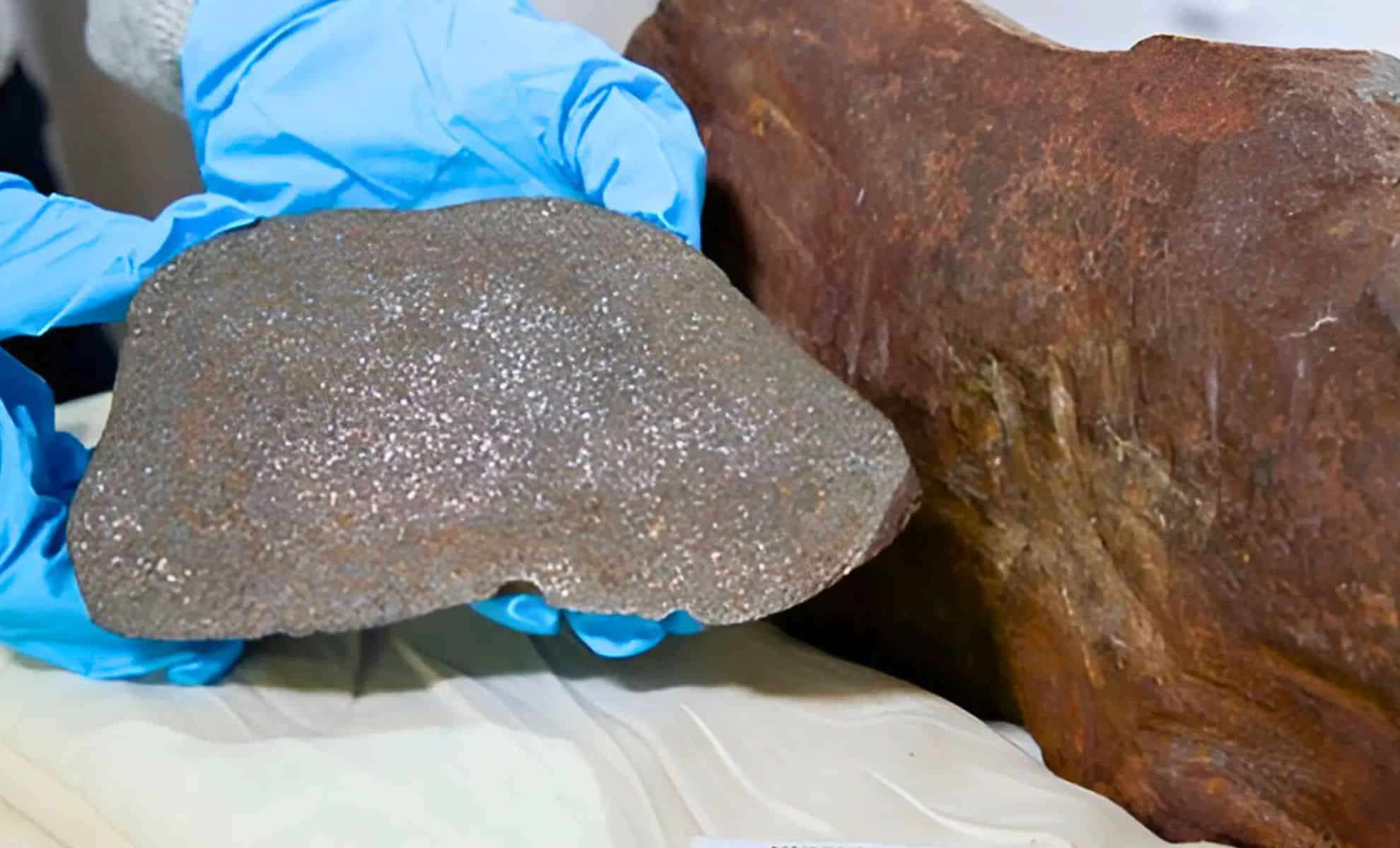
Back in 2015, while exploring the Maryborough Regional Park near Melbourne, Australia, David Hole stumbled upon a dense rock he initially thought was a gold nugget. This area is known for its rich gold deposits, making this discovery feel like an exciting find. Equipped with his metal detector, Hole was convinced the reddish stone concealed a golden treasure inside.
Despite his persistent efforts, the rock resisted all attempts to break it open. He tried several methods, including cutting with a rock saw, grinding with an angle grinder, and treating it with acid, yet the rock stayed intact. As Melbourne Museum geologist Dermot Henry later described, “It had this sculpted, dimpled look to it, formed during its passage through the atmosphere, when the surface melts and the atmosphere shapes it.”
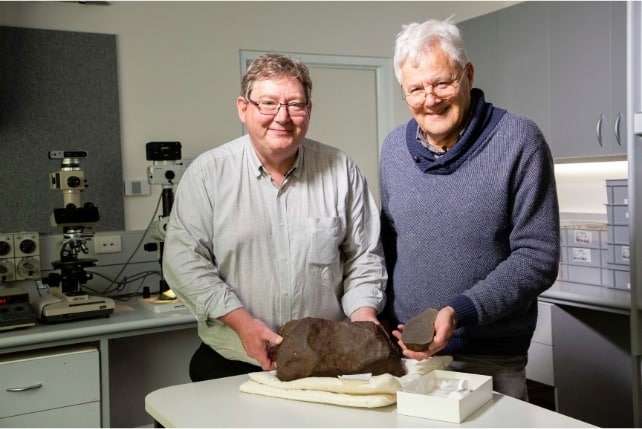
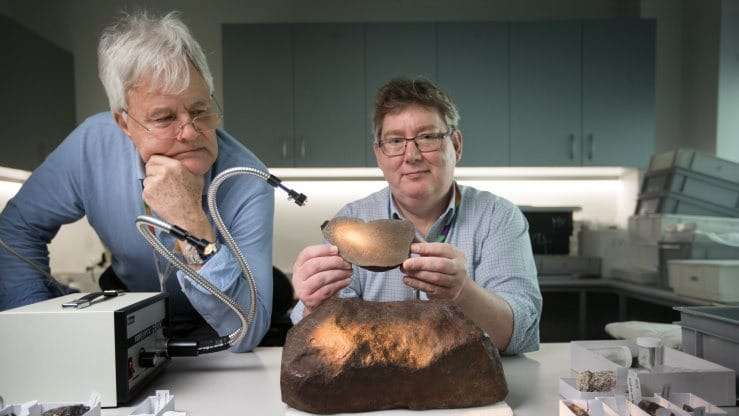
After years of uncertainty, Hole brought the enigmatic rock to the Melbourne Museum for examination. There, geologists including Bill Birch and Dermot Henry identified the specimen not as gold, but as a rare meteorite.

A Meteorite With Exceptional Scientific Value
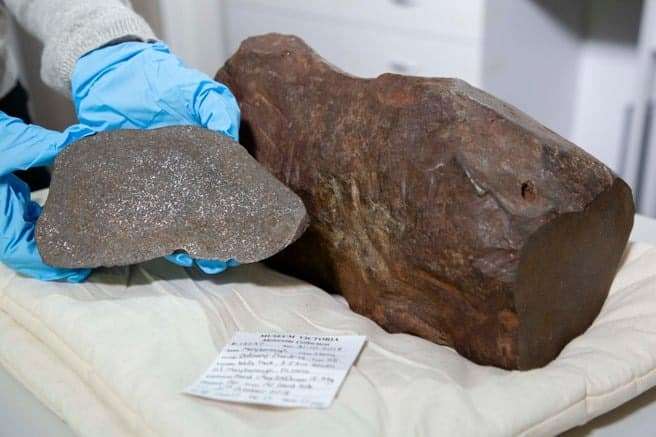
Dubbed the Maryborough meteorite, this unusual find weighs a notable 17 kilograms (37.5 pounds). Unlike typical gold nuggets from the same region, it is one of only 17 meteorites ever recorded in Victoria. This rarity makes the discovery enormously important for scientific research. Classified as an H5 ordinary chondrite, the meteorite’s high iron content and unique traits set it apart.
“A rock like this on Earth should be lighter when you pick it up,” noted Birch. When cut open with a diamond saw, the interior revealed tiny, crystallized metallic mineral spheres known as chondrules, which are relics from the early Solar System. These characteristics confirmed the rock’s exceptional scientific significance.
Unlocking Solar System History Through the Maryborough Meteorite
Estimated to be about 4.6 billion years old, the meteorite originated in the asteroid belt situated between Mars and Jupiter. According to Dermot Henry, the rock was likely ejected from this region following collisions among asteroids before eventually falling to Earth. This journey offers scientists a rare window into the early formation processes of our Solar System.
Meteorites like the Maryborough find hold enormous scientific value because they may harbor “stardust” that predates our Solar System and provide clues about how stars form and evolve. Some contain organic molecules, including amino acids vital to the emergence of life.
Meteorites: Priceless Beyond Gold
Though gold is traditionally associated with wealth, in scientific circles, meteorites hold far greater worth. Henry remarked, “Meteorites offer one of the most affordable ways to explore space. They act as time capsules, revealing the age, formation, and chemistry of the Solar System (including Earth).” Unlike gold, meteorites have the potential to answer fundamental questions about the universe and the origin of life.
In Victoria, while thousands of gold nuggets have been unearthed, meteorite finds like the Maryborough specimen remain exceedingly rare. “Only 17 meteorites have been discovered in Victoria, compared to the thousands of gold nuggets,” noted Henry, adding, “The likelihood of this meteorite's discovery is quite extraordinary.”
Although the full story behind the Maryborough meteorite hasn’t been completely unraveled, its rarity and enormous scientific value far surpass the allure of gold. This space rock provides a unique peek into our Solar System’s origins and may help unlock the mystery of how life began.






0 comments
Sign in to Comment