
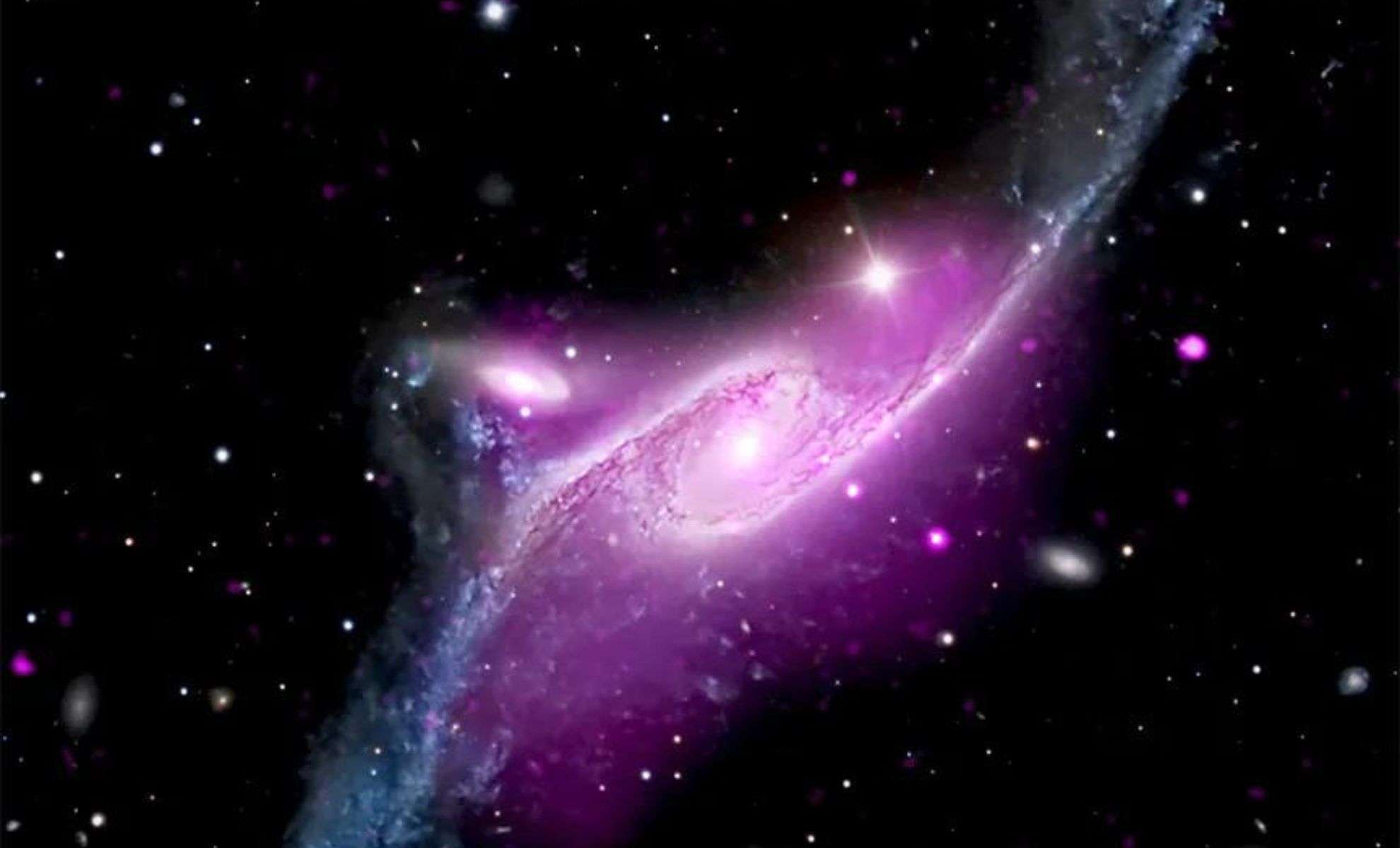
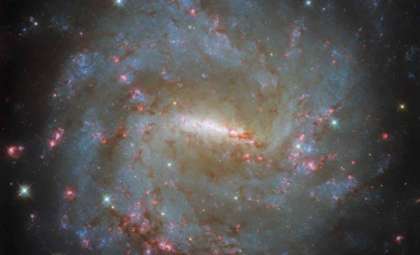
In celebration of its 25th year in space, NASA’s Chandra X-ray Observatory has unveiled striking new images of NGC 6872, famously known as the Peacock Galaxy.
This colossal spiral galaxy, spanning more than 522,000 light-years across, holds the record as the largest spiral galaxy detected, situated in the constellation Pavo.
Introducing NGC 6872: The Colossal Spiral
NGC 6872 is classified as a barred spiral galaxy, initially recognized as the largest spiral galaxy through observations by NASA’s Galaxy Evolution Explorer. Measuring over five times the diameter of our Milky Way, its enormous size offers valuable clues about the formation and behavior of sprawling spiral galaxies.

The Chandra X-ray Observatory, launched on July 23, 1999, has amassed thousands of images of distant cosmic bodies, deepening our grasp of the universe’s mysteries. Pat Slane, the director of the Chandra X-ray Center, remarked, “For 25 years, Chandra has delivered groundbreaking discoveries,” highlighting the observatory’s critical role in uncovering cosmic phenomena.
The distinctive characteristics and vast scale of this galaxy make it a prime object for exploring how spiral galaxies grow and interact with their cosmic environments.
Chandra’s Impact on X-ray Observations
Since its deployment, Chandra has been vital in detecting X-ray signals from phenomena such as supernova remnants, galaxy clusters, and massive black holes. The observatory beams data back to the Chandra X-ray Center at Harvard University’s Smithsonian Astrophysical Observatory, allowing researchers to examine the high-energy universe with exceptional clarity.
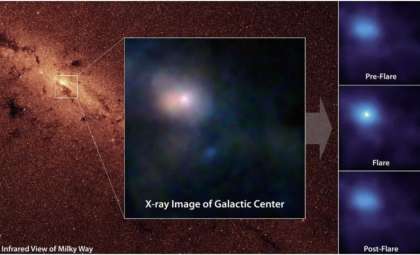
Among its famed contributions are capturing the aftermath of stellar explosions and imaging the supermassive black hole residing at the Milky Way’s core. These studies have significantly advanced our understanding of concepts like dark matter, dark energy, and black hole physics.
Eileen Collins, commander of the space shuttle Columbia mission that carried Chandra aloft, praised the observatory’s record: “Chandra’s findings have consistently amazed and inspired us over the last quarter-century.” The observatory’s high-resolution imagery has shed light on black hole dynamics, the makeup of galaxy clusters, and supernova debris, enriching cosmological insight.
A Visual Tribute to a Quarter Century
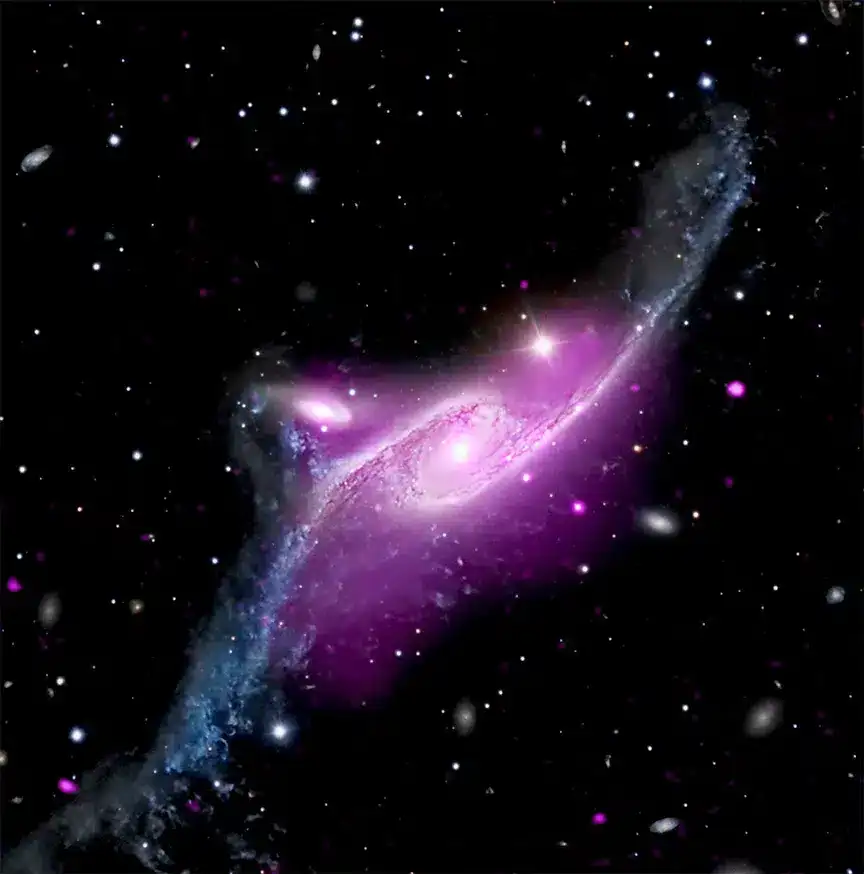
Marking this anniversary, NASA released a collection of 25 breathtaking images, including vibrant views of the Peacock Galaxy. These composites combine X-ray visuals from Chandra with optical data from other telescopes, unveiling the complex structures within NGC 6872.
The captivating swirls of red, blue, and purple highlight diverse elements and features of the galaxy, while supplementary images showcase other renowned celestial phenomena like the Crab Nebula and Cassiopeia A, famous supernova remnants celebrated for their vivid appearance and scientific relevance.
These detailed pictures emphasize Chandra’s imaging capabilities and ongoing contributions to cosmic exploration. Their vibrant coloration and intricate detail provide both scientific value and aesthetic wonder, illustrating the dynamic nature of our universe.
Honoring Chandra’s Lasting Legacy
As Chandra marks 25 years orbiting Earth, it remains a vital asset in NASA’s astrophysical research efforts. The observatory has been key in examining cosmic mysteries that were unknown prior to its inception, including exoplanets and dark energy. Slane stated, “Astronomers have employed Chandra to probe enigmas that we hadn’t even conceived when designing the telescope.”
Chandra’s unique ability to study high-energy events makes it an indispensable instrument for scientists globally. Its ongoing discoveries underscore the value of continued support for space-based observatories and their profound impact on astronomy. Beyond its discoveries, Chandra inspires future scientists to delve into the unknown.
Looking Ahead to New Horizons
The pioneering achievements of the Chandra X-ray Observatory set a high benchmark for upcoming missions. As the astronomy community anticipates new tools like the James Webb Space Telescope, Chandra’s foundational work will help guide future explorations.
The extensive archive of images and data obtained by Chandra has broadened our cosmic understanding and laid the groundwork for future breakthroughs. Continued observation of galaxies such as NGC 6872 will deepen knowledge about galaxy formation and evolution, fostering a richer comprehension of our universe.
Advances in technology and observation promise to unveil new astronomical frontiers, building on Chandra’s extraordinary legacy and expanding the boundaries of cosmic knowledge.
- Categories:
- Astronomy ,
- News ,
- Space ,
- Nasa






0 comments
Sign in to Comment