
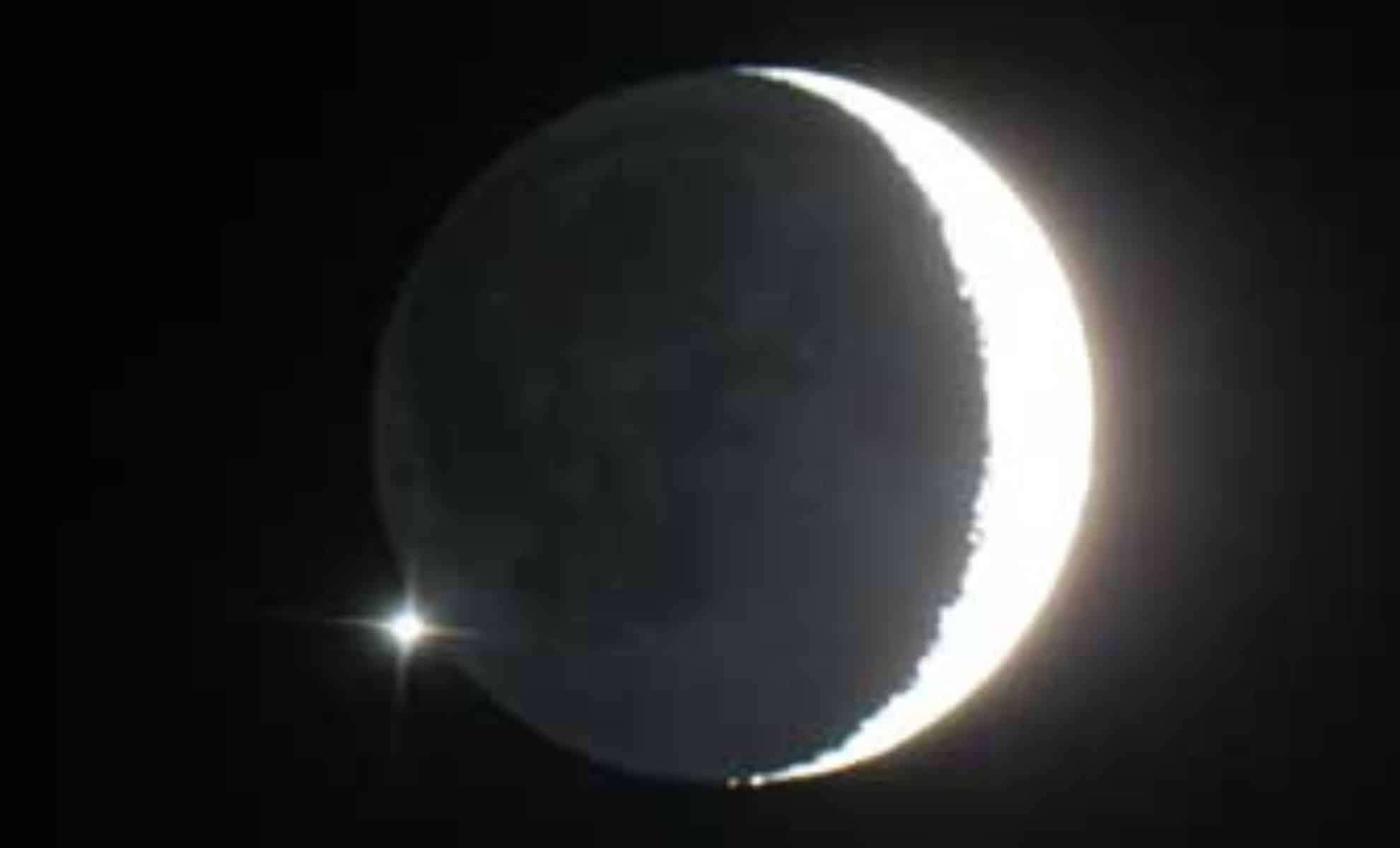
On Saturday evening, stargazers throughout North America will be treated to a remarkable astronomical event as the Moon passes in front of Spica, the brightest star in Virgo.
This uncommon alignment, in which the Moon blocks a distant star from view, promises a stunning spectacle for viewers positioned in optimal regions.
Understanding Lunar Occultations
A lunar occultation happens when our Moon moves directly between Earth and another celestial object, briefly hiding it from sight. This occasion features the Moon crossing in front of Spica, a luminous star roughly 250 light-years away.


Such events offer a rare chance to observe the Moon’s movement and the tiny angular size of the star. Lunar occultations highlight the complex motions within our solar system, as the Moon orbits Earth and occasionally conceals stars in the background.
The exact timing and visibility of a lunar occultation depend heavily on where the observer is located, illustrating the precise nature of these cosmic interactions.
Where and When You Can Catch It
The optimal spots for viewing this phenomenon lie within the central United States, where the event will be fully visible under dark skies. In the mid-Atlantic and Northeast, viewers will see Spica vanish low on the horizon, typically under 10 degrees above west-southwest. Meanwhile, in the Southeast, the star and Moon will appear higher in the sky.
On the West Coast, the occultation will coincide with twilight or daylight, making observation more difficult. For those in the Pacific Northwest, the event will conclude before sunset, reducing visibility. Using binoculars or telescopes is recommended to enhance the view, especially since Spica’s brightness contrasts with the Moon’s surface.
The Moon will begin covering Spica just after 11:30 p.m. EDT on July 13. For example, observers in Raleigh can expect to see Spica fade behind the Moon’s darkened side over about a minute. The star will remain hidden for roughly an hour before reappearing along the bright lunar edge. This timeline offers a predictable window for skywatchers to prepare and observe.
Scientific Insights from the Event
The Moon occulting Spica provides astronomers with valuable observations on the orbital mechanics of our satellite. It showcases the Moon’s precise path and its interactions with background stars, aiding refinement of lunar orbital models.
Accurately recording the moments Spica disappears and reemerges allows scientists to improve calculations of the Moon’s trajectory, contributing to more reliable astronomical predictions. Events like these emphasize the need for continual monitoring to deepen our grasp of celestial dynamics.
Additionally, viewers might notice earthshine illuminating the Moon’s night side — sunlight reflected from Earth that softly brightens the Moon’s dark portion during the occultation, adding a captivating aspect to the experience.
Getting Ready to Watch
For enthusiasts eager to observe, plenty of resources are available detailing optimal binoculars, telescopes, and astrophotography techniques to capture this fleeting event.
The Raleigh Astronomy Club will host a public star party at the North Carolina Museum of Natural Sciences’ Prairie Ridge Ecostation, beginning at 9:00 p.m. EDT and culminating with the occultation at 11:30 p.m. This event offers a chance for astronomy fans to gather, learn, and witness the event together.
To have the best experience, observers should secure a clear view toward the western sky well ahead of the event, be familiar with the Moon and Spica’s positions, and have their equipment ready to capture the brief but spectacular occultation.
- Categories:
- Astronomy ,
- News ,
- Space






0 comments
Sign in to Comment