
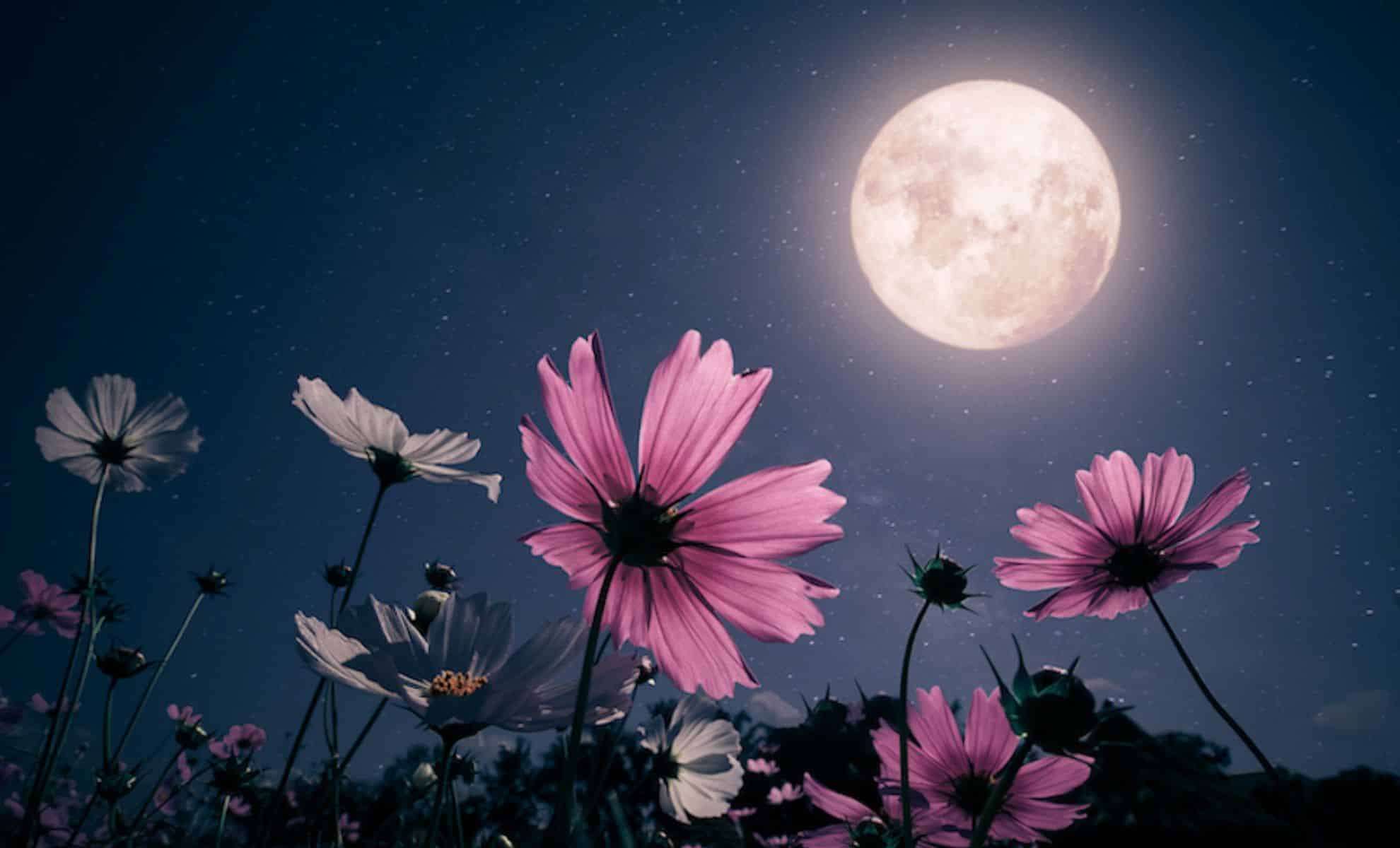
Sky enthusiasts are in for a treat this week as May’s full Flower Moon reaches its peak on May 23. This luminous lunar event, sometimes called the Planting Moon, will shine close to the vibrant red supergiant star Antares in the Scorpius constellation. Prime spotting opportunities fall on the evenings of May 22 and 23, promising an unforgettable view.
Spotting the Flower Moon
The May full moon earns the name Flower Moon because it coincides with the blossoming of abundant flora in the Northern Hemisphere. Besides the Flower Moon, it is also known as the Milk Moon or Hare Moon, names stemming from various cultural traditions. Among the Anishinaabe people, this moon is referred to as Nimebine Giizis, meaning the Sucker Moon.
Such names often echo the rhythms of agriculture and nature, highlighting the significant role this lunar phase holds across different cultures.


The Flower Moon represents the peak of spring’s vibrancy, when colorful blooms are widespread. The bright moonlight enhances this sense of rejuvenation and growth in the natural world, making this period extra special for nature lovers.
When to Watch
Although the full moon officially peaks at 9:53 a.m. EDT on May 23, the most striking views will be on the evenings of May 22 and May 23. On May 22, the moon will appear shortly before sunset, while on May 23, it will rise roughly 50 minutes after the sun goes down. Selecting a spot with an unobstructed eastern horizon is ideal for observation.
Throughout these evenings, the moon will look exceptionally large and radiant as it emerges, painting a scenic vista. As darkness deepens, the moon’s glow intensifies, offering an excellent viewing chance for both casual skywatchers and amateur astronomers.
Nearness to Antares
On May 23, the Flower Moon will be positioned close to Antares, a striking red supergiant star. Known for its distinctive reddish tint, Antares is among the brightest stars visible. Using binoculars or a modest telescope will greatly enhance this stellar conjunction.
The proximity of the moon and Antares will create a rare spectacle, perfect for capturing memorable images by stargazing enthusiasts.
Nicknamed the “Heart of the Scorpion,” Antares lies within Scorpius and owes its ruddy color to its status as a supergiant star approaching the twilight of its existence. The contrast between the moon’s luminous surface and Antares’ deep red glow crafts a breathtaking visual contrast.
Cultural and Historical Context
The tradition of naming full moons stretches across many cultures. The Flower Moon signifies the last full moon of spring in the Northern Hemisphere. Almanacs and indigenous records often highlight its importance, enriching its cultural significance.
Derived from the Algonquin tribes of North America, the title “Flower Moon” celebrates the prevalent floral blooms in May. In medieval England, it was known as the Milk Moon, linked to a surge in cattle milking during this time.
Additionally, this moon coincides historically with key planting periods, underscoring its role in agricultural cycles and traditional farming guidance.
Astronomical Perspective
The display of the Flower Moon near Antares offers more than aesthetic delight; it opens a window onto star life cycles and cosmic scales. Sitting about 550 light-years from Earth, Antares exemplifies a colossal star nearing the stages before its death. Viewing it alongside the moon provides perspectives on stellar evolution and the universe’s vastness.
This event also enables astronomers to explore how lunar brightness influences star visibility and light pollution's effects on night sky observations. The stark contrast in brightness between the moon and stars helps deepen our understanding of celestial magnitudes.
Tips for Enjoyment
Observing the Flower Moon requires no specialized gear, but binoculars or telescopes can elevate the experience by revealing finer lunar details and the neighboring Antares. Photographers might consider long exposure settings to best capture the event’s splendor.
Check local weather forecasts to ensure clear skies, and seek out areas with minimal light pollution away from urban centers to maximize visibility. Utilizing apps or websites that track moonrise and moonset times can assist in planning.
Gathering friends or family for a stargazing session can deepen appreciation for this natural phenomenon. This occasion is also an ideal educational moment to discuss lunar phases, star identification, and humanity’s connection to the cosmos.
- Categories:
- Astronomy ,
- News ,
- Space







0 comments
Sign in to Comment